

Installing a Call Button for PRM: A Small Element with Great Significance
A call button for people with reduced mobility (PRM) is a seemingly small element, but it is often the deciding factor that turns an inaccessible building into one that is convenient for everyone. For a person in a wheelchair, a parent with a baby carriage, or an elderly person, the ability to press a button and summon staff assistance is not just comfort, but a real opportunity to use a facility’s services, work, and lead a full life. Installing a call button for PRM is a mandatory requirement under building codes, which often goes unnoticed by building owners, but its absence can lead to serious legal consequences.
What Is a Call Button for PRM and Where Is It Installed
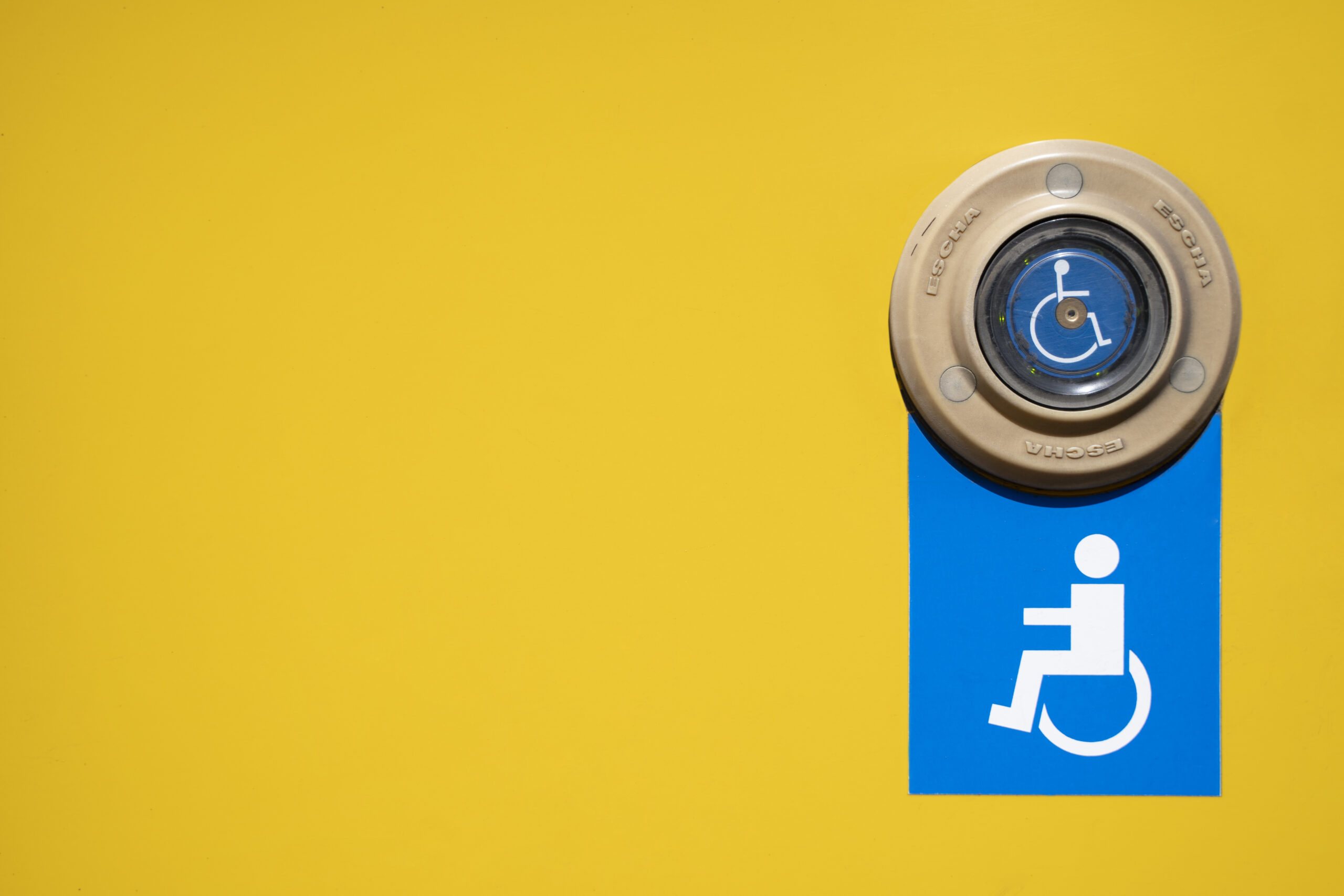
A staff call button is a device that allows a person with limited mobility to contact staff for assistance: opening doors, escorting to an office, calling an elevator, etc. It is installed in places where a person with a disability might need help due to the building’s design features. According to legal requirements, institutions, enterprises, and organizations must ensure unobstructed access to their premises for persons with limited mobility, disabilities, and other people falling into the PRM category. Furthermore, the organization must designate a person responsible for serving PRM individuals, who will respond to the signal. Most often, staff call buttons are mounted in the following locations:
- at building entrances with steps or thresholds;
- in elevator lobbies to call for help when entering/exiting;
- in sanitary and hygienic facilities equipped for PRM;
- near doors that are difficult to open independently;
- at parking spaces for persons with disabilities.
GlobalBud Ukraine provides all necessary services for building construction inclusivity.
Technical Requirements for Call Button Installation
There are clear legal requirements for designing and installing call buttons that must be strictly followed:
- Installation height — from 0.85 m to 1.1 m from floor or ground level. This ensures accessibility for a person in a wheelchair.
- Distance from a vertical plane — not less than 0.4 m to ensure convenient access to the button.
- Contrast — the button must be visible against the wall background, preferably with high-contrast markings.
- Braille duplication — for visually impaired persons.
- Information plate — an icon indicating that it is intended for calling assistance is placed above the button.
- Staff notification — the signal from the button must be received by duty staff (security, reception, administrator).
As experts note, staff call buttons and information plates are some of the most important elements of an inclusive space, alongside ramps and lifting platforms.
How Call Button Installation Works
The process of installing a call button for PRM includes several stages:
- Accessibility audit — specialists determine the locations where call button installation is necessary, in accordance with applicable building codes.
- Design — a placement scheme for the buttons is developed taking into account all technical requirements (height, distance, accessibility).
- Installation — mounting the buttons, connecting them to the staff notification system.
- Labeling — applying information plates with an accessibility icon and Braille duplication.
- Testing — checking system operability, training staff to respond to signals.
- Object verification and commissioning — testing performance, verifying compliance with all safety requirements, and completing necessary documentation.
It is important to remember that installing a call button without preliminary technical inspection and design can lead to building code violations, which are grounds for refusing to issue a certificate of readiness and imposing fines.
Liability for Absence of a Call Button
Failure to comply with inclusivity requirements can have serious consequences:
- refusal to issue a certificate of readiness for building operation — state architectural and construction control authorities verify actual fulfillment of all accessibility requirements;
- imposition of fines — for non-compliance with inclusivity standards;
- lawsuits — individuals with disabilities or public organizations can file a lawsuit regarding inclusivity demanding the removal of discriminatory barriers;
- obligation to remediate violations at one’s own expense;
- reputational damage — for business, inaccessibility means loss of clients and tarnished image.
Frequently Asked Questions
Is a call button necessary if the building already has a ramp and an elevator?
Yes, in many cases. Even with a ramp or elevator, additional accessibility elements may be required. For example, a call button may be necessary near doors that are difficult to open independently or in PRM-accessible restrooms to call for assistance if needed.
Who has the right to inspect and issue an inclusivity compliance conclusion?
A conclusion on accessibility of premises is prepared by certified engineers for technical inspection of buildings and structures or expert organizations that have the appropriate qualifications.