

Accessibility Assessment of Buildings in Ukraine: DBN Requirements, Procedure, and Liability
What is an accessibility assessment of a building?
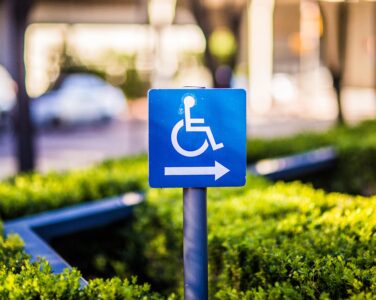
An accessibility assessment of a building is a comprehensive technical and regulatory review of a real estate asset to confirm compliance with accessibility requirements for persons with reduced mobility (PRM) under the applicable State Building Codes of Ukraine (DBN).
The key regulatory instrument is DBN V.2.2-40:2018 “Inclusiveness of Buildings and Structures”, along with the relevant provisions of the Law of Ukraine “On Regulation of Urban Development” and the Law of Ukraine “On Architectural Activity”.
Such an assessment is relevant for:
-
commercial real estate owners;
-
developers;
-
HOAs (condominium associations);
-
local self-government authorities;
-
state and municipal institutions;
-
international companies operating in Ukraine.
When is an accessibility audit mandatory?
1. Before commissioning (putting the facility into operation)
Compliance of a building with accessibility requirements is a mandatory condition for commissioning the facility.
2. During reconstruction or major renovation
A change of functional use or reconstruction of a building requires bringing the facility into compliance with current accessibility standards.
3. When purchasing commercial real estate
Investors increasingly order an accessibility audit as part of technical and legal due diligence.
In such cases, it is advisable to combine the review with the engineering and construction audit service at gbu.kyiv.ua to ensure a comprehensive risk assessment.
Would you like to know the service cost
for your specific situation?
Call a consultant
What is checked during an accessibility assessment?
1. Site and entrance accessibility
-
availability of ramps and their slope;
-
clear width of passageways;
-
tactile elements;
-
step-free (barrier-free) access to the entrance;
-
absence of thresholds, or their compliance with applicable standards.
2. Vertical circulation
-
lifts (cab dimensions, controls, voice announcements);
-
lifting platforms;
-
stair flights (contrast marking, handrails).
3. Internal areas
-
width of corridors and door openings;
-
adapted sanitary facilities (accessible restrooms);
-
accessibility of waiting areas and reception;
-
wayfinding and information signage.
4. Parking spaces
-
number of parking spaces for persons with disabilities;
-
correct location and arrangement;
-
dimensions and markings.
Key Requirements of DBN V.2.2-40:2018
During the assessment, particular attention is paid to:
-
minimum clear door opening width (not less than 0.9 m);
-
permissible ramp slope (up to 8%);
-
mandatory provision of an accessible restroom;
-
ensuring safe evacuation of PRM;
-
contrast marking of stairs.
Failure to comply with these requirements may serve as grounds for refusal to commission the facility and/or the imposition of penalties.
Would you like to know the service cost
for your specific situation?
Call a consultant
Report format following the assessment
After the audit, the client receives:
-
a technical report with a detailed description of non-compliances;
-
photo documentation;
-
references to specific DBN clauses;
-
recommendations for remedying the deficiencies;
-
a preliminary cost estimate for accessibility adaptation measures.
If required, specialists may develop design solutions to bring the facility into compliance with accessibility requirements.
Common non-compliances identified during inspections
-
Excessive ramp slope.
-
Lack of adapted sanitary facilities (accessible restrooms).
-
Insufficient width of doors and corridors.
-
Absence of tactile indicators and contrast marking.
-
Improper arrangement of parking spaces for persons with disabilities.
Such shortcomings create not only legal risks, but also reputational losses for businesses.
Accessibility assessment for public and commercial facilities
Particular attention should be paid to:
-
healthcare facilities;
-
educational institutions;
-
administrative buildings;
-
shopping and entertainment centers;
-
hotels and office centers.
For facilities with a medium and significant consequence class (CC2, CC3), it is advisable to combine the accessibility audit with the technical inspection of buildings and structures service at gbu.kyiv.ua.
Why order a professional accessibility audit?
A self-assessment against DBN requirements is often superficial and may fail to consider all regulatory nuances. A professional assessment allows you to:
-
minimize the risk of penalties and refusal to commission the facility;
-
increase the investment attractiveness of the asset;
-
demonstrate corporate social responsibility;
-
meet modern barrier-free standards.
Conclusions
Accessibility assessment of buildings in Ukraine is not a mere formality; it is an essential element of modern construction and real estate operations. Compliance with DBN V.2.2-40:2018 is a mandatory prerequisite for the lawful and safe operation of a facility.
The company GlobalBud Ukraine provides end-to-end professional accessibility audit services: from on-site inspection to preparation of a technical report and development of design solutions.
Our team includes experienced engineers and legal professionals who support both private clients and major Ukrainian and international companies. Contact GlobalBud Ukraine for a comprehensive and legally sound assessment of your facility for compliance with accessibility requirements.