


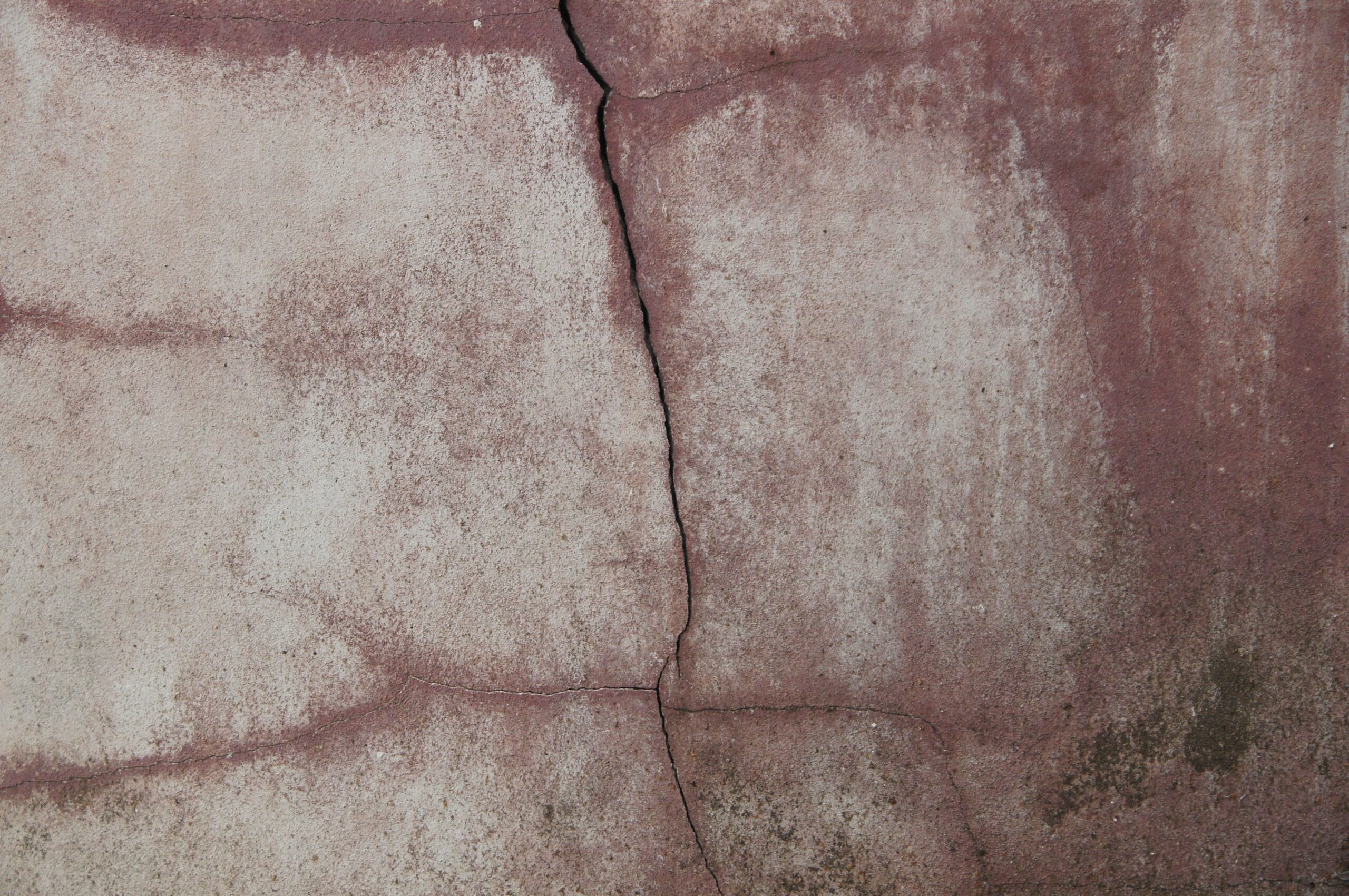
Vertical Crack in the Foundation: Is It Dangerous for the Building
Have you noticed a vertical crack on the foundation of your own home or commercial building? This is not just a cosmetic defect that can be masked with mortar. A vertical crack in the foundation is a warning sign indicating serious problems in the operation of the building’s entire structural system. Unlike horizontal cracks, a vertical rupture indicates overloading and can cause further destruction. In this article, we will analyze why they occur, what danger they pose, and what to do if you find them.
Why a Vertical Crack Appears: Main Causes
Vertical cracks most often occur due to uneven soil settlement under different parts of the building. If the soils under one part of the house have a different density, moisture, or load-bearing capacity, the foundation settles unevenly. As a result, stresses arise that lead to the opening of vertical cracks. A vertical crack indicates overloading of the walls and can be very dangerous. It is vertical cracks that often become the cause of foundation failure. In addition to uneven settlement, the appearance of vertical cracks is caused by:
- Design errors — incorrect load calculation, incorrectly determined foundation laying depth, ignoring the engineering and geological conditions of the site, choosing an inappropriate foundation type.
- Violation of construction technology — poor concrete quality, insufficient reinforcement, violation of the concrete curing regime, poor compaction of the concrete mix, deviation from design solutions.
- Exceeding design loads — addition of floors, change in the building’s functional purpose, installation of heavy equipment without prior foundation reinforcement.
- Impact of groundwater and frost heaving — flooding, lack of drainage, damage to water drainage, as well as seasonal soil freezing, which creates additional pressure on the foundation base.
It is worth noting that the lack of geological site surveys before construction also often leads to cracks. Incorrectly installed formwork or improperly executed base reinforcement are other common causes.
Why a Vertical Crack is Dangerous for a Building
A vertical crack is not just an aesthetic problem. It signals a violation of the foundation’s load-bearing capacity. If measures are not taken in time, the following consequences are possible:
- progressive deformation — the crack may gradually widen, leading to the skewing of walls, doors, and window openings;
- structural destruction — in case of significant crack opening (more than 2–3 mm), partial or complete destruction of the foundation and load-bearing walls is possible;
- violation of building integrity — vertical cracks can cause floor deformation and even an emergency state of the entire building;
- decrease in property value — the presence of foundation cracks significantly reduces the market value of the object and complicates its sale.
It should be remembered that a vertical crack indicates wall overloading, which can be very dangerous. Sometimes the cause of the problem is insufficient foundation strength. Cosmetic repairs without eliminating the root cause only mask the problem but do not solve it.
How to Determine the Degree of Danger: Professional Inspection
To properly assess the danger of a vertical crack, a professional technical inspection is required. GlobalBud Ukraine specialists conduct comprehensive diagnostics, which include:
- Visual inspection — detection of cracks, deformations, moisture traces, rebar corrosion, and other defects.
- Instrumental inspection — geodetic measurements to determine vertical and horizontal structural deformations. The use of non-destructive testing methods (ultrasonic, radar) to assess the condition of materials without damaging them.
- Soil analysis — assessment of the base condition and determination of the causes of uneven settlement.
- Load-bearing capacity calculation — determination of the residual foundation strength and the possibility of continued operation.
- Installation of control beacons — to monitor the crack development over a certain period.
Foundation inspection may be necessary when detecting building deformations or settlement, before conducting reconstruction or major repairs, and also before buying or selling an object. Professional foundation inspection allows accurately determining the cause of the vertical crack and developing an effective plan for its elimination.
What to Do If You Find a Vertical Crack
- Do not panic, but do not ignore it — record the defect: take a photo of the crack, measure its width.
- Install control beacons — this will allow tracking whether the crack widens over time.
- Order a technical inspection — only professional diagnostics will answer how dangerous the crack is and what measures must be taken.
- Develop a reinforcement plan — based on the inspection results, specialists will offer the optimal solution: from crack injection to complete foundation reinforcement with piles.
You can order a technical foundation inspection at GlobalBud Ukraine.
Frequently Asked Questions
Can I independently seal a vertical crack in the foundation?
Cosmetically sealing a crack with mortar without eliminating the cause of its appearance will not solve the problem. If the foundation continues to settle, no mortar will hold the structure. It is necessary to first conduct an inspection and eliminate the root cause of the deformation.
What width of a vertical crack is considered critical?
Cracks wider than 2–3 mm are considered dangerous and require immediate specialist intervention. Particular attention should be paid to cracks that widen over time.
Is it possible to sell a house with a vertical foundation crack?
Yes, but the presence of a crack significantly reduces the object’s value. Potential buyers usually require a technical report on the foundation’s condition. Conducting an inspection and eliminating the problem significantly increases the property’s liquidity.