

Deterioration of Concrete Basement Walls: How to Assess Structural Condition and Save the Building
The deterioration of concrete basement walls is one of the most serious problems building owners may face. Concrete basement walls are an integral part of the foundation and ensure the stability of the entire structure. When these walls start to deteriorate, the entire building is at risk. Understanding the causes of deterioration, timely detection of signs, and professional assessment of the structure’s condition are key to preserving the building and ensuring people’s safety.
Main Causes of Concrete Basement Wall Deterioration
The deterioration of concrete basement walls can be caused by various factors, which often act in combination:
- Impact of groundwater and moisture — one of the most common causes. High groundwater levels or lack of waterproofing cause corrosion of concrete and reinforcement. Water penetrating into concrete pores expands upon freezing, destroying the material structure.
- Reinforcement corrosion — rust forming on reinforcement bars increases in volume and tears the concrete from within, causing delamination and destruction.
- Frost heaving of soil — when water in the soil freezes, it expands, creating additional pressure on basement walls.
- Construction technology violations — inconsistent concrete composition, improper reinforcement, non-compliance with building codes regarding foundation depth.
- Engineering and geological survey errors — insufficient soil investigation or ignoring physical-mechanical properties leads to uneven building settlement.
- Excessive loads — unauthorized reconstruction or adding floors without proper calculations.
- Prolonged operation without maintenance — lack of technical inspection leads to an accumulation of defects.
According to urban planning and construction legislation, the proper technical state of an object is a mandatory requirement for its safe operation.
How to Detect Concrete Basement Wall Deterioration
Timely detection of problems allows minimizing repair costs. Main symptoms of deterioration:
- Cracks — appearance of cracks in basement concrete walls, especially those that widen over time.
- Concrete delamination — pieces of concrete falling off, exposure of reinforcement.
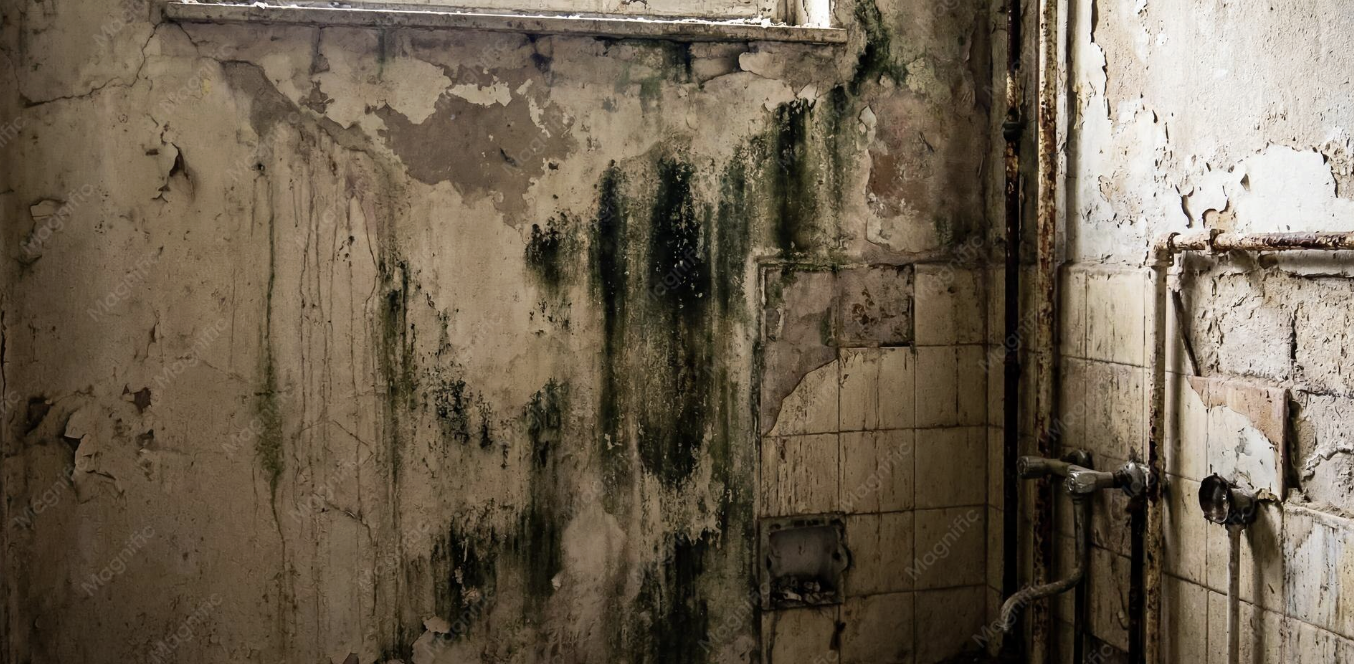
- Presence of moisture, fungus, or mold — a sign of constant structural dampening.
- White or yellow spots (efflorescence) — salt deposits on the concrete surface indicate constant dampening and leaching of salts.
- Wall deformation — warping, bulging, or settlement of individual wall sections.
- Sound when tapping — a dull sound may indicate concrete delamination.
For precise diagnostics, specialists use a complex of methods: visual and instrumental inspection of main structural elements of the building, including foundations and basements. Professional inspection of building walls and foundations allows accurately determining the condition of structures and the degree of damage.
Methods for Restoring Concrete Basement Walls
The choice of repair method depends on the nature of damage, foundation type, and geological conditions. Main methods include:
- Shotcreting — applying concrete under pressure to a damaged surface to restore the protective layer and increase strength.
- Injection — filling cracks and voids with special polymer or cement-based compounds to restore structural monolithic integrity.
- Reinforcement strengthening — installing additional reinforcement bars to increase load-bearing capacity.
- Waterproofing — applying waterproofing materials to protect concrete from moisture.
- Replacing damaged sections — in cases where individual wall sections have lost load-bearing capacity.
- Structural reinforcement — installing additional metal or reinforced concrete elements.
Deterioration of concrete foundation is a complex problem requiring a professional approach to diagnostics and restoration.
Prevention of Concrete Basement Wall Deterioration
It is much easier to prevent deterioration than to spend money on eliminating it:
- Regular inspection — conduct visual inspections of basement walls at least twice a year, paying attention to cracks, moisture, and efflorescence.
- Groundwater level control — monitor groundwater levels and take timely measures to divert them.
- Waterproofing — ensure proper waterproofing of basement walls and floors.
- Drainage system — make sure the drainage system is working properly.
- Timely repair — do not postpone the repair of minor damage, as they can turn into serious defects.
Comprehensive building inspection allows identifying hidden defects and avoiding significant financial expenses in the future.
Frequently Asked Questions
Can concrete basement walls be restored without complete replacement?
Yes, in many cases, local repair of damaged areas via shotcreting, injection, or reinforcement strengthening is possible. However, if the majority of the structure has lost its load-bearing capacity, a complete replacement may be required.
How often should concrete basement walls be checked?
It is recommended to conduct a visual inspection at least twice a year, as well as after heavy precipitation or snowmelt. A professional inspection using instrumental methods is recommended every 3–5 years.