

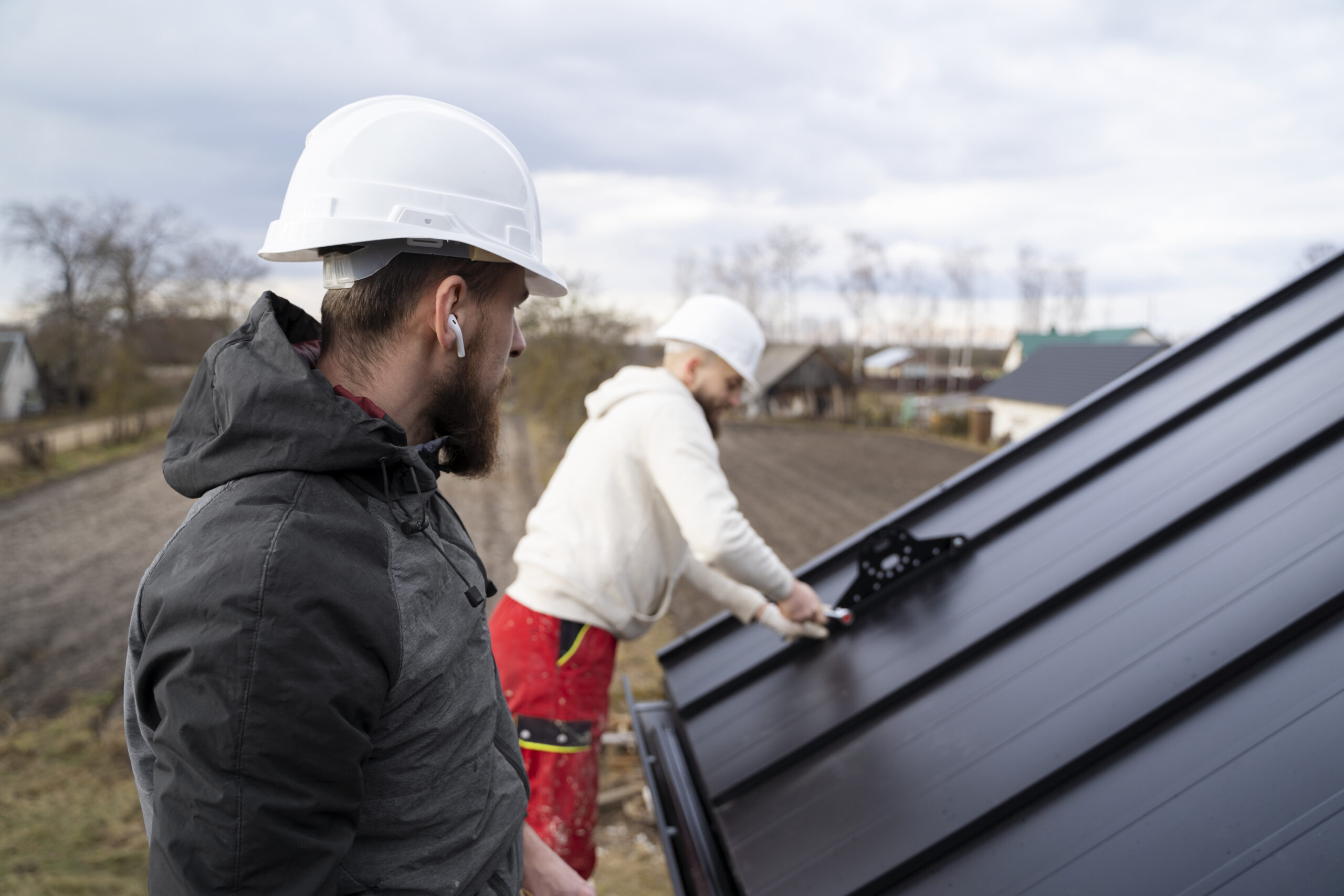
Roof Inspection Before Installing a Solar Power Station in Kharkiv
Today, energy independence has become not just a trend, but a critical life necessity, especially for residents and businesses in Kharkiv. Installing solar power stations (SPS) on the roofs of private houses, commercial buildings, warehouses, and industrial workshops ensures stable power supply even in the most challenging conditions and significantly reduces costs. However, before investing substantial funds into photovoltaic modules, inverters, and batteries, it is necessary to solve a key engineering question: is your roof capable of withstanding this additional load?
Specificity of the Kharkiv Construction Stock
Kharkiv’s construction stock features pronounced distinctive traits. Beyond standard natural material wear and weather impacts, many buildings in the city and region have experienced severe vibrations, dynamic loads, or indirect blast wave consequences over recent years. Even if a roof or facade visually appears intact and undamaged, the load-bearing capacity of supporting structures can be significantly reduced due to micro-cracks or shifts.
In cases where a building was previously in a risk zone or sustained visible damages, before planning any large-scale modernization, preparing a technical report on building or structure collapse is exceptionally vital. This stage ensures that the property is generally suitable for safe continued operation and will withstand the installation of additional heavy equipment.
Why Are Solar Panels a Serious Test for a Roof?
Solar panels, together with aluminum or steel mounting systems, ballasts (for flat roofs), and cable infrastructure, create significant additional permanent loads. On average, this amounts to 15 to 30 kg per square meter. But this is only static weight. Climate factors must be strictly taken into account:
- Snow load: Panels alter roof geometry. Snow can accumulate in gaps between modules or beneath them, creating “snow pockets” that exert pressure on specific points of the floor slab.
- Wind load: Photovoltaic modules feature a large surface area and act like a sail. During storm winds, a powerful aerodynamic lifting force (uplift load) arises, attempting to tear the panels off along with mounting hardware and parts of the roofing.
If a wooden roof’s rafter system or a flat roof’s reinforced concrete floor slabs possess concealed defects, SPS installation can lead to roof deflection, airtightness failures, or, in the worst-case scenario, structural collapse. Timely техническое обследование дефектов зданий и сооружений (technical inspection of building and structure defects) uncovers metal fatigue, timber rot, or concrete cracks prior to installation work, preventing catastrophic consequences and expensive repairs.
What Does a Professional Engineering Audit Include?
Expertise prior to SPS installation requires a comprehensive approach:
- Assessment of load-bearing elements: Non-destructive testing methods (ultrasound, sclerometers) are deployed to determine residual concrete and metal beam strength.
- Waterproofing layer analysis: Installing mounts on sloped roofs frequently involves drilling through roofing materials. If waterproofing is already degraded, this will inevitably lead to large-scale leaks.
- Checking fastening zones: The strongest roof nodes are identified, where solar station support profiles can be securely anchored.
Official Document for Investment Safety
Beyond physical reliability, professional inspection possesses a weighty legal dimension. Serious solar system installers, as well as insurance companies, increasingly demand documentary confirmation that a roof is suitable for SPS installation. To legally protect your investments and preserve equipment warranties, be sure to order an engineering roof conclusion — an official document for safe SPS installation. This document contains precise thermal and structural calculations, as well as comprehensive recommendations regarding optimal mounting types (ballast, roof hooks, mini-rails) specifically for your building.
Installing a solar power station in Kharkiv is a far-sighted step toward energy independence. Start it correctly: with a professional engineering audit guaranteeing the safety of your home or business for decades to come.