

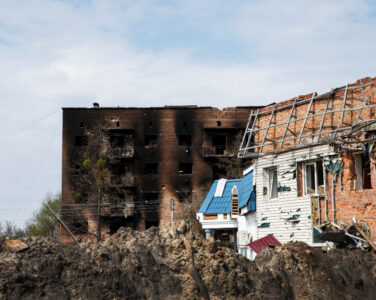
Inspection of Destroyed Real Estate in Chernihiv: Damage Diagnostics in a Border City Environment
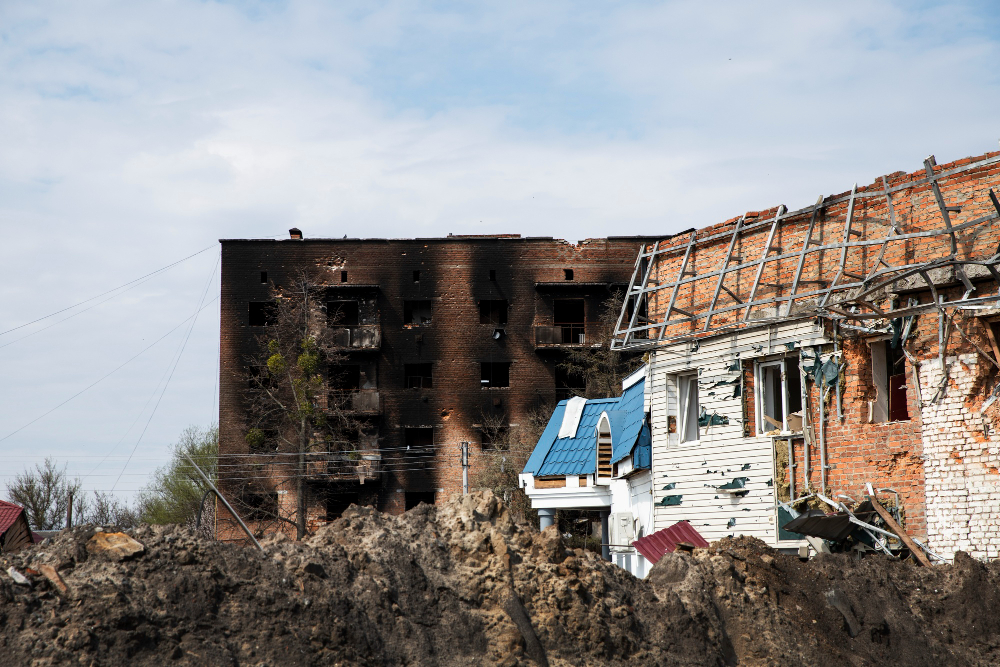
Chernihiv is one of the cities that has suffered significant destruction as a result of hostilities. During the battles for the city, about 700 people died, and a significant part of the housing stock sustained damage of varying degrees. As of 2025, work is underway in the Chernihiv region to record damage and provide compensation. Technical inspection of destroyed real estate in Chernihiv is a critical stage for determining the feasibility of restoring the housing stock, planning repair work, and obtaining compensation payments. The procedure is carried out in accordance with the Methodology for Inspecting Buildings and Structures Damaged as a Result of Emergencies, Hostilities, and Terrorist Acts, as well as in compliance with DBN V.1.2-14:2018.
When Inspection of Destroyed Real Estate in Chernihiv is Necessary
The main grounds for ordering a technical inspection of damaged objects in Chernihiv are:
- recording damage caused by hostilities, shelling, or airstrikes to receive compensation under the eRecovery (“єВідновлення”) program;
- assessing the technical condition of buildings affected by blast waves to make a decision on major repairs, reconstruction, or demolition;
- the need to obtain an official inspection act for submission to local self-government bodies;
- planning restoration works on social infrastructure facilities.
In the Chernihiv region, a mechanism for remote inspection of destroyed housing in combat zones has been introduced. However, to obtain a full-fledged technical report suitable for registration in EDESSB, an on-site inspection after the completion of the active phase of hostilities is necessary.
Specifics of Inspecting Chernihiv Buildings: Historical Development and Scale of Destruction
Conducting a technical inspection in Chernihiv has a number of specific aspects:
- Historical development. In Chernihiv, a significant number of buildings are architectural monuments or located in historical areas. Inspecting such objects requires taking into account cultural heritage protection requirements and using control methods that do not damage historical elements.
- Scale of destruction. A significant part of the housing stock has sustained damage of varying degrees — from local facade impacts to partial or complete destruction of load-bearing structures. The inspection must cover all types of damage for correct classification.
- Condition of engineering systems. A significant portion of the damage affects utility networks. The inspection must include diagnostics of water supply, sewage, heating, and power supply systems.
Stages of Technical Inspection in Chernihiv
The procedure for technical inspection of destroyed real estate in Chernihiv is structured according to the following algorithm:
- Preliminary analysis. Reviewing available documentation, including technical passports and project documentation (if available). Determining destruction zones.
- Visual inspection. Recording visible defects: cracks, deformations, spalling, moisture traces, and corrosion. Special attention is paid to the condition of historical elements and structural joints.
- Instrumental inspection. Geodetic measurements of deformations. Ultrasonic and endoscopic diagnostics of hidden cavities. Thermal imaging inspection to detect thermal bridges and hidden insulation defects.
- Calculation of the technical condition. Determining the damage category based on inspection results in accordance with current DBNs and building technical condition assessment methodologies.
- Preparation of a technical report. A document indicating the degree of damage,еме -> the state of individual structural elements, a forecast of further destruction or stability, and recommendations for restoration, reinforcement, or dismantling.
Result of the Inspection and Its Legal Significance
The customer receives a technical report containing:
- an assessment of the building’s technical condition and individual structures;
- a list of identified defects with references to DBNs;
- calculations of residual load-bearing capacity;
- a conclusion on the technical condition category;
- recommendations for further actions.
The report is registered in the Unified State Electronic System in the Construction Sector (EDESSB), which gives it legal validity for submission to local self-government bodies or court. In cases whereрти -> where the destruction is critical, the dismantling or demolition of buildings and structures may be required, which also demands proper technical justification. GlobalBud Ukraine provides a full cycle of technical inspection of real estate objects with subsequent registration of the report in EDESSB.
Cost and Timeframe ofрти -> of the Inspection
The price for conducting a technical inspection of destroyed real estate in Chernihiv is determined individually for each object. The main pricing factors are the building’s area, the degree of destruction, the difficulty of access to structural elements, andрти -> and the need to take into account cultural heritage protection requirements. The timeframe for completing the work depends onрти -> on the scale of damage andрти -> and the complexity ofрти -> of the inspection.
Frequently Asked Questions
Is it mandatory to conduct a technical inspection to receive compensation under the eRecovery program in Chernihiv?
Yes, to receive compensation, it is necessary to carry out a commission inspection of the damaged property. A technical report by an independent expert registered in EDESSB serves as weighty evidence of the extent of damage.
How isрти -> is the inspection carried out ifрти -> if the building is an architectural monument?
For cultural heritage objects or buildings located in historical areas, the technical report must take into account protection requirements. Control methods that do not damage historical elements are applied. Recommendations for restoration must take into account cultural heritage protection requirements.
Is it possible to conduct a remote inspection of destroyed real estate in Chernihiv?
For objects in areas where access is limited, a remote inspection involving drones and photo reports is possible. However, to obtain a full-fledged technical report suitable for registration in EDESSB, an on-site inspection using instrumental control methods is necessary.