


Building Damage After an Explosion or Blast Wave: How to Assess the Real State of Structures
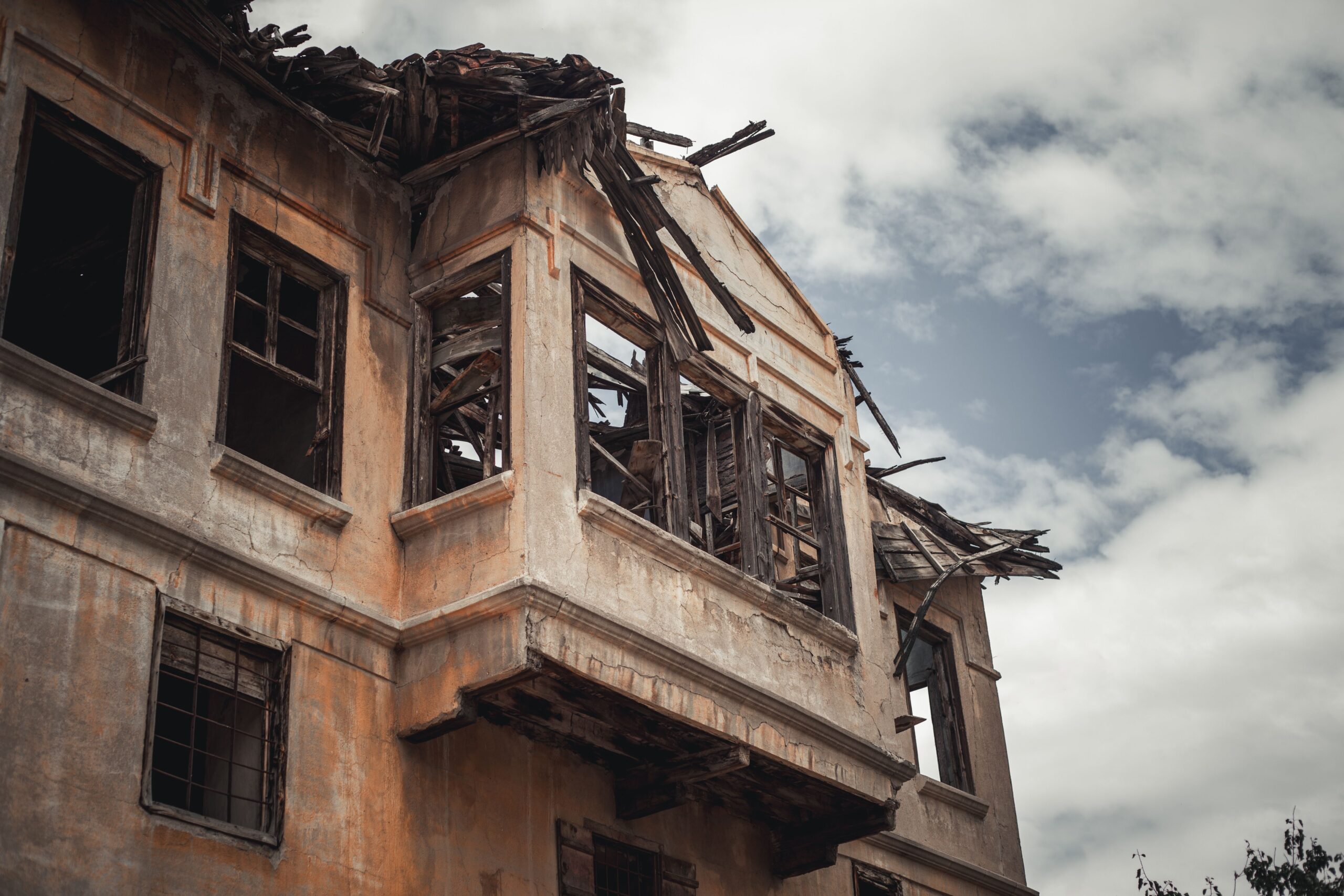
A blast wave is a colossal force that can alter a building’s geometry in seconds, create hidden defects, and make a structure unsafe for further operation. Damage to a building after an explosion or blast wave is more than just broken windows and cracks on the facade. The most dangerous defects are often hidden: micro-cracks in load-bearing structures, disruption of reinforcement-to-concrete bonding, and frame deformations that may manifest months after the event. Understanding exactly what needs to be checked and conducting a timely inspection is a matter of safety for your building and for human lives.
How a Blast Wave Affects a Building
A blast wave is a sudden increase in air pressure propagating from an explosion epicenter at supersonic speed. Its impact on a building is multifactorial and depends on the explosion’s power, distance to the epicenter, the building’s design features, and the materials used. Main damage mechanisms:
- Direct blast pressure — the blast wave front creates significant loading on the building facade, leading to the destruction of exterior walls, windows, and doors. Exterior wall structures (wall panels, brickwork, cladding, translucent structures) suffer the greatest damage from the blast wave.
- Rarefaction (suction phase) — after the wave front passes, a zone of rarefaction forms, which can “rip” structural elements outward, creating additional destruction.
- Vibration impact — ground and structural vibrations from the explosion are transmitted to all building elements, causing micro-damage and weakening joints.
- Debris loading — the scattering of debris and shrapnel creates localized punctures and structural damage.
The blast wave is a specific destructive factor that explains why windows are lost in entire blocks and why internal damage occurs in surviving buildings. Windows were blown out in houses within a radius of approximately 50–100 meters from the explosion epicenter. On all these structures, one can trace a clear directionality of the blast wave.
What is Checked During an Inspection After an Explosion
A technical inspection after an explosion or blast wave is a comprehensive procedure conducted in accordance with the Methodology for surveying buildings and structures damaged by emergency situations, combat operations, and terrorist acts. Specialists check:
- Load-bearing structures — foundations, walls, columns, floor slabs. The presence of cracks, deformations, shifts, and destruction is assessed.
- Enclosing structures — exterior walls, roofing, partitions. Integrity, presence of punctures, and shedding are checked.
- Engineering systems — power supply, water supply, sewage, heating, ventilation. Functionality and safety are assessed.
- Windows and doors — presence of damage, airtightness, ability to open/close.
- Hidden defects — using special equipment (thermal imagers, ultrasonic devices, endoscopes), damage not visible to the naked eye is detected.
Structural inspection is performed using visual and instrumental methods. The inventory of defects and damage includes flaws in structures, engineering systems, and other facility elements. According to construction codes, a technical inspection is mandatory in cases of damage due to shelling, explosions, fires, or collapses. An inspection is conducted after explosions, man-made accidents, and emergency events.
How to Determine if a Building is Safe for Further Use
The assessment of a building’s suitability for continued use after an explosion is based on the results of the technical inspection. Specialists determine the category of the structure’s technical condition:
- Normal condition — structures have no damage affecting load-bearing capacity. The building is fit for operation.
- Limited operational condition — there is damage requiring repair. Operation is possible with restrictions and under control.
- Emergency condition — structures have significant damage threatening safety. Operation is dangerous; immediate reinforcement or demolition is required.
- Unfit for operation — the building has lost its load-bearing capacity and requires demolition.
Technical conclusion on the emergency state of a building is an official document that records the inspection results and determines the building’s future.
Stages of Technical Inspection After an Explosion
The inspection procedure for a damaged building includes several stages:
- Preliminary analysis — study of existing design and as-built documentation, identification of zones with the most damage.
- Visual inspection — recording visible defects, cracks, deformations, and destruction. Inspection is carried out externally and internally, including hard-to-reach places (attics, basements, technical floors).
- Instrumental inspection — use of geodetic, ultrasonic, endoscopic, and other control methods to detect hidden defects.
- Calculation of technical condition — determination of the damage category based on inspection results in accordance with current methodologies.
- Preparation of a technical conclusion — the final report indicates the degree of damage, the state of individual structural elements, a forecast of further degradation or stability, and recommendations: restoration, reinforcement, or demolition.
A technical inspection of a damaged building is not a formality; it is a necessity. It allows for determining the real state of structures, assessing risks, and making the right decision: whether it is possible to return to the building, whether repairs are needed, or if the structure must be demolished. Inspection of structures after combat operations helps determine if it is safe to be in your home and to develop a restoration plan.
Frequently Asked Questions
Is an inspection mandatory if the damage seems insignificant?
Yes, it is mandatory. Even cracks that seem insignificant at first glance can indicate serious structural problems. The most dangerous defects are often hidden and invisible to the naked eye. A technical inspection allows identifying hidden damage and assessing the building’s true state.
Who should conduct the inspection after an explosion?
The inspection must be conducted by qualified expert engineers who have the appropriate equipment and experience working with damaged facilities. Engineering and technical inspection of a damaged building by GlobalBud Ukraine is a comprehensive service that guarantees an objective assessment of your building’s state.