


Cracks in Basement Walls: Are They Dangerous for the Building
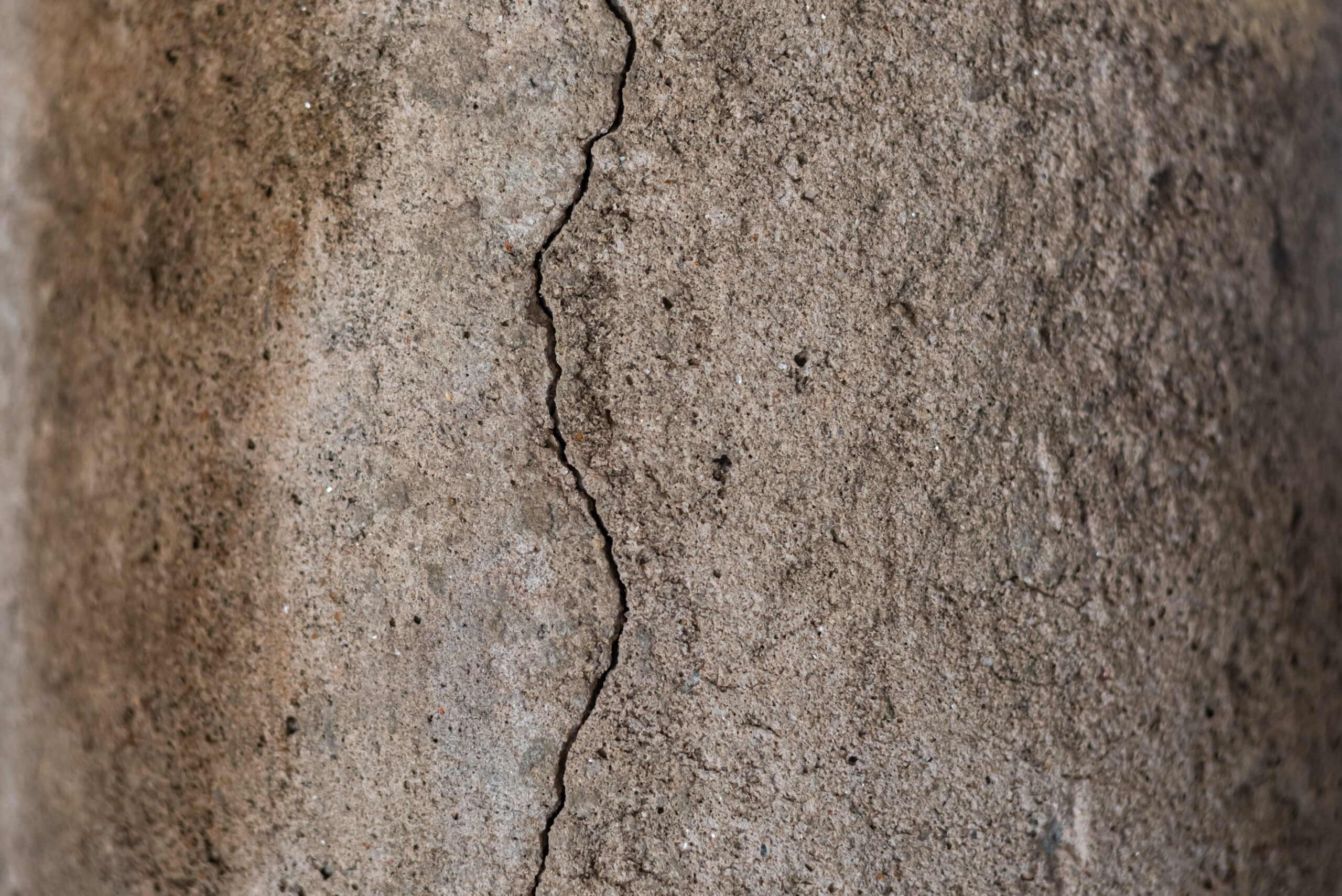
Cracks in basement walls are one of the most alarming signals a building owner can see. Basement walls are an extension of the foundation and play a critical role in ensuring the stability of the entire structure. Therefore, any cracks in these walls require immediate attention. But is every crack dangerous? The answer depends on many factors: the nature of the crack, its width, development dynamics, and the cause of origin.
Why Cracks Appear in Basement Walls
Cracks in basement walls can occur for various reasons, and correctly identifying the source of the problem is the foundation for effective repair:
- Uneven foundation settlement — one of the most common causes. If the soil under different parts of the building has different load-bearing capacities, the foundation settles unevenly, leading to cracks. According to studies, uneven soil settlement is the cause of over 60% of cases of cracks in basement walls.
- Soil and groundwater pressure — lateral soil pressure on basement walls, especially with high groundwater levels, can lead to horizontal or inclined cracks.
- Frost heaving of soils — when water in the soil freezes, it expands, creating additional pressure on the basement walls.
- Construction technology violations — low-quality concrete, insufficient reinforcement, incorrect compaction of the concrete mix.
- Design errors — incorrect load calculation, incorrectly determined foundation depth.
- Structural overloading — adding floors, installing heavy equipment without prior load-bearing capacity calculation.
How to Determine the Danger of Basement Wall Cracks
Not all cracks are equally dangerous. For proper risk assessment, you should pay attention to several key characteristics:
- Direction of the crack — vertical cracks often indicate material shrinkage or thermal deformations; horizontal ones — lateral soil pressure; diagonal ones — uneven foundation settlement.
- Crack width — cracks less than 1 mm wide are usually not critical. If the width exceeds 2–3 mm, it is already an alarming signal. According to DBN V.2.6-98:2009 (or equivalent standards), for reinforced concrete structures, the maximum permissible crack width should not exceed 0.5 mm.
- Development dynamics — the main indicator of danger. If a crack increases in width or length over time, it indicates progressive structural deformation. Monitoring is done using control beacons.
- Through-cracks — cracks passing through the entire wall thickness are significantly more dangerous than surface ones.
- Presence of moisture — if water penetrates through a crack, it indicates a breach in waterproofing and requires immediate intervention.
If cracks are detected, it is recommended to conduct a technical inspection of the building to determine the causes and the degree of damage. Professional inspection of building walls and foundations allows accurately determining the cause of cracks and assessing the degree of danger to the building.
Consequences of Ignoring Cracks in Basement Walls
If measures are not taken in time, cracks in basement walls can lead to serious consequences:
- Progressive deformation — expanding cracks lead to distortions in walls and door/window openings of upper floors.
- Loss of load-bearing capacity — cracks in basement walls reduce the structure’s ability to withstand loads from upper floors.
- Moisture penetration — water enters the basement through cracks, causing dampness, mold, and fungus growth.
- Reinforcement corrosion — moisture penetrating through cracks causes corrosion of reinforcement, leading to further destruction of the concrete.
- Destruction of the entire building — in critical cases, cracks in basement walls can lead to the collapse of the entire structure.
Comprehensive building inspection allows identifying hidden defects and avoiding significant financial expenses in the future.
How to Repair Cracks in Basement Walls
The choice of repair method depends on the cause, nature, and degree of damage to the crack:
- crack injection — filling cracks with special polymer or cement-based compounds to restore the monolithic nature of the structure;
- wall strengthening — installing additional metal or reinforced concrete elements to restore load-bearing capacity;
- waterproofing — applying waterproofing materials to the inner or outer surface of walls to prevent moisture penetration;
- foundation strengthening — if cracks are caused by foundation issues, strengthening it is necessary;
- replacing damaged sections — in cases where individual wall sections have lost their load-bearing capacity.
Foundation strengthening is selected individually after analyzing the causes of damage, the type of foundation, soil conditions, and actual loads.
Frequently Asked Questions
Can I seal a crack in a basement wall myself?
Cosmetic sealing of small surface cracks is possible, but it won’t solve the problem if the crack is a consequence of structural deformation. If the foundation continues to deform, the crack will reappear. It is necessary to first conduct an inspection and eliminate the root cause.
How to distinguish a dangerous crack from a safe one?
The main criterion is dynamics. Install a control beacon (a strip of plaster or paper across the crack). If the beacon doesn’t break within 1–3 months — the crack is likely stable. If the beacon ruptures or the crack expands — this is a signal of progressive deformation requiring professional intervention.