

Facade Dampness: How to Identify the Cause and Resolve the Problem
Facade dampness is one of the most common and dangerous problems faced by property owners. Moisture penetrating the building structure destroys the insulation, causes reinforcement corrosion, promotes mold and fungus growth, and significantly reduces the thermal insulation properties of walls. Identifying the cause of dampness is a key stage that allows choosing the right repair strategy and avoiding recurring problems.
Main Causes of Facade Dampness
Facade dampness can be caused by various factors, which often act in combination:
- Waterproofing damage — breach of the waterproofing layer integrity at points of contact with windows, doors, parapets, as well as cracks in the plaster layer through which water penetrates.
- Capillary moisture wicking from the ground — water rises through the capillaries of wall materials from the foundation, especially if horizontal waterproofing is missing or damaged.
- Moisture condensation — when warm, humid air from inside the room meets a cold wall surface, condensation forms. This indicates insufficient insulation thickness or disrupted vapor permeability of the layers.
- Drainage system malfunctions — damaged or clogged gutters, improper water diversion from the facade lead to constant wall dampening.
- Facade system installation technology violations — improper ventilation gap design (for ventilated facades), absence or insufficient vapor barrier.
- Mechanical damage — cracks, chips, damage to cladding through which water enters the structure.
How to Determine the Cause of Facade Dampness
Searching for the source of moisture is a systematic process requiring a professional approach. Here are the main diagnostic methods:
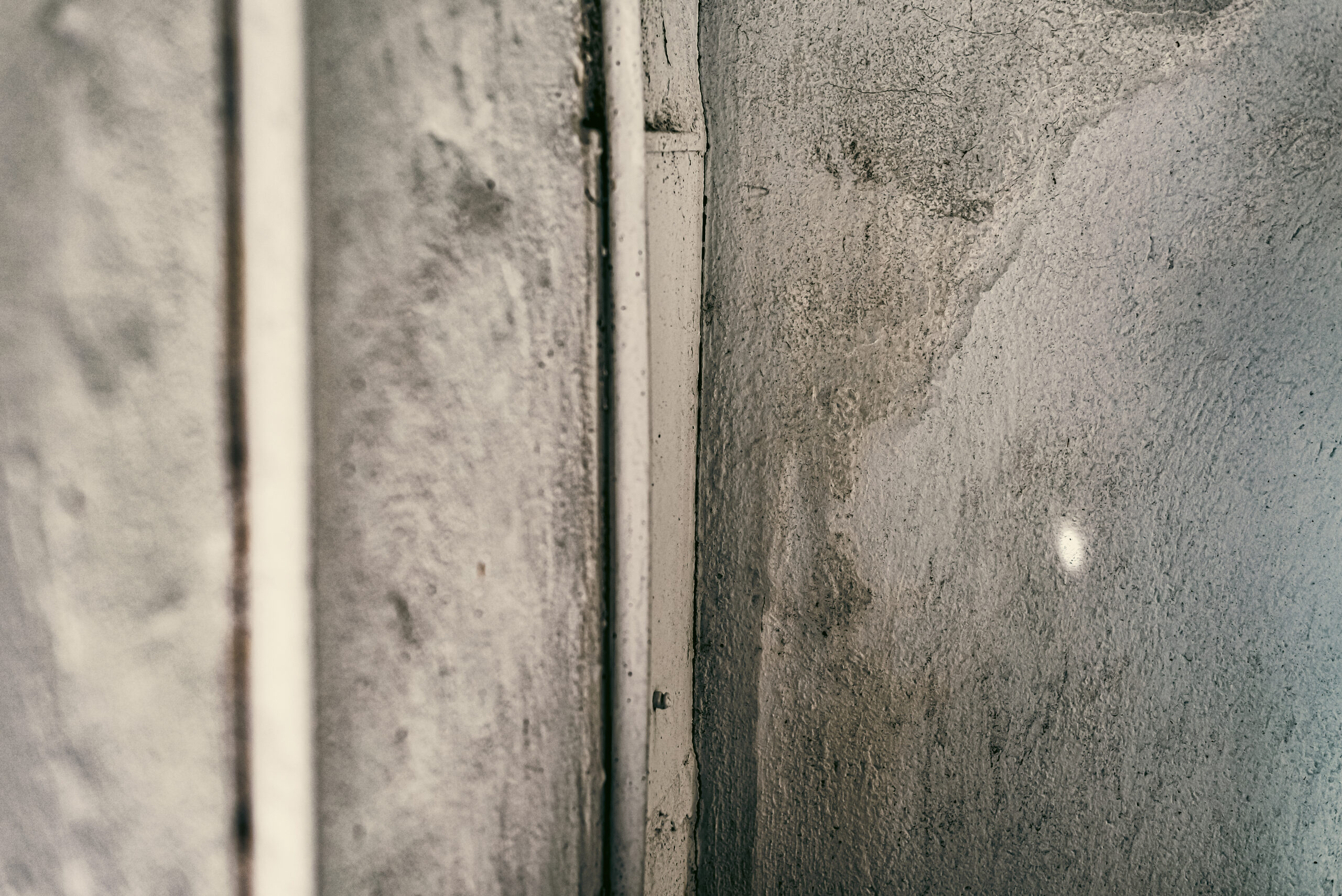
- Visual inspection — pay attention to dark spots on the facade, water traces, efflorescence (white salt deposits), peeling paint or plaster, and the presence of moss, lichen, or algae. These signs indicate constant dampness on facade sections.
- Interior inspection — wet spots on walls, peeling paint, musty smell, mold in corners are signals that moisture is penetrating from the outside.
- Measuring material moisture — using a moisture meter, specialists determine the humidity level in different facade sections and compare it with permissible standards.
- Thermal imaging inspection — areas with increased humidity have a different temperature, which allows identifying hidden zones of dampness. Thermography of exterior facades reveals places of so-called thermal bridges, where moisture condenses most actively.
- Analysis of drainage systems condition — checking gutters, pipes, and catch basins for damage or clogs.
Professional technical facade inspection allows accurately determining the source of moisture and developing a plan for its elimination.
Consequences of Facade Dampness for the Building
Ignoring the problem of dampness can lead to serious consequences:
- decreased thermal insulation properties — dampened insulation loses up to 50% of its thermal insulation properties, leading to increased heating costs;
- insulation destruction — mineral wool settles, expanded polystyrene degrades under the influence of moisture and frost;
- reinforcement and fastener corrosion — moisture causes rust that destroys structural metal elements;
- mold and fungus formation — a damp environment is ideal for microorganism growth, posing a threat to residents’ health;
- destruction of finishing layers — delamination of plaster, paint, and facing tiles;
- wall freezing — moisture freezing in winter expands and destroys materials from within.
Comprehensive building inspection allows identifying hidden dampness areas and avoiding significant restoration expenses.
How to Eliminate Facade Dampness
The choice of elimination method depends on the cause of dampness:
- waterproofing repair — restoring the airtightness of junctions, sealing cracks, applying hydrophobic compounds;
- drainage system restoration — repair or replacement of gutters, pipes, catch basins, ensuring proper water diversion from the facade;
- local facade repair — removing damaged plaster sections, replacing dampened insulation, restoring the protective layer;
- installation or restoration of vapor barrier — if the cause is moisture condensation due to disrupted vapor permeability of the layers;
- strengthening the drainage system — to divert groundwater from the foundation.
In cases where dampness is caused by systemic problems (e.g., incorrectly chosen insulation thickness or disrupted vapor permeability), partial or complete facade system replacement may be required.
Frequently Asked Questions
How to distinguish facade dampness from regular dirt?
Dampness traces usually have irregular shapes, a darker shade, and are accompanied by efflorescence (white salt deposits) or a greenish coating (algae, moss). Dirt, as a rule, is more uniform and lacks clear boundaries. For precise diagnostics, use a moisture meter or thermal imager.
Can I eliminate facade dampness myself?
Minor local problems (e.g., small damage to a junction or a crack) can be fixed independently. However, if the dampness is widespread, accompanied by mold, or the source of moisture cannot be determined — a professional inspection is necessary. Incorrect repairs can worsen the situation.