

Deterioration of the Facade Insulation System: Causes, Consequences, and Restoration Methods
A facade thermal insulation system is a complex set of materials and technological solutions that protects a building from cold, moisture, and mechanical impact. The deterioration of a facade insulation system is not just an aesthetic issue; it is a serious threat to the entire building. Damage to one of the system’s layers leads to the failure of the entire structure, a reduction in thermal insulation properties, and the gradual degradation of load-bearing walls. Understanding the causes of deterioration and timely restoration of the facade system is key to a building’s durability and safety.
Why Facade Insulation Systems Deteriorate
The deterioration of a facade insulation system can be caused by various factors, which often act in combination:
- Installation technology violations — incorrect insulation anchoring, insufficient reinforcement, failure to observe temperature conditions during work, or the use of incompatible materials. Such errors lead to cracks, delamination of the plaster layer, and deformation of the entire system.
- Moisture impact — water penetration through damaged waterproofing, cracks, or material pores. Water destroys the insulation, causes corrosion of fasteners, and leads to plaster delamination.
- Temperature fluctuations — constant expansion and contraction of materials cause micro-damage, which over time turns into cracks and delamination.
- Mechanical damage — impacts, vibrations, wind impact, or damage from falling objects.
- Biological growth — mold, fungi, algae, and moss destroy the surface layers of the facade system.
- Natural material aging — every material has a service life, after which it loses its functional properties.
- Incorrect system selection — using a facade system that is not suitable for the climatic conditions or the building type.
Designing external wall structures with facade thermal insulation is governed by building standards (such as DBN V.2.6-33:2018), which establish requirements for the design of such systems. Failure to follow these norms is one of the primary causes of premature facade failure.
How to Detect Facade Insulation Deterioration
Timely detection of deterioration helps prevent serious damage. Here are the key signs:
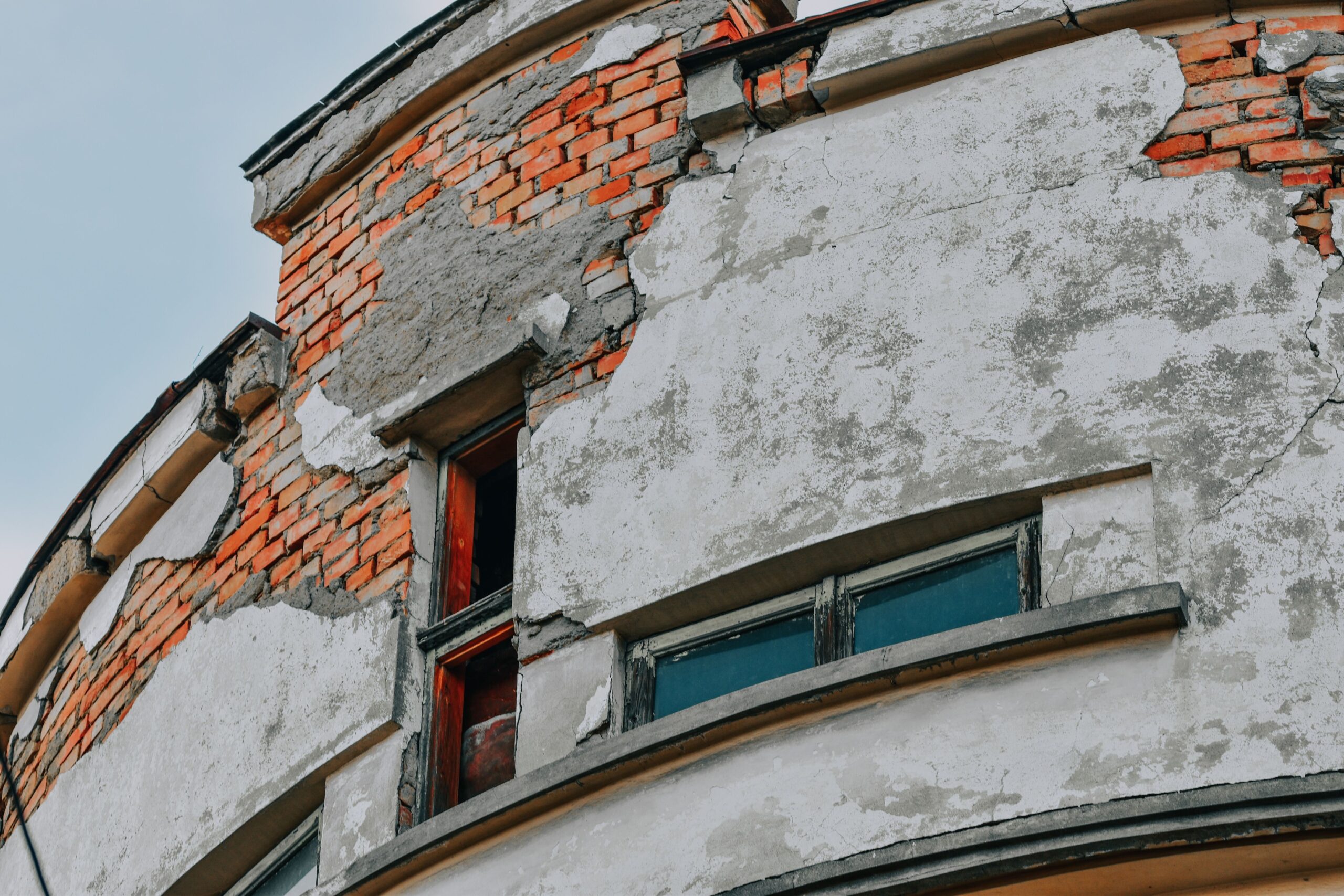
- Visual signs — cracks, blistering, plaster delamination, discoloration, moisture stains, or efflorescence.
- Delamination and falling fragments — especially dangerous for people near the building.
- Dampness and moisture traces — indicate a breach in the waterproofing.
- Progressive deformation — if damage increases over time, it is a signal of active deterioration.
- Mold and fungus growth — a sign of constant dampness within the construction.
For precise diagnostics, instrumental methods are used: thermal imaging to detect hidden defects and thermal bridges, moisture meters to determine material humidity levels, and non-destructive testing methods to assess the state of anchors and reinforcement. Professional technical facade inspection allows identifying hidden defects in the facade system and assessing the scale of damage.
Consequences of Facade Insulation Deterioration
Ignoring the deterioration of a facade system can lead to serious consequences:
- Significant reduction in thermal insulation properties — dampened or damaged insulation loses its functionality, leading to a 30-50% increase in heating costs.
- Deterioration of load-bearing walls — moisture penetrating through the damaged system causes corrosion of reinforcement and the degradation of concrete and masonry.
- Mold and fungus growth — posing a health risk to residents and damaging interior finishes.
- Threat to public safety — falling fragments of plaster or cladding from heights can cause serious injuries.
- Reduction in property value — a damaged facade significantly lowers the market value of the property.
Comprehensive building inspection helps identify hidden defects and avoid significant financial expenses in the future.
How to Restore a Facade Insulation System
The choice of restoration method depends on the system type and the degree of damage:
- Local repair — removing damaged plaster sections, replacing individual insulation boards, and restoring the reinforcement layer.
- Major repair — replacing a significant part of the facade system and restoring hydro- and vapor barriers.
- Complete replacement — in cases where most materials have lost their properties or the system was installed with critical violations.
- Structural strengthening — if deterioration is caused by deformation of load-bearing walls or foundation, prior structural strengthening is necessary.
Restoration of facade systems should be performed in accordance with regulatory standards and using high-quality materials. Local defects identified during inspection that prevent normal system operation are resolved through local repairs according to technical specifications.
Frequently Asked Questions
How often should the facade insulation system be inspected?
It is recommended to conduct a visual inspection at least twice a year (spring and autumn), as well as after heavy precipitation, storms, or significant temperature shifts. A professional inspection using instrumental methods is recommended every 3-5 years.
Can a facade insulation system be restored without complete replacement?
Yes, in many cases, local repair of damaged areas is possible. However, if the majority of the system has lost its properties or was installed with critical errors, full replacement is necessary. The final decision is based on the results of a technical inspection.