

Determination of Object Emergency State: How to Understand if Your Building Can Still Be Saved
When your house has been damaged by shelling, the first question that arises is: is it safe to enter? Can the damage be repaired, or is the building beyond restoration? Answers to these questions are provided by professional determination of an object’s emergency state. This is a comprehensive study that helps you make the right decision about the future fate of your property and protect you from potential danger.
What is the emergency state of a building and how does it differ from other damages
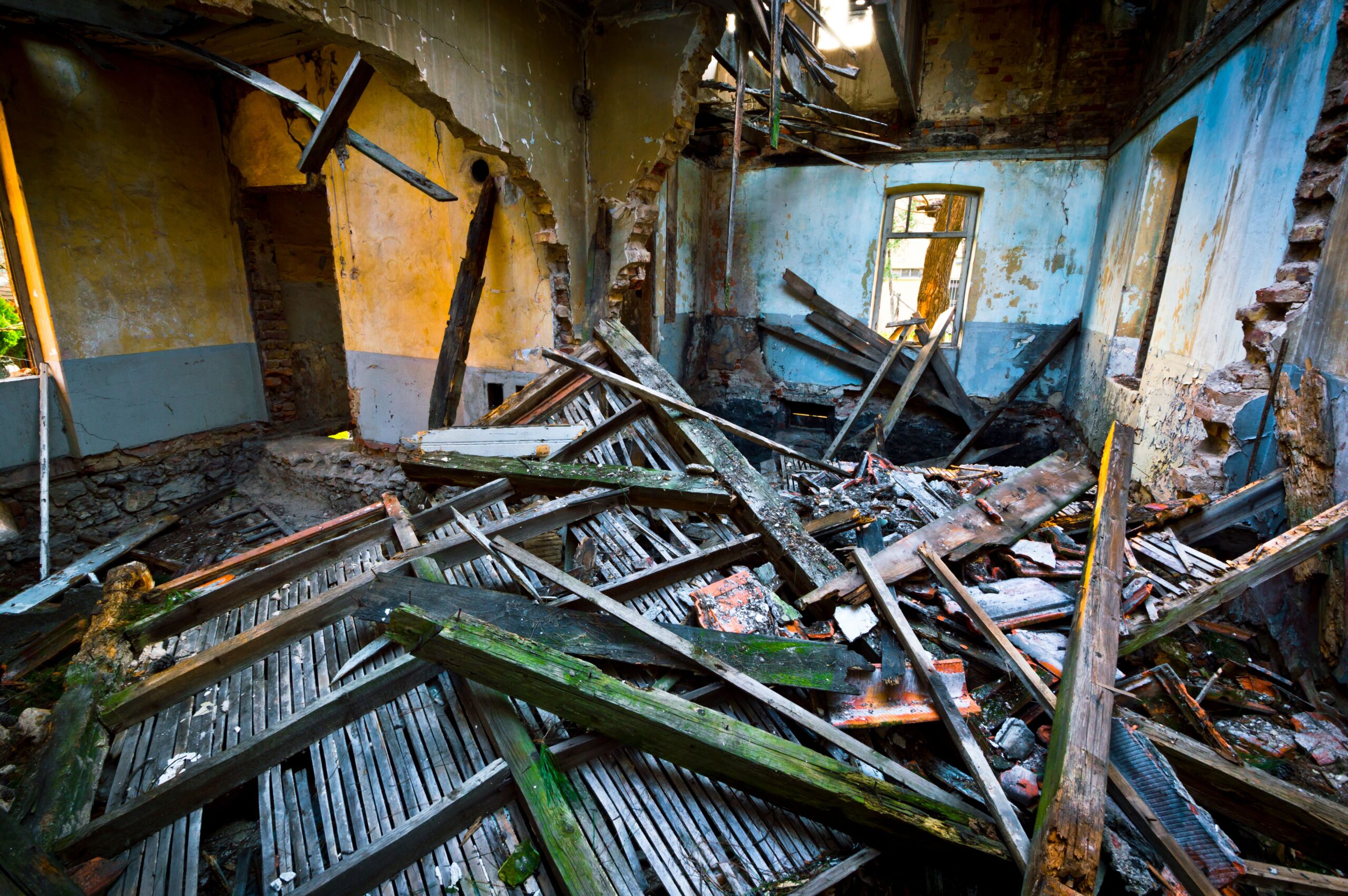
An emergency building is an object where above-ground structural elements, the foundation (or the house in general) do not meet safety operation requirements or are partially destroyed, and physical wear and tear is 81–100%. In other words, it is a state when the building has lost its ability to safely withstand loads and creates a real threat to human life and health. It is important to understand: emergency state is not about the “age” of the building, but about the loss of the ability to safely resist loads. A house can be a century old and at the same time be in a good technical condition, and vice versa — lose stability within a decade if it was built with violations or operated under unfavorable conditions.
How the emergency state of an object is determined: regulatory framework
In Ukraine, the criteria for emergency state are enshrined in State Building Norms (DBN) and a special Methodology for inspection of buildings and structures damaged as a result of emergency situations, hostilities, and terrorist acts, approved by the Ministry of Development of Communities and Territories of Ukraine. This Methodology defines the specifics of inspecting damaged objects, carried out with the aim of making a decision on the possibility of further operation of such objects and developing recovery measures. To determine emergency state, specialists evaluate a number of key parameters:
- damage to load-bearing structures — presence of deep cracks in walls, accompanied by shifts and opening that exceeds permissible deformations;
- loss of load-bearing capacity of floor slabs — their sagging or destruction of support nodes;
- settlement or tilting of the foundation — causing spatial deformations of the building box;
- corrosion damage to metal — capable of causing sudden failure;
- collapses and partial destruction of elements — in particular, cornices, balconies, panels.
Categories of the technical condition of a building
In accordance with DSTU 9273:2024 and other regulatory documents, the technical condition of building structures is divided into four categories:
- Normal state — structures fully meet safety requirements.
- Satisfactory state — there are minor defects that do not affect safety.
- Unfit for normal operation state — structures have significant damage, require major repairs or reconstruction.
- Emergency state — there is a high risk of partial or complete destruction of load-bearing structures, the building is unable to withstand operational loads and poses a threat to human life.
Technical inspection of damaged buildings helps to accurately determine the state category of your object.
How determination of object emergency state occurs in practice
The procedure for determining emergency state includes several stages:
- Preliminary analysis — study of existing design and as-built documentation, identification of visible damage and destruction zones.
- Visual and instrumental inspection — visual fixation of load-bearing structure defects (cracks, settlement, deformations), use of geodetic, ultrasonic, endoscopic, and other control methods. If necessary, laboratory testing of material samples.
- Calculation of technical state — damage category is determined based on inspection results in accordance with current DBN and methodologies for assessing the technical state of buildings.
- Preparation of conclusion — the final report indicates the degree of damage, state of individual structural elements, prognosis of further destruction or stability, recommendations: restoration, reinforcement, or demolition.
Owners and building managers, as well as authorized bodies (executive bodies of relevant village, settlement, city councils, or military administrations), can order inspection works. Learn about the stages of inspecting damaged buildings.
Three categories of damage to objects according to the methodology
The methodology defines 3 categories of object damage:
- Category I — estimated degree of damage up to 20%: routine repair is recommended.
- Category I–II — estimated degree of damage from 21 to 40%: routine or capital repair is recommended.
- Category II — estimated degree of damage from 41 to 80%: capital repair and reconstruction are recommended.
- Category III — estimated degree of damage from 81 to 100%: immediate demolition (liquidation) of the object is recommended.
What documents are needed for recognizing a building as emergency
For official recognition of a building as emergency, the following are required:
- inspection report of the residential building’s state with the corresponding conclusion;
- technical passport of the residential building with data on the state of structures.
The decision on emergency state is made not for individual apartments, but for the building as a whole.
Frequently Asked Questions
If a building is recognized as emergency, is it mandatory to demolish it?
Not always. In some cases, structural reinforcement and building restoration are possible. The final decision is made based on the experts’ technical conclusion.
Who pays for the inspection to determine the emergency state?
Inspection is financed by funds of individuals or legal entities, the state and/or local budget, as well as other funds in accordance with the established procedure.
What to do if I do not agree with the emergency state conclusion?
You have the right to contact another expert organization for a re-inspection or appeal the conclusion in court.
Conclusion
Determination of an object’s emergency state is not just a bureaucratic procedure, but a necessary step to ensure your safety and proper planning of restoration. Timely professional inspection helps to understand the real state of the building, avoid danger, and obtain the necessary documents for compensation. Follow our news regarding restoration of damaged housing and compensation programs. GlobalBud Ukraine is by your side — we will help conduct the inspection efficiently, quickly, and with full support at every stage.