


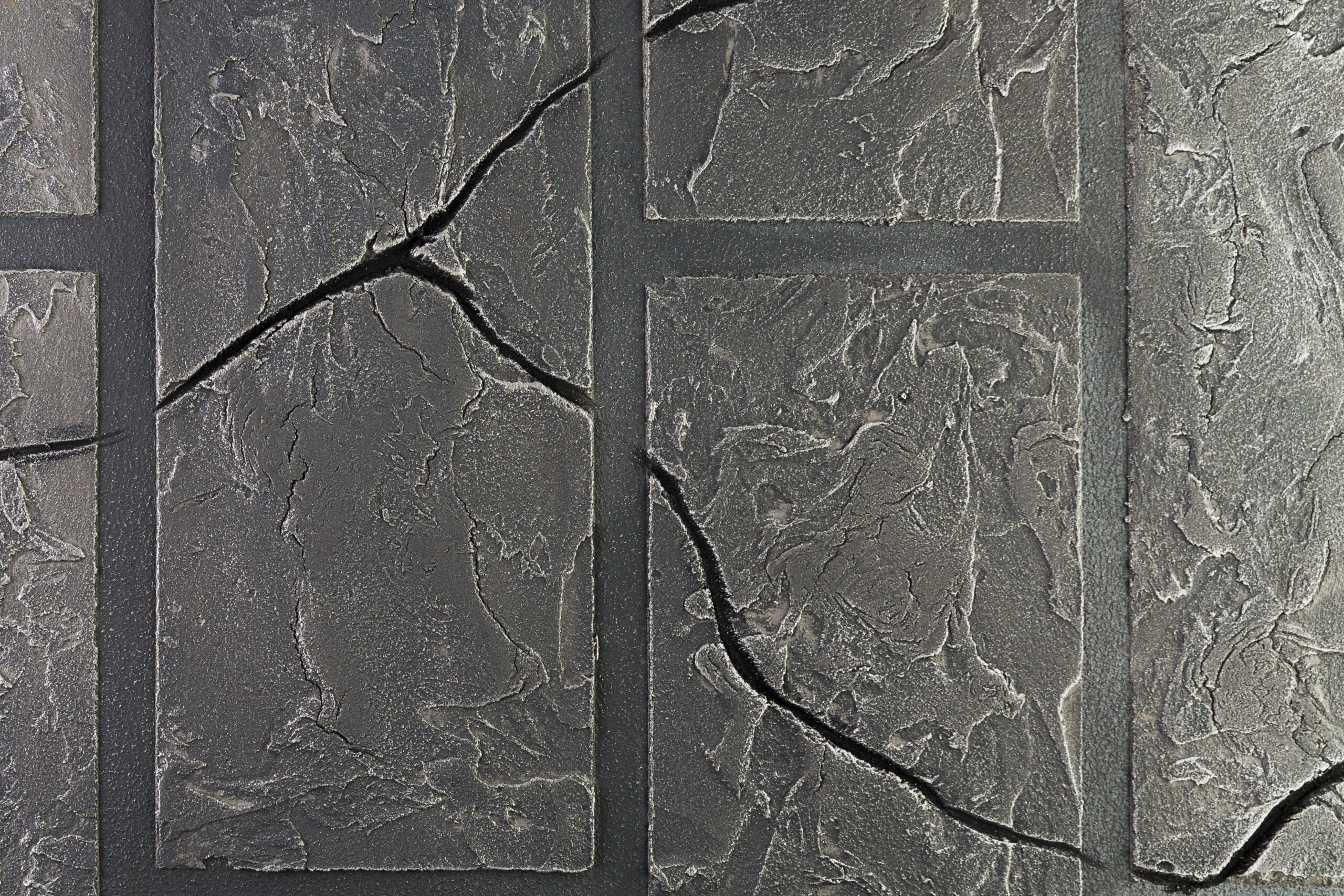
Cracks in Floor Beams: When Reinforcement Is Necessary
Floor beams are the foundation that supports the entire building. They absorb the load from floors, residents, furniture, and equipment. Therefore, any cracks in floor beams cause perfectly justified anxiety. But does every crack require immediate reinforcement? The answer depends on many factors — the width of the crack, its nature, development dynamics, and the type of the beam itself.
Why Cracks Appear in Floor Beams
Cracks in beams can occur for various reasons, and understanding these reasons is the key to correctly assessing the danger:
- overloading — exceeding design loads, changing the functional purpose of the room, installing heavy equipment;
- design errors — incorrect calculation of beam cross-section, insufficient reinforcement (for reinforced concrete beams);
- construction technology violations — use of poor-quality materials, improper installation, violation of concrete hardening conditions;
- support deformations — foundation settlement, bearing wall deformations that create additional stresses in the beams;
- reinforcement corrosion — rust tears the concrete from within, causing longitudinal cracks along the reinforcing bars.
Which Cracks Require Immediate Reinforcement
Not all cracks are equally dangerous. Critical signs indicating that a beam requires reinforcement:
- width of opening over 0.4 mm — for reinforced concrete structures, this is an alarming signal;
- the crack passes through the entire height of the beam — through-cracks are significantly more dangerous than surface ones;
- the crack is located in the tension zone — for beams, this is the lower part, where the greatest stresses occur;
- the crack is progressing — increasing in width or length over time;
- the crack is accompanied by beam deflection — this indicates a loss of load-bearing capacity;
- there are signs of reinforcement corrosion — rusty spots, exposed reinforcement.
Control beacons are used to monitor the dynamics of cracks. If the crack width increases, the beacon breaks — a signal that the deformation is progressing. Professional inspection of building floor systems allows accurately determining the nature of the crack and assessing the need for reinforcement.
Methods of Floor Beam Reinforcement
If an inspection shows that a beam needs reinforcement, specialists offer different methods depending on the type of beam and the degree of damage: For reinforced concrete beams:
- Reinforcement with composite materials — carbon fiber (carbon laminates) or fiberglass, which are glued to the tension zone of the beam. This is a modern method that does not increase the structure’s thickness and can be installed in 1–2 days.
- Shotcreting — applying an additional layer of concrete onto a cleaned and primed surface.
- Installation of additional reinforcement — placing new bars in grooves with subsequent concreting.
- External reinforcement with metal elements — installing metal channels or I-beams under the beam.
For wooden beams:
- Increasing the cross-section — installing additional wooden plates on the sides or bottom of the beam.
- Installation of metal plates — steel plates that are fixed with bolts.
- Installation of additional supports — posts in the span that reduce the effective length of the beam.
- Replacement of the damaged beam — in cases where the beam has lost more than 50% of its load-bearing capacity.
The complex of work on beam reinforcement includes setting up scaffolding, unloading the beams, and restoring the structural element. Technical inspection of buildings and structures is the first step to choosing the correct reinforcement method.
When Reinforcement Is Not Needed
In some cases, cracks are not dangerous:
- Surface hairline cracks (less than 0.2 mm wide) — they often occur due to concrete shrinkage or minor temperature fluctuations.
- Stable cracks — which do not change over a long period (half a year to a year).
- Cracks in the plaster layer — if they do not penetrate into the beam body.
However, a final conclusion can only be made by a specialist after conducting an instrumental inspection.
Frequently Asked Questions
Can the building be used with cracks in floor beams?
If cracks are stable and their width does not exceed permissible standards, operation is possible with periodic monitoring. If cracks are progressing or their width exceeds critical values, operation is dangerous until reinforcement is completed.
Can I seal a crack in a beam myself?
Cosmetic sealing of a crack is possible, but it will not solve the problem if the root cause is not eliminated. If the beam continues to deform, the crack will reappear. It is necessary to first conduct an inspection and determine the cause.