

Deterioration of Metal Roof Trusses: Causes, Diagnostics, and Restoration Methods
Metal roof trusses are the foundation that supports the entire roofing system. They provide rigidity and stability to the roof, bearing loads from the roofing assembly, snow, wind, and operational impacts. The deterioration of metal trusses is a critical issue that can lead to roof deformation, leaks, and even collapse of the entire structure. The most dangerous aspect is that this process often occurs hidden, especially in hard-to-reach connection joints.
Why Metal Roof Trusses Deteriorate
Metal trusses can deteriorate for various reasons, which often act in combination. The main factors include:
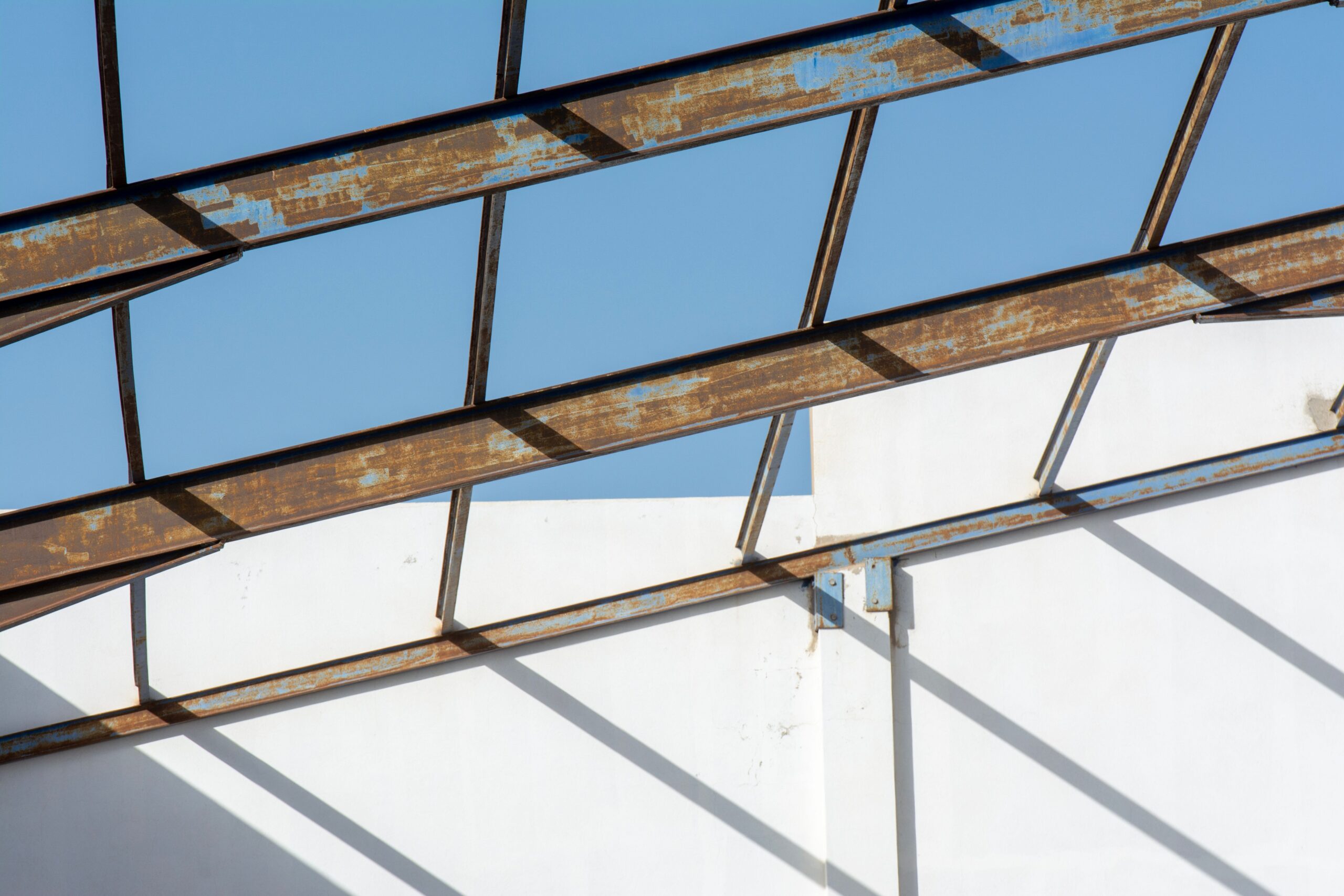
- Metal corrosion. The primary cause of gradual strength loss. Corrosion is particularly dangerous where trusses rest on walls or columns, where moisture accumulates most frequently. Rust reduces the effective cross-section of elements, leading to a loss of load-bearing capacity.
- Exceeding design loads. A change in building use, installation of heavy equipment on the roof, adding floors, or excessive snow loading can lead to truss overloading.
- Weld defects. Improper welding technology, cracks, or lack of penetration in connection nodes significantly reduce structural strength. Truss gusset plates operate under complex conditions with stress concentration near the welds.
- Damage to protective coatings. Scratches and paint chips expose the metal to moisture, triggering corrosion processes.
- Fire and high temperatures. When steel is heated to 550–600 °C, deformations become significant, which can lead to irreversible changes in truss geometry.
How to Detect Metal Truss Deterioration at an Early Stage
Timely detection of the problem allows avoiding critical consequences and expensive repairs. Here is what to watch for during inspection of the roof and attic space:
- visual signs — rust, peeling paint, cracks in truss elements, visible deformation (sagging);
- roof sagging — if the roof visually settles or has a wavy surface, it indicates a loss of truss load-bearing capacity;
- cracks at bearing points — the appearance of cracks in walls or columns where the truss rests on the structure may indicate excessive load transfer;
- creaking and cracking — the appearance of unusual sounds under load (wind, snow) may indicate deformation or connection failure.
For precise diagnostics, specialists conduct a comprehensive inspection in accordance with regulatory requirements, including verification calculations and assessment of technical condition. Inspection of building structures allows detecting hidden defects before they become critical.
How Truss Deterioration Affects Building Safety
The consequences of metal truss failure can be catastrophic for the entire building:
- loss of load-bearing capacity — with significant corrosion or deformation, a truss may lose its ability to withstand loads, leading to roof failure;
- roof deformation — sagging trusses lead to compromised roofing assembly integrity, formation of “snow pockets,” and leaks;
- damage to interior spaces — roof failure can lead to damage to ceilings, walls, engineering systems, and property;
- risk of collapse — in critical cases, truss failure can lead to roof collapse and damage to lower levels.
Methods for Restoring and Strengthening Metal Trusses
The choice of method depends on the cause and degree of damage. In most cases, reinforcement of metal structures is carried out during restoration or repair work:
- reinforcing truss elements — installing additional plates, angles, or channels welded or bolted to the main structure;
- truss duplication — installing additional parallel trusses next to the existing ones to reduce the load on each;
- truss relief — before reinforcement, perform truss relief work (e.g., dismantling an emergency suspended ceiling);
- replacement of damaged sections — cutting out destroyed fragments and welding in new elements with reinforcement of weld joints;
- anti-corrosive protection — cleaning and painting trusses to stop corrosion processes.
It is important to remember: local repair without eliminating the cause of deterioration will be ineffective. It is necessary to first conduct an inspection and identify the true cause of the problem.
Prevention of Metal Truss Deterioration
It is much easier to prevent deterioration than to spend money on restoration:
- Regular inspection. Periodic visual monitoring of truss conditions, especially at bearing points and in high-humidity zones.
- Timely anti-corrosive protection. Regular updating of protective coatings.
- Load control. Do not exceed design loads on the roof, avoid excessive accumulation of snow and heavy objects on the roof.
- Ensure ventilation. Proper attic space ventilation reduces humidity and corrosion risk.
Frequently Asked Questions
Can I determine independently if trusses require strengthening?
Visual signs (noticeable sagging, rust, cracks) can be noticed by yourself. However, a precise assessment of load-bearing capacity and the need for strengthening can only be provided by a specialist after conducting instrumental measurements and calculations.
How long does it take to strengthen metal roof trusses?
The duration depends on the volume of work and the chosen strengthening method. Local repairs may take 1–3 days, while major strengthening with additional truss installation can take up to several weeks.