


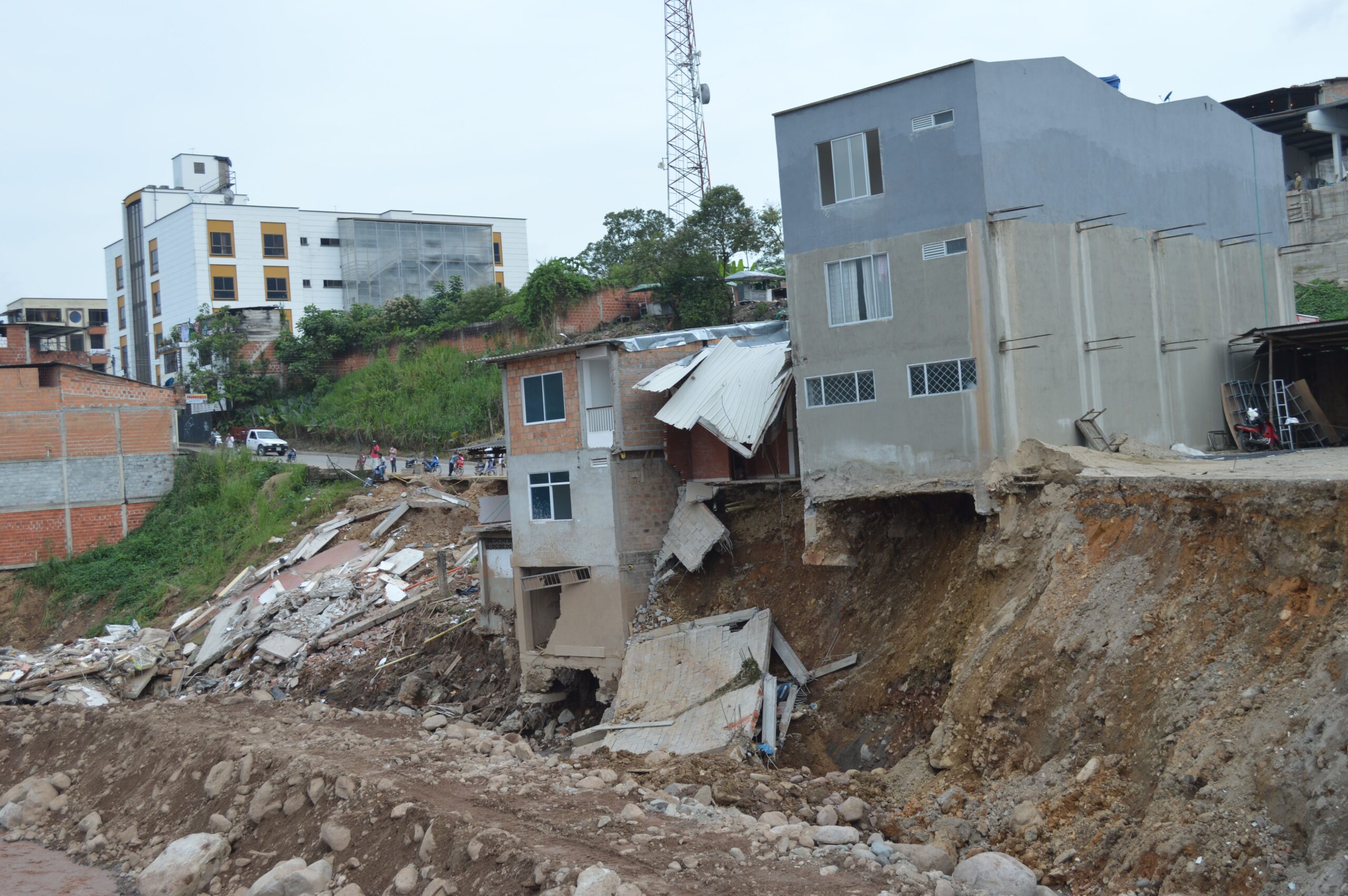
Soil Sinkhole Near a Building: Causes, Dangers, and Repair Methods
A soil sinkhole near a building is one of the most dangerous defects that can threaten the integrity of the entire structure. Unlike gradual settlement, a sinkhole happens suddenly and often without prior warning signs. It can be caused by the formation of voids under the foundation, soil erosion, or karst processes. This situation poses a direct threat to the building — it may lose support, leading to cracks, distortions, and even collapse.
Why Soil Sinkholes Occur Near Buildings
A soil sinkhole is a sudden vertical movement of the earth’s surface due to the formation of voids within the soil strata. The reasons for this phenomenon can vary:
- Soil erosion by water — water accumulating near the foundation or flowing underneath it washes away soil particles, creating voids. This is particularly relevant for granular/sandy soils.
- Karst processes — natural dissolution of limestone rocks by groundwater leads to the formation of voids that can eventually collapse.
- Construction technology violations — insufficient soil compaction, improper drainage installation, or lack of geological surveys.
- Changes in groundwater levels — a sudden drop or rise in the water table can cause voids to collapse.
- Nearby construction — vibrations from construction work, excavation, or excessive soil loading.
- Utility damage — a water main or sewer rupture erodes the soil, creating voids.
How Sinkholes Affect a Building
A soil sinkhole near a building is an extremely dangerous phenomenon with serious consequences:
- sudden loss of foundation support — part of the foundation may lose its support, leading to structural failure;
- uneven building settlement — one part of the building may settle more than another, leading to cracks and distortions;
- cracks in walls and foundation — sudden settlement causes cracks to open that can progress rapidly;
- distortion of door and window openings — doors and windows stop closing, and gaps appear;
- damage to engineering systems — foundation deformation entails damage to pipes, cables, and gas lines;
- risk of collapse — in critical cases, soil sinkholes can lead to partial or total building collapse.
When a soil sinkhole is detected, immediate measures must be taken. The longer the problem remains unattended, the more severe the consequences will be.
How to Detect a Soil Sinkhole Near a Building
Timely detection of a sinkhole allows preventing catastrophic consequences. Here is what to watch for:
- sudden appearance of depressions or sinkholes on the ground surface near the foundation;
- cracks in the soil — especially those that appeared suddenly and are expanding rapidly;
- accumulation of water in unusual places — may indicate the formation of voids;
- sudden appearance of cracks on walls — especially if they appeared without visible cause;
- floor settlement — sudden settlement of the floor in individual rooms.
For precise diagnostics, specialists conduct a comprehensive inspection, which includes ground-penetrating radar (GPR) scanning of the soil to detect hidden voids, assessing the foundation and structure state, analyzing soil, and determining the causes of the sinkhole. Comprehensive building inspection is a key stage in identifying hidden soil and foundation defects.
How to Eliminate a Soil Sinkhole Near a Building
The choice of elimination method depends on the cause and scale of the sinkhole:
- Soil injection — injecting special polymer or cement compounds into voids to fill empty spaces and compact the soil. This is one of the most effective methods, especially in cases where micro-cracks, voids, or local damage have appeared in the construction.
- Soil strengthening under the foundation — restoring soil load-bearing capacity through compaction or replacement.
- Foundation reinforcement — increasing foundation width, installing additional supports to restore load-bearing capacity.
- Soil replacement — in cases where the soil has completely lost its load-bearing capacity.
- Drainage system restoration — ensuring proper water diversion to prevent further erosion.
Sinkhole remediation measures must be performed under the control of qualified specialists. Filling voids independently without prior inspection can be dangerous.
Prevention of Soil Sinkholes
It is much easier to prevent a sinkhole than to spend money on eliminating its consequences:
- conducting engineering-geological surveys before construction — identifying karst cavities, collapsible soils, and other dangers;
- ensuring proper water drainage — timely water diversion from the foundation prevents soil erosion;
- regular inspection of soil near the foundation — allows detecting the first signs of a sinkhole;
- monitoring utility conditions — timely detection and elimination of water supply and sewage leaks.
Frequently Asked Questions
Can a soil sinkhole be detected before it occurs? In some cases, yes. With the help of ground-penetrating radar (GPR) scanning and engineering-geological surveys, hidden voids in the soil can be detected before they cause a sinkhole. Professional inspection allows identifying such threats at an early stage. What should be done if a soil sinkhole has already occurred? Immediately cordon off the dangerous area to keep people safe. Report the problem to the building manager or the appropriate services. Order a professional inspection to determine the scale of the sinkhole and develop a repair plan. Do not attempt to fill the sinkhole yourself — it can be dangerous.