

Inspection of War-Damaged Real Estate in Ternopil: Technical Audit and Damage Recording
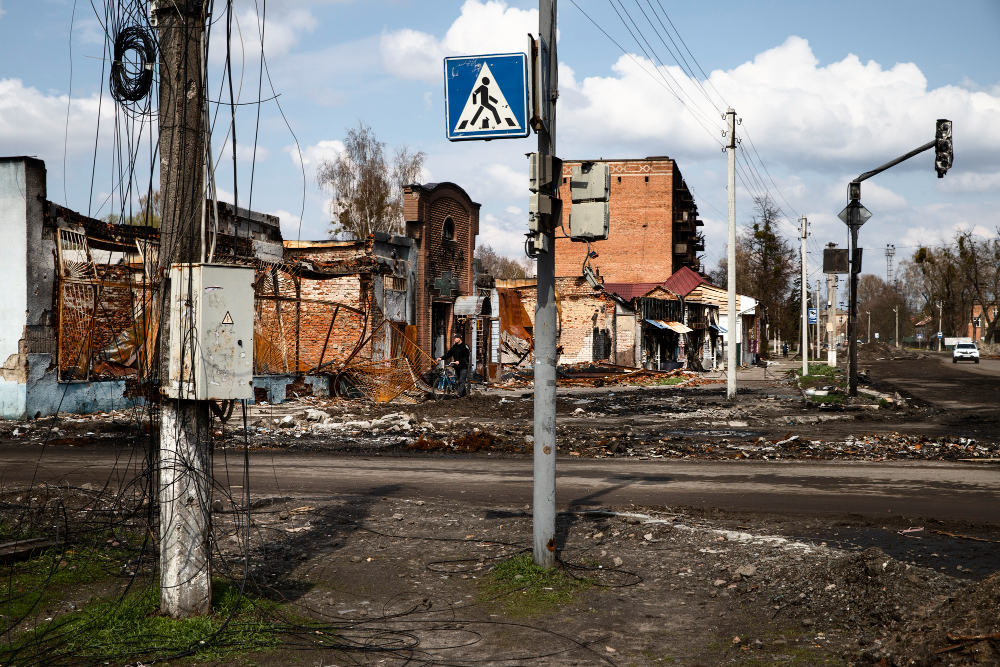
The procedure for inspecting real estate in Ternopil that has been damaged by military actions and missile strikes is a strictly regulated engineering process aimed at determining the actual technical condition of the damaged object. The main goal of this audit is to record the loss of load-bearing capacity of structures after explosions or fires, establish the category of war damages, and determine the economic and technological feasibility of further reconstruction. Based on the requirements of current state building codes (DBN V.1.2-14:2018) and methodologies for assessing the consequences of armed aggression, the expert assessment minimizes the owner’s legal and financial risks, creating a legitimate basis for receiving state compensation or starting reconstruction.When the Inspection Service is Required
Initiating a technical audit of war-damaged assets is mandatory in cases where the object has suffered partial or complete destruction as a result of armed attacks. The main triggers for ordering an expertise are:- forming an evidence base for receiving payments under the e-Vidnovlennya program or compensation from international funds for damaged property;
- preparing the object for large-scale reconstruction or major repairs in order to restore its operational safety after shelling;
- justifying the impossibility of restoration, which precedes the procedure of writing off the destroyed asset from the enterprise’s balance sheet;
- obtaining permits for dismantling emergency structures (more details on preparing a technical report on destruction can be found in the relevant section).
What a Comprehensive Inspection Includes
A professional technical inspection of real estate objects includes a multi-vector analysis of damaged structural elements. Experts conduct:- an assessment of the load-bearing frame — checking foundations, columns, crossbeams, and floor slabs for through-cracks from blast waves, concrete delamination, and exposed reinforcement;
- an analysis of enclosing structures — recording the displacement of wall panels, destruction of brickwork from shrapnel, and deformation of window and door openings;
- instrumental control — using sclerometers to determine the residual strength of concrete after thermal impact by non-destructive methods, ultrasonic flaw detection to find hidden cavities;
- a check of engineering networks: establishing the degree of damage to utilities, ventilation systems, water supply, and electrical grids as a result of hostilities.
How Engineering Work is Conducted
The technical audit of destruction is performed by certified engineers according to a strictly defined protocol, which eliminates subjective assessments:- Preliminary stage: studying the available design-estimate and inventory documentation (technical passports, BTI plans), collecting data on the nature of the military impact.
- Visual inspection (field stage): a continuous walk-through of the object, photo and video recording of all identified defects from explosions and fires, compiling draft defect sheets (visual inspection acts).
- Instrumental inspection: conducting engineering measurements, geodetic verification of the deviations of load-bearing structures from the vertical after a shock wave impact.
- Desk processing: performing verification calculations of the load-bearing capacity, classifying the object by the degree of damage (categories I-IV according to the methodology for assessing the consequences of armed aggression).
What the Customer Receives Based on Audit Results
The final product is an official technical report on the inspection of the damaged object. This document contains a detailed defect act, the results of instrumental measurements, a calculation section, and a clear expert conclusion. The report determines the possibility of further safe reconstruction of the object or indicates the need for its complete dismantling due to critical destruction. The document is mandatorily registered in the Unified State Electronic System in the Construction Sector (EDESSB), which gives it absolute legal force before state bodies, courts, and recovery funds.Cost and Work Execution Timelines
Pricing and report preparation timelines are formed exclusively after the initial analysis of the scale of destruction. The final cost is influenced by the construction volume of the damaged structure, the level of mine or structural danger of being at the facility, the remoteness of the location within Ternopil and the region, as well as the need for specialized laboratory testing of material samples. Timelines are tied to the complexity of the war damages and the volume of desk calculations.FAQ
Does an uncertified engineer have the right to conduct such an inspection? No. According to the law, technical reports on war-destroyed property can only be signed by specialists who hold a qualification certificate as an expert in the technical inspection of buildings and structures. What is the validity period of a technical report? The technical report reflects the condition of the object at the time of the inspection. However, if the damaged object remains un-conserved and continues to deteriorate under the influence of precipitation, an additional inspection may be required before starting reconstruction. Is it possible to conduct an audit if only the foundation remains of the building as a result of a direct hit? Yes. In this case, complete (category IV) destruction of the above-ground part is recorded, and the foundation is inspected to determine the possibility of its use for erecting a new structure.Need an initial consultation?
We will help solve the issue within as little as 1 day