

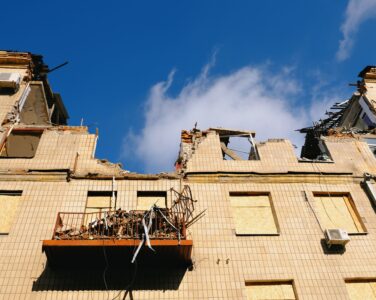
Inspection of Destroyed Real Estate in Odesa: Features of Coastal Development Diagnostics
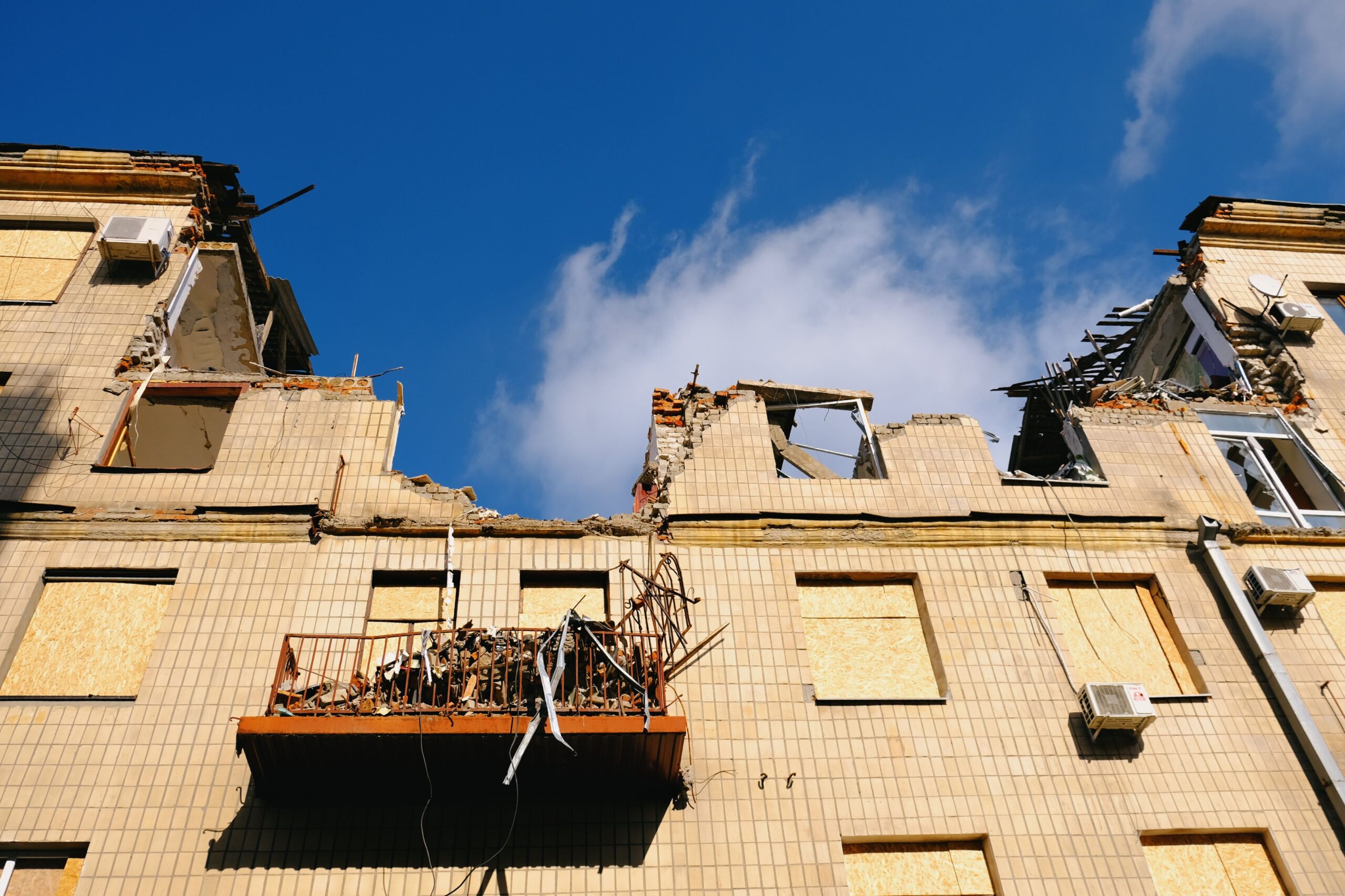
The Odesa region, despite its relative remoteness from the frontline, has experienced a series of missile strikes and damage to infrastructure and residential facilities. The specifics of Odesa include dense historical development, proximity to the sea coast, which affects the moisture regime of structures, and the presence of buildings constructed using various technologies—from limestone coquina blocks to modern monolithic frames. Technical inspection of destroyed real estate in Odesa, in addition to standard procedures, requires taking these local factors into account, as well as the presence of basements, which are often used as shelters.
When Inspection of Damaged Real Estate in Odesa is Necessary
The main grounds for ordering a technical inspection of destroyed objects in Odesa are:
- recording damage caused by missile strikes or falling debris for subsequent application for compensation under the eRecovery (“єВідновлення”) program;
- assessing the technical condition of buildings affected by blast waves to make a decision on major repairs, reconstruction, or demolition;
- the need to obtain an official inspection act for submission to local self-government bodies or insurance companies;
- planning restoration works on cultural heritage objects or in historical quarters of the city, where additional restrictions apply.
Inspection work is carried out in areas where active phases of hostilities are absent, in accordance with the requirements of current legislation.
Specifics of Inspection in Odesa: Moisture, Coquina, and Basements
Conducting a technical inspection in Odesa has a number of specific features that affect the methodology and scope of work:
- Increased moisture of structures. Proximity to the sea and high groundwater levels contribute to capillary moisture absorption. This leads to accelerated reinforcement corrosion, destruction of limestone blocks, and the loss of thermal insulation properties of materials. Moisture meters are mandatory during the inspection to determine the actual level of structural dampness.
- Structural features of historical development. Many buildings in Odesa are built of coquina (shell limestone), a material with low mechanical strength and high porosity. A blast wave can cause invisible micro-cracks in this material, which over time lead to spalling and loss of load-bearing capacity. Instrumental diagnostics of such structures require the use of ultrasonic testing methods.
- Condition of basement premises. Basements in Odesa buildings are often used as shelters. Their inspection is critical for assessing the safety of people staying inside. Airtightness, the condition of load-bearing structures, and signs of flooding are checked.
Stages of Technical Inspection in Odesa
The workflow includes the following consecutive stages:
- Preparatory stage. Review of available design and as-built documentation (if any). Identification of zones with the greatest destruction and planning of inspection routes.
- Visual inspection. Recording visible defects: cracks, deformations, spalling, moisture traces, and corrosion. Special attention is paid to structural joints and areas around window and door openings.
- Instrumental inspection. Performing geodetic measurements to determine vertical and horizontal deformations. Conducting ultrasonic testing of concrete and masonry. Thermal imaging diagnostics to detect hidden defects and thermal bridges.
- Desk study. Analysis of the data obtained, calculation of the residual load-bearing capacity of structures. Determination of the technical condition category according to DSTU 9273:2024.
- Preparation of a technical report. Drafting conclusions and recommendations regarding the further operation, restoration, or dismantling of the object.
Result of the Inspection and Its Legal Significance
The customer receives a technical report containing a detailed assessment of the building’s technical condition, a list of defects with references to DBNs, calculations of residual load-bearing capacity, and a conclusion on the technical condition category (operable, limited operable, emergency, unfit for operation). The report is registered in the Unified State Electronic System in the Construction Sector (EDESSB), which gives it legal validity for submission to local self-government bodies, the State Emergency Service (SES), or court. Please note that the process of preparing a technical report on the destruction of a building or structure is a separate stage that requires a professional approach and proper execution. GlobalBud Ukraine provides a full cycle of technical inspection of real estate objects with subsequent registration of the report in EDESSB.
Cost and Timeframe of the Inspection
The price for conducting a technical inspection of destroyed real estate in Odesa is determined individually for each object. The main pricing factors are the building’s area, the degree of destruction, the number of structural elements requiring instrumental diagnostics, and the need to use special equipment to work in conditions of high humidity. The timeframe for completing the work depends on the scale of damage and the complexity of the inspection.
Frequently Asked Questions
Is it possible to inspect destroyed real estate in Odesa without design documentation?
Yes, the inspection is carried out based on the actual condition of structures. The lack of design documentation is not an obstacle to performing the work. However, having a technical passport or archival drawings allows for higher accuracy in calculating the residual load-bearing capacity.
What documents are needed to receive compensation for damaged housing in Odesa?
To receive compensation under the eRecovery program, a commission inspection act compiled by an authorized local self-government body is required. A technical report by an independent expert registered in EDESSB can serve as additional evidence of the extent of damage in the event of an appeal against the commission’s decision.
Is the historical value of the building taken into account during the inspection?
Yes, for cultural heritage objects or buildings in historical quarters, additional requirements regarding inspection methods and permissible interventions apply. This can affect the scope of work and the cost of the inspection.