

Technical Inspection of War-Damaged Real Estate in Rivne: Expertise and Reporting
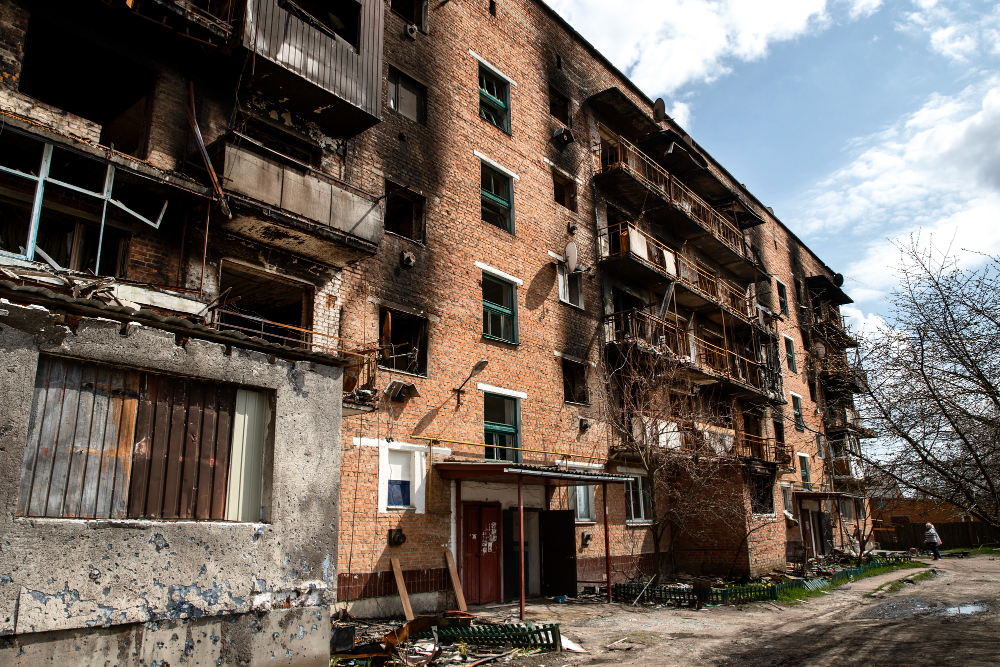
An objective inspection of real estate in Rivne that was destroyed or damaged as a result of hostilities and missile strikes is a critically important engineering procedure for owners of industrial, commercial, and residential objects. The process involves a comprehensive diagnostics of the technical condition of the remaining structures to make economically sound decisions regarding reconstruction or obtaining compensation. Compliance with the DBN requirements during the audit guarantees investors and owners the legal purity of documentation necessary for recording war damages, writing off property, its conservation, or obtaining financing (including state programs) for restoration work.
Purpose and Triggers for Initiating the Expertise
Involving independent engineers to assess war-induced damage is initiated to minimize financial losses and protect the owners’ rights. Conducting an expertise is objectively necessary for:
- Documentary confirmation of the fact and scale of destruction from the Russian armed aggression for the Register of Damaged and Destroyed Property (RPZM), insurance companies, or obtaining state payouts.
- Deciding on the feasibility of repair after a direct hit or blast wave impact. If the load-bearing frame is deformed beyond normative limits, it is safer to carry out dismantling and demolition of buildings.
- Attracting investments or bank crediting for a reconstruction project (banks and international funds require a legitimate technical report).
- Developing a project for strengthening structures before starting construction and installation work.
Algorithm of Engineering Inspection
The process of assessing war damages in Rivne is carried out by specialized experts and is based on a multi-stage approach. Our service for technical inspection of real estate objects is performed according to the following scenario:
- Analysis of the documentary base: collecting initial data, studying working projects (if any), geological reports, and materials from inspections conducted before the destruction.
- Visual diagnostics: identification of zones of maximum destruction from explosions and shrapnel, recording cracks, chips, floor slab deflections, and column deviations caused by the shock wave. A defect map is compiled.
- Instrumental flaw detection: physical and mechanical testing of building materials (checking the residual strength of concrete, brick, and rolled metal after fires or thermal impact).
- Desk stage and modeling: calculating actual loads that the elements of the building surviving the shelling can withstand, classification of operational suitability.
To obtain accurate data, experts use verified equipment. Thermal imagers are used to find hidden moisture zones, laser total stations for geodesic surveying of facade deviations, and magnetic detectors to determine the reinforcement pitch and rebar depth in concrete without destroying the structure.
Formation of Final Documentation
The result of the audit is an engineering and technical report that meets state standards. It contains a defect act indicating the volume of destruction due to hostilities, photographic materials, and results of laboratory and instrumental tests. The key element of the report is an expert conclusion with recommendations: the object is subject to restoration, partial dismantling, or complete demolition. The data is automatically entered by the engineer into the EDESSB registry, after which the document acquires the status of official legal evidence for obtaining compensation.
Pricing and Execution Timelines
The estimate for conducting the expertise is calculated individually for each object. Key pricing factors include the area and height of the blast-damaged building, the accessibility of elements for inspection (the need for special equipment or industrial alpinism to access destroyed floors), and the building density in the work area. Timelines for preparing documentation depend on the volume of desk calculations and the need for laboratory analysis of material samples.
FAQ
What is the object damage category?
This is a classifier defined by legislation (from I to IV) to assess the consequences of armed aggression. The first category means minor finishing defects, while the fourth means total destruction of load-bearing structures with no possibility of restoration.
Is it necessary to inspect the surviving parts of the building if only one wing is destroyed?
Yes. The shock wave or soil displacement during destruction could cause hidden deformations in visually intact blocks of the building. A comprehensive audit is mandatory.
Do you create a restoration estimate as part of this report?
The standard technical report includes only determining the volumes of damage from military actions. The reconstruction estimate is compiled separately by a cost engineer based on the defect act provided by us.