

Corrosion of Steel Building Elements: How to Detect and Stop Structural Deterioration
Corrosion of steel elements is not just rust on the metal surface; it is a destructive electrochemical process that invisibly but relentlessly reduces the building’s load-bearing capacity. According to experts, about 70% of structural damage in metal buildings is related to corrosion processes. Unlike concrete, where cracks are visible to the naked eye, rust can eat away at steel from the inside for years, especially at welds, joints, and behind cladding. Understanding the nature of this phenomenon and timely diagnostics are key to the safety of the entire structure.
Why Corrosion Occurs and Which Types Are Most Dangerous
Steel corrosion is a natural process of metal destruction due to environmental exposure. However, in building operation conditions, it accelerates significantly due to several factors:
- High humidity and atmospheric precipitation: rain, snow, and fog create an electrolytic film on the steel surface, which activates corrosion. Areas constantly in contact with water or soil are particularly dangerous.
- Chemical impact: aggressive environments (acid rain, salts, industrial emissions) significantly accelerate metal destruction. According to building standards, protection of structures must account for the classification of environmental conditions and corrosive impacts.
- Galvanic couple: occurs at contact points of dissimilar metals in the presence of moisture, creating a galvanic couple that accelerates the destruction of the less noble metal.
- Damage to protective coatings: scratches, chips, or paint burning off expose the steel to moisture, triggering irreversible processes.
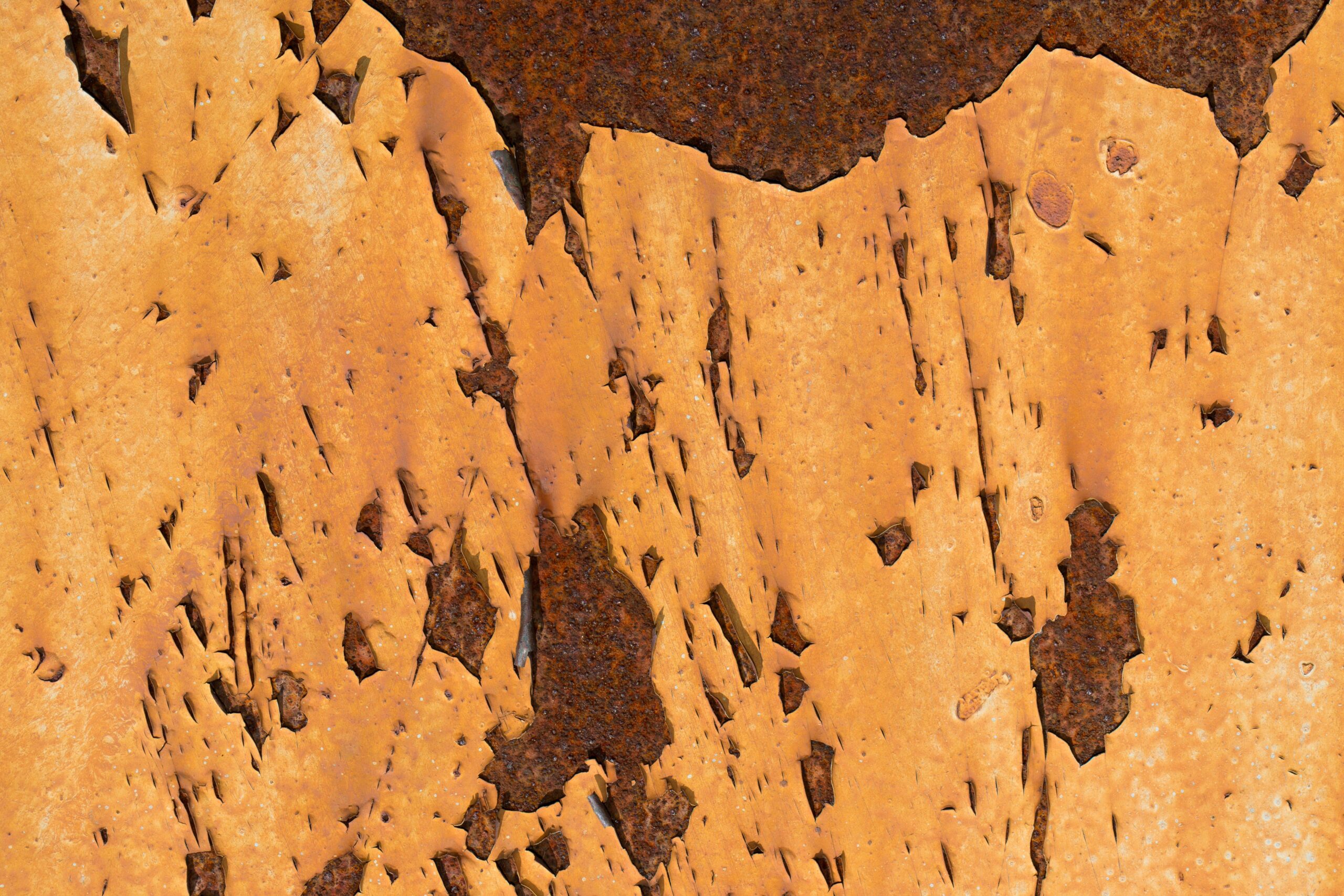
The most dangerous type is pitting corrosion, which attacks the metal locally but very deeply. It is almost invisible visually, yet it can lead to sudden structural failure without prior deformation. Under-film corrosion occurs when moisture penetrates under the protective coating, causing paint blistering and hidden metal destruction.
How to Detect Corrosion at an Early Stage
Timely detection of corrosion helps avoid critical consequences. Here are the main signs to watch for during an inspection:
- visual changes — appearance of rust, metal discoloration, peeling paint, bulging protective coating;
- cracks and delamination — especially in weld areas, corner joints, and at element intersections;
- corrosion pitting and cavities — localized depressions on the metal surface indicating deep penetration of corrosion;
- signs of moisture and efflorescence — white or yellowish salt deposits on the surface may indicate constant dampening.
For precise diagnostics, specialists use instrumental methods: ultrasonic thickness gauging to determine residual metal thickness, magnetic particle inspection to detect hidden defects, and visual inspection using specialized equipment Technical inspection of buildings and structures.
How Corrosion Affects Building Safety
The consequences of steel element corrosion can be critical for the entire structure:
- Reduced load-bearing capacity. Corrosion reduces the effective cross-section of a column or beam, causing the element to lose its ability to withstand design loads.
- Risk of sudden failure. Pitting corrosion is especially dangerous and can lead to sudden collapse without prior signs of deformation.
- Impaired stability of the entire building. Loss of load-bearing capacity in one element leads to load redistribution and deformation of others.
- Additional repair costs. The longer the problem remains unaddressed, the more expensive restoration becomes. In advanced cases, full element replacement may be necessary.
Methods for Protection and Restoration of Steel Elements
The choice of method depends on the degree of corrosion damage. Main methods include:
- anti-corrosive coating — applying primers and enamels to a cleaned surface to create a protective barrier;
- galvanization (hot-dip or cold) — creating a zinc coating for electrochemical protection of steel;
- cathodic protection — using external current or sacrificial anodes to prevent corrosion;
- strengthening elements — in cases of significant cross-section reduction — installing additional plates or jackets to restore load-bearing capacity;
- replacing damaged sections — cutting out destroyed fragments and welding in new elements followed by protection.
It is important to remember: cosmetic painting without prior cleaning and priming only masks the problem. Comprehensive building inspection allows determining the true state of structures and choosing the optimal protection strategy.
Frequently Asked Questions
Can I detect corrosion of steel columns myself?
Visual signs (rust, peeling paint) can be noticed by yourself. However, to assess corrosion depth and residual load-bearing capacity, an instrumental inspection in accordance with standard requirements is necessary. Subtle pitting corrosion can be significantly more dangerous than visible surface rust.
How often should metal structures be checked?
It is recommended to conduct a visual inspection at least once a year, as well as after significant events (fires, flooding, high wind loads). Professional inspection using instrumental methods is recommended every 3–5 years, or more frequently for facilities in highly aggressive environments.