

Reinforcement Corrosion in Floor Slabs: How It Affects Strength
A concrete floor slab seems monolithic and immovable. But inside it, a reinforcement framework is at work — it is what provides tensile strength, which concrete itself lacks. When this reinforcement begins to rust, the strength of the structure rapidly declines. And the most dangerous thing is that corrosion often goes unnoticed until it is too late. How to recognize the problem and what to do — let’s look further.
Why Reinforcement Corrosion is a Threat to the Entire Building
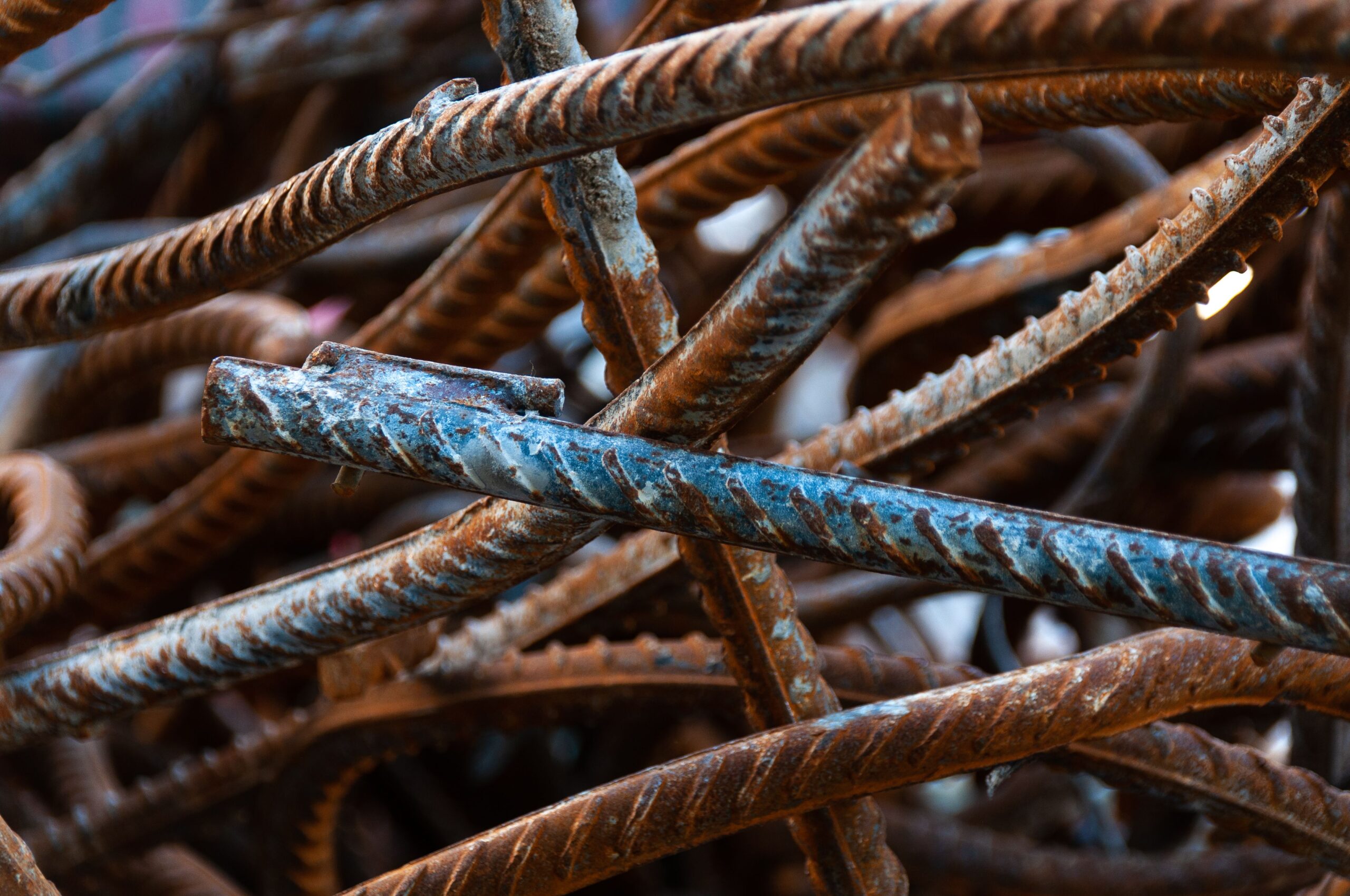
Reinforcement corrosion in a floor slab is an electrochemical process of steel destruction caused by moisture, oxygen, and aggressive substances penetrating through the concrete pores. As a result, rust forms on the surface of the reinforcing bars, occupying a significantly larger volume than the metal. This pressure ruptures the concrete from within — cracks form, the protective layer delaminates, and the reinforcement loses its bond with the concrete. A structure is considered strong if its actual strength exceeds design loads with a certain safety margin. Corrosion, however, reduces strength, and the destruction of steel reinforcement resulting from chemical or electrochemical interaction with the corrosive environment causes a reduction in the working cross-section of the bars. The influence of chemical substances, high humidity, frost, or salts can cause reinforcement corrosion, leading to a decrease in structural strength and reduced durability. As a result, the slab can lose up to 30–50% of its load-bearing capacity before visible signs of destruction even appear.
How to Detect Reinforcement Corrosion: Warning Signs
The first signs of corrosion can be noticed during visual inspection, but only an instrumental inspection provides a precise diagnosis. Here is what to look for:
- brown or reddish spots on the concrete surface — this is rust emerging from within;
- cracks along the reinforcing bars — especially if they follow the direction of the reinforcement;
- delamination of the protective concrete layer — exposed reinforcement, visible corrosion;
- efflorescence (white spots) on the surface — indicate lime leaching and moisture penetration;
- a dull sound when tapped — means the concrete has delaminated from the reinforcement.
Professional inspection of building floor systems allows accurately determining the degree of corrosion damage and assessing the structure’s residual load-bearing capacity.
How Corrosion Affects Floor Strength
Consequences of reinforcement corrosion can be divided into three danger levels:
- Initial stage — reinforcement is covered in rust, but the bond with concrete is still preserved. Strength decreases insignificantly. Cleaning and anti-corrosion protection are required.
- Intermediate stage — rust delaminates the concrete; cracks appear along the reinforcement. The working cross-section of the bars decreases by 10–30%. The structure requires reinforcement.
- Critical stage — reinforcement has lost up to 50% of its cross-section; concrete has delaminated in significant areas. The floor is in an emergency condition, and operation is dangerous.
Technical inspection of buildings and structures helps determine what stage the structure is in and develop a recovery plan.
Protection and Restoration Methods
Depending on the severity, specialists propose different solutions:
- reinforcement passivation — applying special compounds to the reinforcement surface to stop corrosion;
- crack injection — filling cracks with polymer compounds to restore monolithicity;
- shotcreting — applying an additional concrete layer onto cleaned reinforcement;
- reinforcement with composite materials — carbon fiber or fiberglass, which take on part of the load;
- replacing damaged sections — in the most complex cases.
According to DBN V.2.6-98:2009 “Concrete and Reinforced Concrete Structures,” structures must satisfy basic requirements for load-bearing capacity and serviceability throughout their entire service life. If these requirements are violated due to corrosion, intervention is necessary.
Frequently Asked Questions
Can I stop reinforcement corrosion myself?
If corrosion is local and surface-level, you can clean the reinforcement and treat it with an anti-corrosion agent. If the rust has penetrated deeply or the concrete is delaminating, professional intervention is necessary. Improper repairs can accelerate destruction.
How often should reinforcement condition in floor systems be checked?
It is recommended to conduct inspections at least once every 5–10 years, as well as after significant load changes (remodeling, installation of heavy equipment) or upon detecting the first signs of corrosion.