


Crack Widening Over Time: How to Determine the Danger
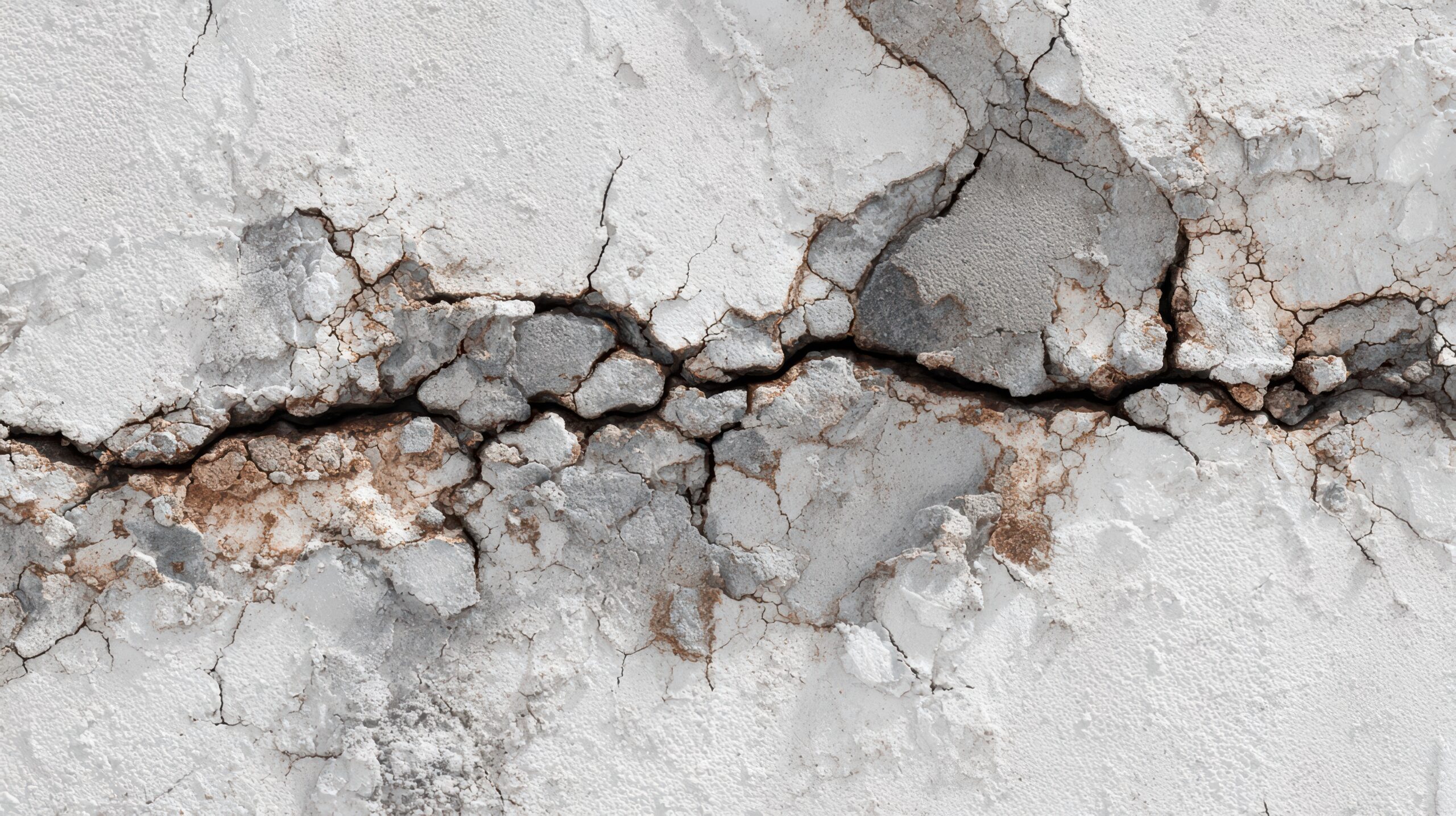
You noticed a crack on the wall of your house. A month passed, and it became slightly wider. Two months later — a new one appeared nearby. This situation is familiar to many property owners, and the main question that worries them at this moment is: is it dangerous? Crack widening over time is the most important indicator by which specialists determine the degree of threat to a building. A static crack that hasn’t changed for years is one thing. A progressing crack is quite another.
How to Determine if a Crack is Widening Over Time
The main tool for monitoring crack dynamics is control beacons. These are simple but extremely effective devices that allow tracking whether a crack changes over time. The most common types of beacons:
- Gypsum (cement) beacons — a small strip of mortar applied across the crack. If the crack expands, the beacon cracks or breaks. Important: the beacon is applied directly to the wall body, not to the plaster, otherwise the result will be unreliable.
- Paper (glass) beacons — a strip of paper or glass glued across the crack. A rupture indicates crack opening.
- Mechanical beacons — special devices with a scale that allow measuring the crack width with an accuracy of 0.1 mm.
- Marker strip — the simplest method: draw a control line with a marker across the crack and periodically check its condition.
Beacons are installed in places of maximum crack opening. The observation period usually ranges from 1 to 3 months. If during this time the beacon has not broken and the crack has not changed — it is likely stable and poses no threat. Professional inspection of building walls and foundations includes the installation of control beacons and crack dynamics monitoring.
Which Cracks are Considered Dangerous
Based on state dynamics, cracks are divided into two types:
- Stable (non-progressive) — cracks that do not change over time. They generally do not pose a threat to structures and require only cosmetic repair.
- Progressing (developing) — cracks that gradually expand or lengthen. They indicate active structural deformation and require immediate specialist intervention.
Particularly dangerous are:
- cracks opened on both sides of the wall — this means the crack has gone all the way through, which over time leads to the displacement of the parts of the structure separated by it;
- cracks in load-bearing structures — they can lead to the loss of a building’s load-bearing capacity;
- cracks appearing after reconstruction — this is a signal that walls and the base are failing to handle new loads;
- vertical cracks — they pose a greater danger than horizontal ones.
Technical inspection of buildings and structures allows accurately determining the nature of a crack and its impact on building safety.
What to Do If a Crack Widens Over Time
If you notice that a crack is increasing, do not delay. Here is an algorithm of actions:
- Install control beacons — this will allow tracking the crack opening rate.
- Take photos of the crack — take pictures with a ruler for width measurement to be able to compare the state over time.
- Order a technical inspection — only professional diagnostics will answer how dangerous the crack is and what measures must be taken.
- Do not perform cosmetic repairs — sealing a crack without eliminating the cause only masks the problem. If the foundation continues to deform, the crack will appear again.
When is the risk of cracks highest?
- in new buildings — the first five years of operation are a risk period when normal building settlement occurs;
- after reconstruction or extension — the appearance of cracks indicates that structures are not handling new loads;
- during adjacent construction — vibrations from construction work can cause new cracks even in old houses;
- during changes in hydrogeological conditions — rising groundwater levels, flooding, soil drying.
Frequently Asked Questions (FAQ)
What crack opening rate is critical?
There is no single norm, as it depends on the type of structure and material. However, if a crack increases by 1 mm or more within 1-3 months — this is a warning sign requiring professional inspection. According to regulatory documents, for reinforced concrete structures in closed rooms, the maximum permissible crack opening width is 0.4 mm.
Can I determine if a crack is dangerous on my own?
A preliminary assessment can be made using control beacons. If the beacon does not break within 1-3 months — the crack is likely stable. However, the final conclusion about the degree of danger can only be made by a specialist after a technical inspection.
Can I just seal the crack if it is widening?
No. Cosmetic sealing of a progressing crack without eliminating the root cause is useless — the crack will appear again, possibly elsewhere. You must first determine the cause of the deformation (most often it is foundation problems) and eliminate it.
Conclusion
Crack widening over time is the main indicator by which the degree of danger to a building is determined. Stable cracks generally do not pose a threat, while progressing ones require immediate professional intervention. Control beacons help track dynamics, but a final diagnosis can only be made by a specialist after a technical inspection. Learn more about crack inspection methods and protect your building from destruction.