


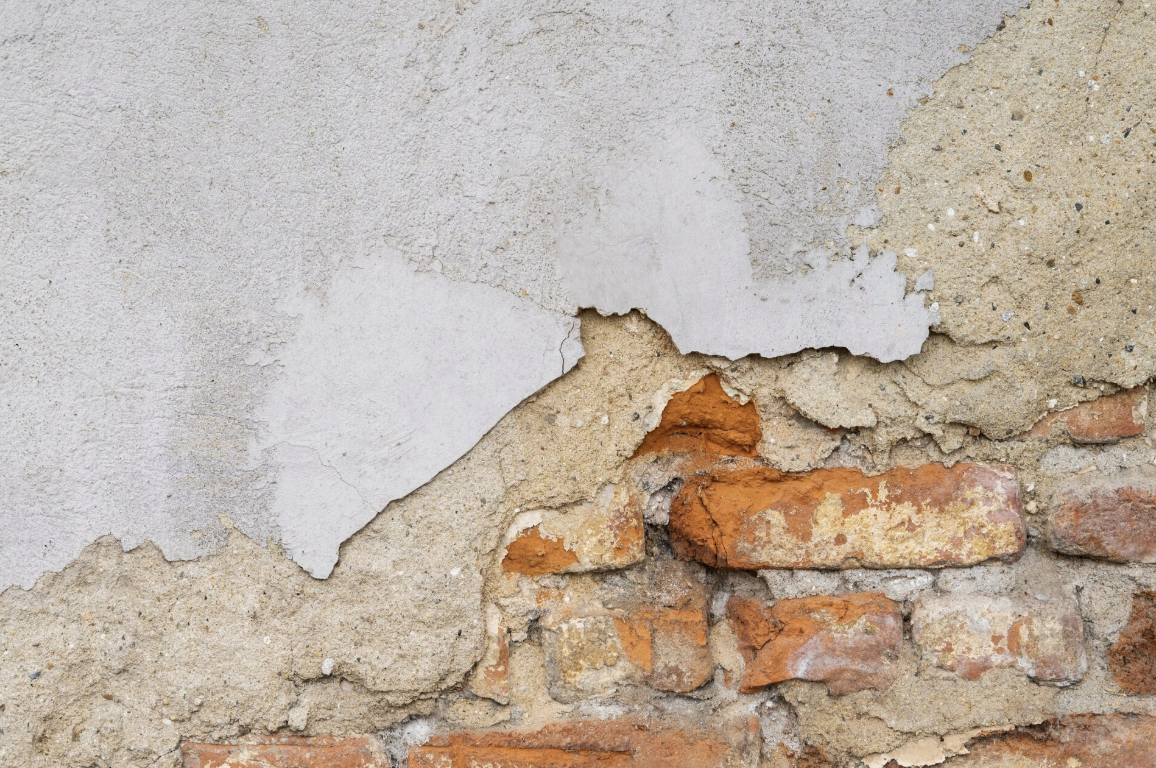
Uneven Foundation Settlement: Signs and Consequences
Uneven foundation settlement is one of the most dangerous deformations that can happen to a building. Unlike uniform settlement, where the entire structure sinks equally, uneven settlement causes skews, cracks, and gradual structural failure. This defect can appear in both old houses and new buildings, often remaining unnoticed in the early stages. Timely problem detection and professional intervention are the only ways to preserve the building and avoid catastrophic consequences.
Why Uneven Foundation Settlement Occurs
The main cause of uneven settlement is soil heterogeneity under different parts of the building. If the ground under one part of the foundation consists of dense soil, while under another it is weak or heaving, settlement occurs at different speeds and amplitudes. This is caused by:
- Design errors — incorrect distribution of the building’s weight onto the base, lack of geological surveys, or incorrectly determined foundation laying depth.
- Soil instability or heterogeneity — presence of peat bogs, loess soils that change properties upon wetting, or different soil types within the same construction site.
- Water impact — rising groundwater levels, flooding, drainage system damage, or water accumulation near the foundation due to improper drainage.
- Construction technology violations — insufficient soil compaction under the cushion, poor concrete quality, or improper reinforcement.
- Excessive load — adding floors or installing heavy equipment without prior foundation reinforcement.
It is worth noting that uneven foundation settlement can also be caused by moisture loss in clayey soils, leading to base shrinkage. As a result, the foundation loses necessary support, and the building begins to deform.
How to Recognize Uneven Settlement: Main Signs
Problems with a building’s base rarely go unnoticed. Here are the most common signs indicating uneven foundation settlement:
- plinth and pavement skewing — visually noticeable slope or unevenness in the building’s lower section;
- distortion of door and window openings — doors and windows stop closing properly; gaps appear between the frame and the wall;
- cracks in walls — especially diagonal cracks diverging from opening corners or wall joints;
- uneven floor settlement — floors in different rooms are at different levels;
- building tilting — visually noticeable deviation from the vertical;
- shifts and deformations — displacement of individual structural elements, appearance of horizontal shifts in the masonry.
Particular attention should be paid to cracks appearing at the joints of load-bearing walls and partitions, as well as cracks radiating from corners of window and door openings. If you notice at least one of these signs — do not delay. Professional foundation inspection will help determine the scale of the problem.
Consequences of Uneven Settlement: What are the Threats
Uneven foundation settlement is not just an aesthetic problem. It affects all building structures, creating a threat to inhabitants and nearby objects. The most common consequences include:
- progressive structural deformation — tilting, warping, shifts in individual elements that only worsen over time;
- appearance and widening of cracks — small hair-line cracks can turn into significant ruptures threatening the building’s integrity;
- destruction of engineering systems — foundation deformations lead to damage in water supply, sewage, and gas pipes;
- emergency state of the building — in critical cases, uneven settlement can lead to partial or complete collapse of the structure;
- reduction in property value — the presence of foundation deformations significantly lowers the market value of the object and complicates its sale.
According to DBN V.2.1-10:2018 “Foundations of Buildings and Structures,” the goal of foundation deformation calculation is to limit absolute and relative foundation displacements to values that guarantee normal structure operation. If these limits are exceeded — the building requires immediate intervention by specialists.
What to Do When Detecting Uneven Settlement
- Do not panic, but do not ignore it — record all visible defects (take photos of cracks, measure their width, note when the first signs appeared). Install control beacons to monitor dynamics. This will allow tracking whether cracks are widening over time.
- Order a technical inspection — only professional diagnostics will answer how dangerous the settlement is and what measures must be taken. Specialists will conduct geodetic measurements, ground-penetrating radar surveys, and foundation condition assessment. Inspection is carried out in accordance with DSTU 9273:2024 “Guideline for inspection of buildings and structures for determination and assessment of their technical state” and taking into account the requirements of DBN V.2.1-10:2018.
- Develop a reinforcement plan — based on inspection results, specialists will suggest an optimal solution: from soil injection to installing additional supports or replacing damaged foundation sections.
Technical inspection of buildings and structures from GlobalBud Ukraine is the first step toward the safety of your building.
Frequently Asked Questions
Can uneven settlement be stopped independently?
No. Stopping settlement without professional diagnostics and developing a reinforcement project is impossible. Any independent attempts (e.g., pouring concrete under the foundation) can only worsen the situation. It is necessary to first determine the cause of deformation, then develop an action plan.
How long does the process of uneven settlement last?
Duration depends on soil type, humidity, and load. In some cases, settlement happens quickly (within a few months); in others, it drags on for years. Particular attention should be paid to cracks that appeared after building reconstruction — this means the walls and base are failing to handle new loads.
Conclusion
Uneven foundation settlement is a serious problem that requires immediate specialist intervention. Timely detection of signs (cracks, skews, deformations) and professional inspection allow determining the cause of deformation and developing an effective reinforcement plan.