

Roof Inspection Before Installing a Solar Power Station in Zaporizhzhia: Protection of Industrial and Commercial Investments
Zaporizhzhia is a powerful industrial hub. For local business, installing solar power stations has become a matter not only of ecology, but also of survival under conditions of electricity shortages. Factories, warehouses, shopping centers, and private enterprises are massively utilizing their vast flat roofs to host megawatt-scale solar arrays. Yet large-scale projects entail large-scale technical risks.
The Problem of Flat Roofs and Ballast Systems
The majority of commercial and industrial buildings in Zaporizhzhia feature flat roofs based on reinforced concrete slabs or corrugated sheeting. The primary feature of SPS installation on such roofs is the utilization of ballast systems. To avoid damaging the waterproofing PVC membrane or roofing felt via drilling, structures with panels are pressed against the roof utilizing heavy concrete blocks. This means dozens of tons of additional static weight are imposed on the roof. If the building is old or errors occurred during its erection, the floor slab may fail to withstand it.
Roof problems frequently entail wall deformation. For instance, if the load is distributed incorrectly, facade thermal insulation cracks may appear over time, requiring separate costly intervention. In the worst cases, when old industrial workshops are in an emergency state, partial dismantling (demolition) of buildings and structures or their emergency superstructures may be required prior to modernization to clear a safe site for modern energy solutions.
How Technical Audit Works at Industrial Facilities
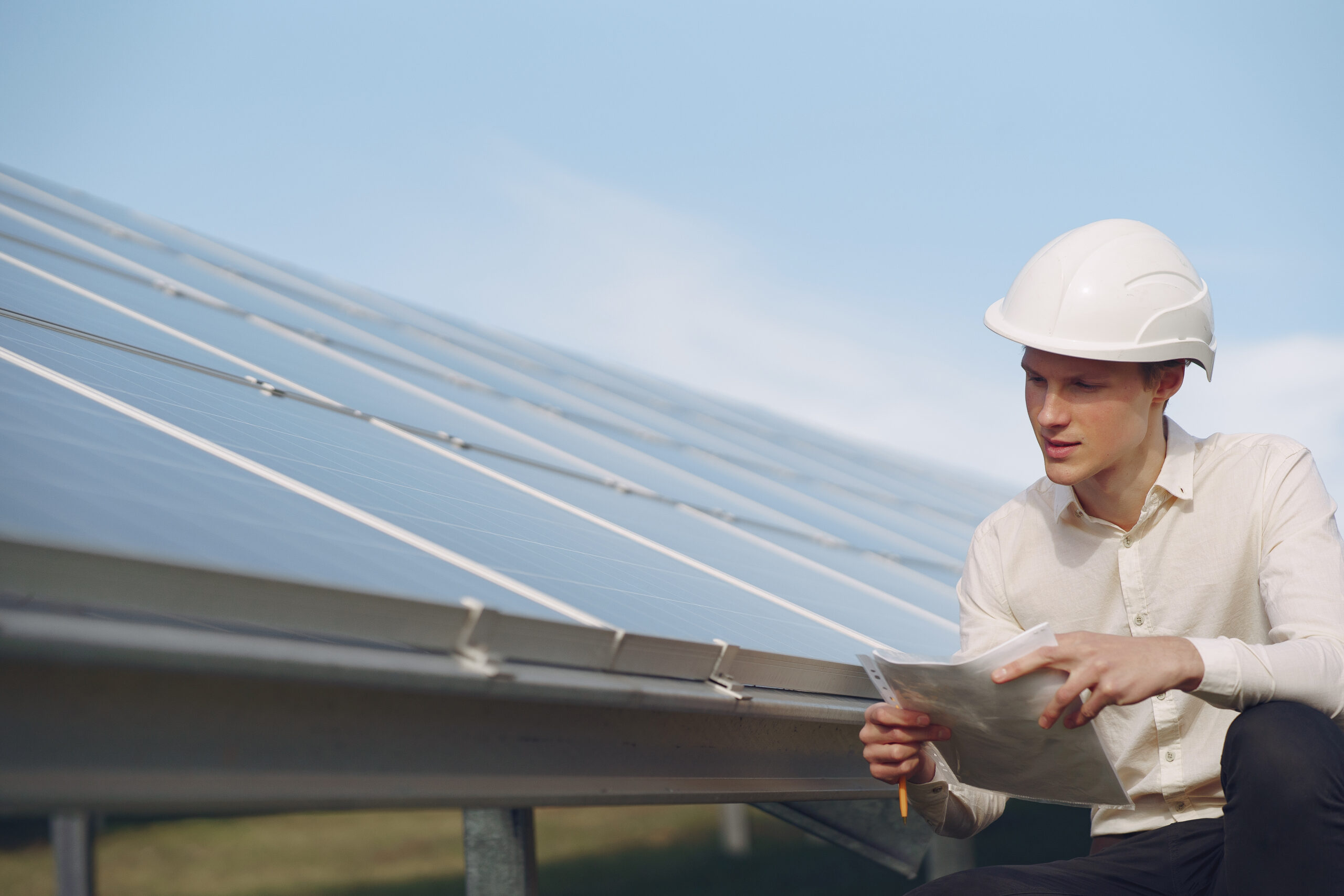
Engineering roof inspection in Zaporizhzhia prior to SPS installation is a rigorous computational process:
- Geodetic surveying and flaw detection: Determining floor slab deflections, searching for concrete micro-cracks or metal truss corrosion.
- Load-bearing capacity calculation: The engineer computes the exact structural strength reserve of the roof. This determines precisely what SPS capacity (and consequently weight) can be safely accommodated.
- Roofing membrane expertise: Verifying the capability of roofing felt or membrane to withstand point pressure from concrete ballasts during summer heat (when the coating softens).
To avoid catastrophic scenarios, investors invariably order an engineering roof conclusion. This document contains a schema for optimal load distribution, enabling the safe placement of equipment without collapse risks.
Frequently Asked Questions (FAQ)
What should be done if the engineering audit shows that the roof will not withstand an SPS?
This is not a verdict. In the conclusion, engineers will provide recommendations regarding structural reinforcement (for example, installing additional metal struts or beams). Following reinforcement, station installation will become safe.
Can a ballast system be installed on a corrugated sheet roof?
Usually no, as corrugated sheeting is not designed for the point loads of concrete blocks — it deforms. For such roofs, special lightweight fasteners on rivets or specialized rails are selected, which must also be calculated during the inspection.
How much time does a commercial roof inspection take?
Specialist dispatch to the property and conducting measurements typically takes 1-2 days. Data processing, laboratory testing (if necessary), and compiling the official engineering conclusion takes from 5 to 10 working days depending on the property’s square footage.