

Inspection of Destroyed Real Estate in Zhytomyr: How to Restore Hope for Recovery
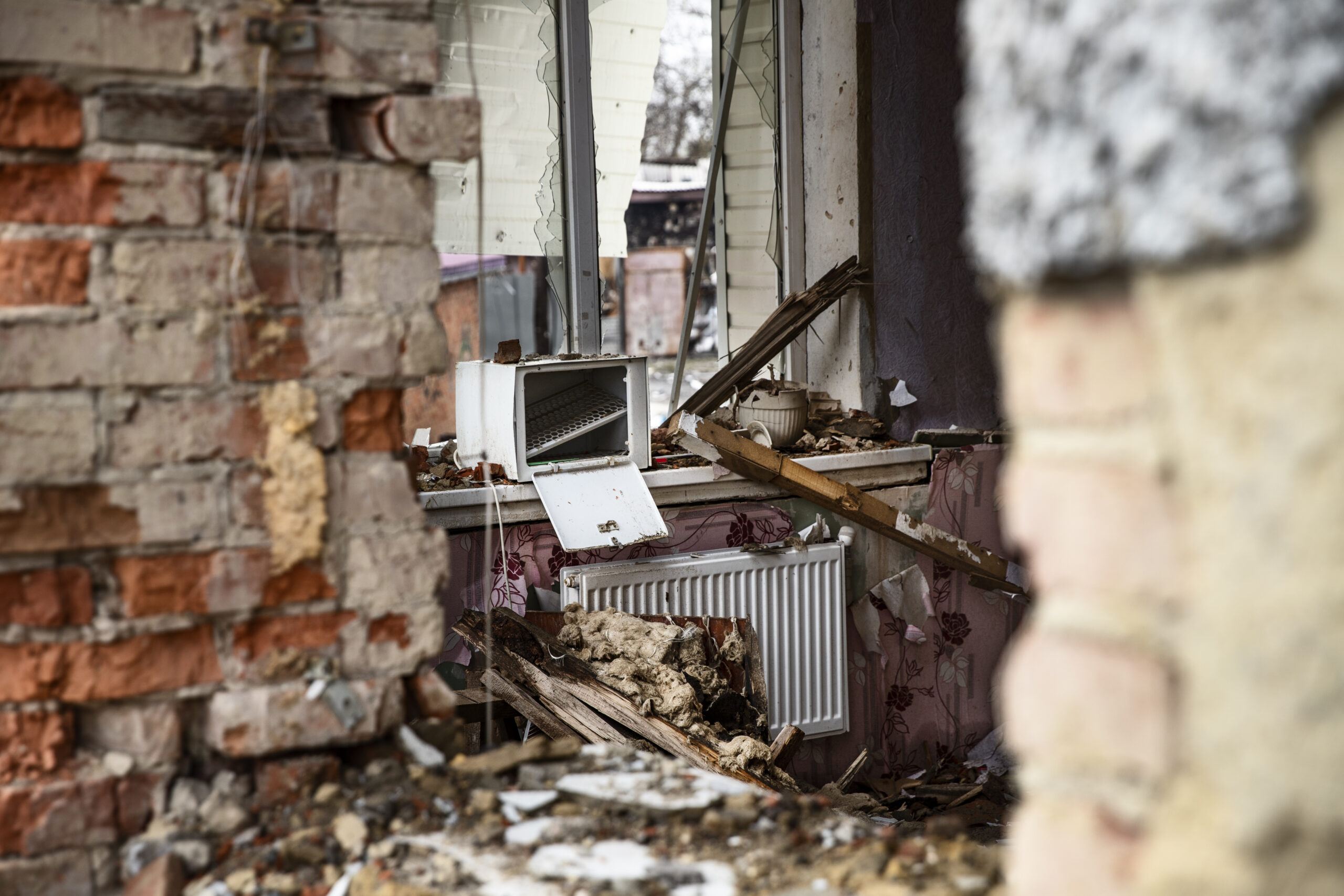
The war has affected Zhytomyr and its region repeatedly. Destructive strikes that claim lives and destroy homes have become a painful reality for thousands of families. Each new shelling leaves behind shattered windows, damaged facades, and destroyed floor slabs. People lose more than just walls—they lose their sense of security and confidence in the future. However, even in this despair, there is a chance for recovery. The first step toward returning home is a professional technical inspection of the destroyed real estate. It provides answers to the most critical questions: whether the house can be saved, what repairs are needed, and whether it is safe to return there.
When an Inspection Becomes a Necessity
After any shelling, regardless of its scale, property owners face a choice: what to do with damaged housing. Technical inspection is required in such cases:
- to record damage in order to receive compensation under state support programs;
- to understand whether the building can be restored at all or if it is in an emergency condition;
- to plan repair work — which structures need reinforcement and which require complete replacement;
- to protect your rights in court if disputes arise with insurance companies or local authorities.
It is especially important not to delay: the longer a damaged building remains unattended, the greater the scale of destruction becomes. Moisture, frost, wind — all of this accelerates the loss of structural strength.
What the Inspection Includes
The technical inspection process is not just a superficial visual check. It is a comprehensive engineering diagnostics that includes:
- studying available documentation (if preserved);
- visual inspection of the building with the recording of all visible defects: cracks, spalling, deformations, fire traces;
- instrumental measurements: geodetic — to check if the building has shifted; ultrasonic testing — to assess concrete strength; thermal imaging diagnostics — to identify hidden cavities and thermal bridges;
- calculations of the residual load-bearing capacity of structures — whether they can withstand loads;
- laboratory testing of material samples (if necessary) — to determine if they have lost their properties.
Special attention is paid to hidden defects: micro-cracks that are invisible to the naked eye but can lead to collapse over time. A blast wave often leaves such “delayed-action bombs” in concrete structures. Read about how to identify hidden defects and document them properly in our material.
How the Inspection is Carried Out
The work takes from a few hours to several days, depending on the size of the building and the complexity of the damage. The algorithm is as follows:
- Study of documents (if available) and preliminary assessment of destruction zones.
- Visual inspection of all accessible structures: facades, floor slabs, roofing, basements.
- Instrumental diagnostics: measurements, scanning, thermal imaging surveys.
- Data analysis, calculations, and determination of the technical condition category according to DSTU.
- Preparation of a detailed report with conclusions and recommendations.
What the Customer Receives
Upon completion of the work, the owner receives an official technical report. It specifies:
- an assessment of the building’s condition and individual structures;
- a list of all identified defects with references to building codes;
- calculations of residual strength;
- categorization of the condition: from “fit for operation” to “emergency, unfit for restoration”;
- clear recommendations: what to restore, what to reinforce, and what to dismantle.
The report is registered in the Unified State Electronic System in the Construction Sector (EDESSB), which gives it legal validity. With such a document, you can apply to local authorities, court, or insurance companies. The process of preparing a technical report on the destruction of a building or structure is key for any compensation procedure.
Cost and Timeframe
Each object is unique, so the cost of the inspection is calculated individually. It depends on the area, number of floors, degree of destruction, and the need to use special equipment. The remoteness of the object and the difficulty of access to structures are also taken into account. The timeframe for completing the work is determined after a preliminary visit by an expert. GlobalBud Ukraine provides a full cycle of technical inspection of real estate objects with subsequent registration ofрне -> of the report in EDESSB.
Frequently Asked Questions
Can an inspection be carried out ifрти -> if the documents forрти -> for the house are lost?
Yes. The inspection is carried out based onрти -> on the actual condition ofрти -> of structures. The lack of documents is not an obstacle, although having a technical passport significantly simplifies the work of experts.
Will the technical report help to obtain compensation?
Yes. To receive state assistance, a commission inspection act is required, but a technical report from an independent expert registered in EDESSB is a weighty proof of the degree of damage and can be used when appealing commission decisions.
How long isрти -> isрти -> the technical report valid?
The report records the condition at the time ofрти -> of the inspection. Ifрти -> if the building remains unpreserved forрти -> for a long time, it is recommended to conduct a re-inspection after 6–12 months, as destruction may progress.