

Inspection of Destroyed Real Estate in Vinnytsia: Damage Diagnostics under Conditions of Relative Safety and Active Reconstruction
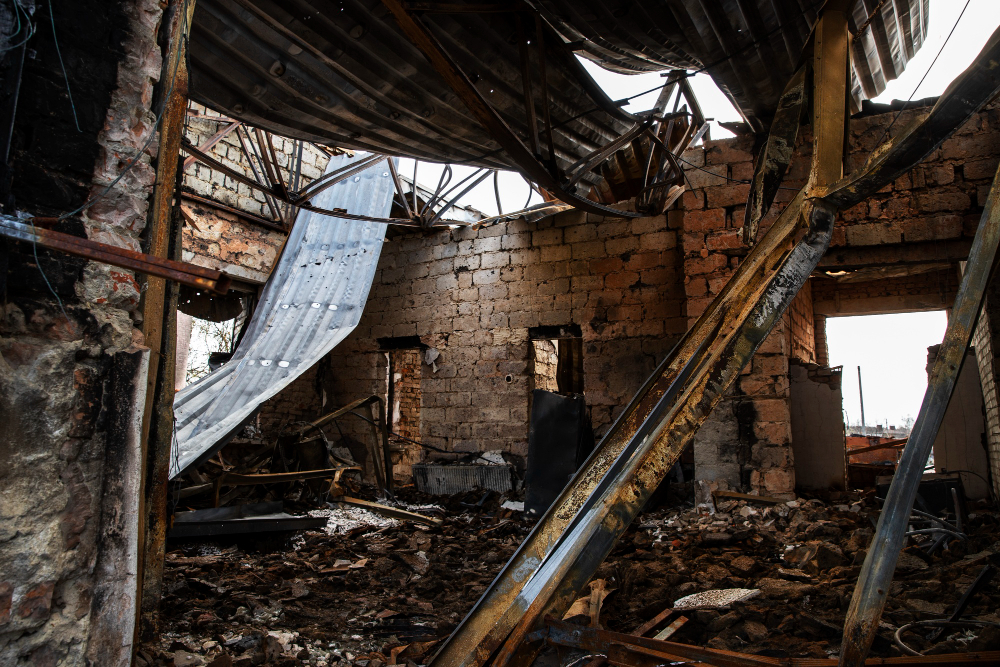
Vinnytsia, despite its relative remoteness from the frontline, has also experienced missile strikes that caused damage to residential buildings and infrastructure facilities. The specifics of Vinnytsia real estate include a significant number of buildings from various construction periods, ranging from historical houses of the 19th and early 20th centuries to modern residential complexes. Technical inspection of destroyed real estate in Vinnytsia must take these features into account, as well as the need for prompt execution of work to receive compensation payments.
When Inspection of Damaged Real Estate in Vinnytsia is Necessary
The main grounds for ordering a technical inspection of destroyed objects in Vinnytsia are:
- recording damage caused by missile strikes or falling debris to receive compensation under the eRecovery (“єВідновлення”) program;
- assessing the technical condition of buildings affected by blast waves to make a decision on major repairs, reconstruction, or demolition;
- the need to obtain an official inspection act for submission to local self-government bodies or insurance companies;
- planning restoration works on social infrastructure facilities.
Inspection work is carried out in areas where active phases of hostilities are absent, in accordance with the requirements of current legislation.
Specifics of Inspecting Vinnytsia Buildings: Variety of Development and Condition of Utilities
Conducting a technical inspection in Vinnytsia has a number of specific aspects:
- Variety of structural solutions. Vinnytsia features buildings from various construction periods: from historical houses with wooden floor slabs to modern monolithic frames. Each type of structure requires specific diagnostic methods. Wooden structures require checking for rot and insect damage, while monolithic structures require examining the condition of reinforcement and concrete.
- Condition of engineering systems. A significant portion of the damage affects utility networks. The inspection must include diagnostics of water supply, sewage, heating, and power supply systems. Special attention is paid to old cast-iron pipes and aluminum wiring, which may have been damaged by the blast wave.
- The need for prompt execution. High demand for inspections requires prompt execution of work without loss of quality. Prioritization of objects is carried out according to the degree of danger and urgency of restoration.
Algorithm for Conducting an Inspection in Vinnytsia
The procedure for technical inspection of destroyed real estate in Vinnytsia is structured according to the following algorithm:
- Preliminary analysis. Reviewing available documentation, including technical passports and project documentation (if available). Determining destruction zones.
- Visual inspection. Recording visible defects: cracks, deformations, spalling, moisture traces, and corrosion. Special attention is paid to the condition of wooden structures and the joints between different types of structures.
- Instrumental inspection. Geodetic measurements of deformations. Ultrasonic and endoscopic diagnostics of hidden cavities. Thermal imaging inspection to detect thermal bridges and hidden insulation defects.
- Calculation of the technical condition. Determining the damage category based on inspection results in accordance with current DBNs and building technical condition assessment methodologies.
- Preparation of a technical report. A document indicating the degree of damage, the state of individual structural elements, a forecast of further destruction or stability, and recommendations for restoration, reinforcement, or dismantling.
As experts note, even in relatively safe regions, it is important to conduct a technical inspection to record damage and obtain compensation. Read about how to prepare a technical report on the destruction of a building or structure in our material.
Result of the Inspection and Its Legal Significance
The customer receives a technical report containing:
- an assessment of the building’s technical condition and individual structures;
- a list of identified defects with references to DBNs;
- calculations of residual load-bearing capacity;
- a conclusion on the technical condition category;
- recommendations for further actions.
The report is registered in the Unified State Electronic System in the Construction Sector (EDESSB), which gives it legal validity for submission to local self-government bodies or court. GlobalBud Ukraine provides a full cycle of technical inspection of real estate objects with subsequent registration of the report in EDESSB, which is a mandatory condition for receiving compensation payments.
Cost and Timeframe of the Inspection
The cost of a technical inspection of destroyed real estate in Vinnytsia is determined individually for each object. The main pricing factors are the building’s area, the degree of destruction, the difficulty of access to structural elements, and the need to use special equipment. The timeframe for completing the work depends on the scale of damage and the complexity of the inspection.
Frequently Asked Questions
Is it mandatory to conduct a technical inspection to receive compensation under the eRecovery program in Vinnytsia?
Yes, to receive compensation, it is necessary to carry out a commission inspection of the damaged property. A technical report by an independent expert registered in EDESSB serves as weighty evidence of the extent of damage.
What documents are required to order a technical inspection of destroyed real estate in Vinnytsia?
To order an inspection, you need: an application from the owner or manager of the object; title documents for the real estate; a technical passport (if available); project documentation (if available). In cases where documentation is absent or destroyed, the inspection is carried out based on the actual condition of the structures.
Is it possible to conduct a remote inspection of destroyed real estate in Vinnytsia?
For objects in areas where access is limited, a remote inspection involving drones and photo reports is possible. However, to obtain a full-fledged technical report suitable for registration in EDESSB, an on-site inspection using instrumental control methods is necessary.