

Deformation of the Steel Building Frame: What It Means and How to Save the Structure
Deformation of a steel frame is one of the most alarming signals that may indicate serious problems with a building’s load-bearing capacity. Unlike local damage, deformation indicates a change in the geometry of the entire frame system or its critical elements. This can include buckling of columns, sagging of beams, subsidence of trusses, or displacement of node connections. Ignoring these signs can lead to uneven distribution of loads, cracks in walls, and even collapse of the entire structure.
What Is Steel Frame Deformation and Its Main Types
Steel frame deformation is the change in shape or dimensions of structural elements under the influence of external loads. The most common types of deformations that threaten a building’s integrity:
- sagging — bending of beams, trusses, or other horizontal elements under vertical load;
- subsidence — vertical movement of specific frame sections due to foundation settlement or loss of element load-bearing capacity;
- buckling of columns — change in the straightness of vertical elements, which can be caused by uneven heating, lateral pressure, or mechanical impacts;
- node displacement — horizontal movement of elements at connection points relative to each other.
Main Causes of Steel Frame Deformation
Frame deformation rarely occurs suddenly. As a rule, it is preceded by prolonged exposure to negative factors, which often act in combination:
- Uneven foundation settlement. One of the most common causes. If soils under different parts of a building have different load-bearing capacities, the foundation settles unevenly, leading to skewing and frame deformations.
- Exceeding design loads. Adding floors, installing heavy equipment, or changing the purpose of a room without prior load-bearing capacity calculation.
- Exposure to high temperatures (fire). When steel is heated to 550–600 °C, deformations become significant and irreversible.
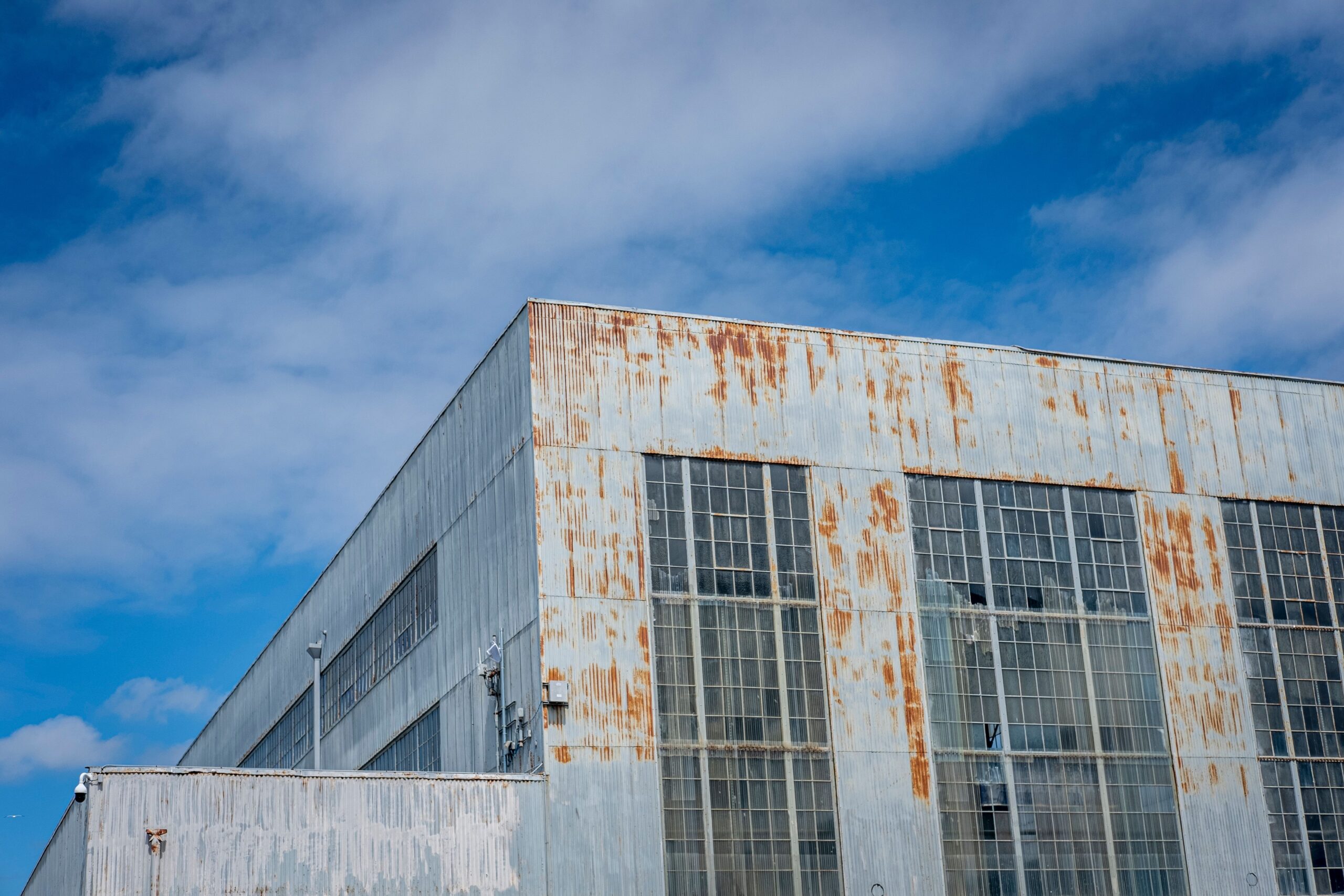
- Metal corrosion. Gradual reduction of element cross-sections leads to loss of stiffness and the appearance of deformations.
- Dynamic loads. Vibrations from traffic, nearby construction work, or industrial equipment can cause accumulation of deformations.
- Design and construction errors. Incorrect choice of foundation type, insufficient safety factor, or poor-quality execution of welds.
How to Detect Steel Frame Deformation at an Early Stage
Timely detection of deformation allows preventing catastrophic consequences and significant financial costs. Here are the main signs to watch for:
- visual signs — distortion of frame lines, visible sagging of beams and trusses, column inclination, surface waviness;
- internal signs — cracks in ceilings and walls, traces of leaks, deformation of door and window openings, issues with opening doors and windows;
- signs in the attic — buckled rafters, traces of subsidence, disruption of structural geometry;
- drainage issues — water accumulation in places where it wasn’t before may indicate frame deformation.
For precise assessment of deformation, specialists use geodetic measurements, laser scanning, and leveling. Professional building inspection allows determining the actual state of the frame and the degree of its damage.
Consequences of Steel Frame Deformation for the Building
Ignoring frame deformation can lead to serious consequences:
- loss of integrity — deformation leads to the opening of joints and cracks, creating pathways for moisture penetration;
- reduced load-bearing capacity — progressive deformation can lead to loss of load-bearing capacity of individual elements or the entire structure;
- destruction of building envelope — frame deformation causes damage to walls, roofing, and facade systems;
- threat of collapse — in critical cases, frame deformation can lead to partial or total building collapse.
Methods for Eliminating Steel Frame Deformation
The choice of method for eliminating deformation depends on its cause, nature, and degree of damage:
- Foundation strengthening. If deformation is caused by foundation settlement, foundation reinforcement is necessary (soil injection, installation of additional supports).
- Frame element reinforcement. Installation of additional metal plates, angles, or channels to restore stiffness.
- Structural realignment. Using hydraulic jacks to return elements to their design position followed by reinforcement.
- Replacement of damaged sections. Cutting out deformed fragments and welding in new elements.
- Installation of additional bracing. Mounting extra horizontal or vertical bracing to increase the spatial stiffness of the frame.
It is important to remember: cosmetic repair without eliminating the cause of deformation will be ineffective. It is necessary to first conduct an inspection and develop a comprehensive recovery plan.
Frequently Asked Questions
Can I determine independently if frame deformation is dangerous?
A preliminary assessment can be made visually — if you notice column buckling, beam sagging, or issues with opening doors and windows, this is an alarming signal. However, a precise assessment of the danger can only be provided by a specialist after conducting instrumental measurements and verification calculations.
How often should the state of the steel frame be checked?
It is recommended to conduct a visual inspection at least once a year, as well as after significant events (fires, strong wind loads, earthquakes). Professional inspection using instrumental methods is recommended every 3–5 years.