

Cracks on the Building Facade: Is There a Risk of Collapse
The facade is the building’s face, but more importantly, it performs protective and load-bearing functions. Cracks on the facade are not just an aesthetic defect that spoils the building’s appearance. They signal that processes are occurring in the structure that could lead to serious consequences — from reduced energy efficiency to the complete destruction of the building. Understanding the nature of cracks helps take timely measures and avoid disaster.
Why Cracks Appear on the Facade
Cracks on the facade can occur for various reasons, and correctly identifying the source of the problem is the key to fixing it. The most common causes include:
- Uneven foundation settlement — if the soil under different parts of the building has different load-bearing capacities, this leads to distortions and cracks in the walls. This is one of the most dangerous causes, as it points to problems with the foundation of the entire building.
- Thermal deformations — significant temperature fluctuations cause materials to expand and contract. If expansion joints are absent or incorrectly implemented in the design, stresses occur that tear the material.
- Material shrinkage — a natural process that occurs in the first years after construction. Concrete, plaster, brickwork — all these materials change their dimensions during the drying and hardening process.
- Structural overloading — adding floors, installing heavy equipment on the roof or facade without preliminary load-bearing capacity calculation.
- Reinforcement corrosion — rust, increasing in volume, tears the concrete from within, causing cracks along the reinforcing bars.
- Construction technology violations — low material quality, improper reinforcement, non-compliance with technological processes.
How to Assess the Severity of Facade Cracks
Not all cracks are equally dangerous. For proper risk assessment, you should pay attention to several key characteristics:
- Crack width — cracks less than 1 mm wide are usually not critical. If the width exceeds 2–3 mm, it is already an alarming signal. For reinforced concrete structures, the maximum permissible crack width should not exceed 0.5 mm according to DBN V.2.6-98:2009.
- Development dynamics — the main indicator of danger. If a crack increases in width or length over time, it indicates progressive structural deformation. Monitoring is done using control beacons — if a beacon breaks, the crack continues to expand.
- Location — cracks on load-bearing walls, corners of the building, and around window/door openings are more dangerous than those on decorative elements.
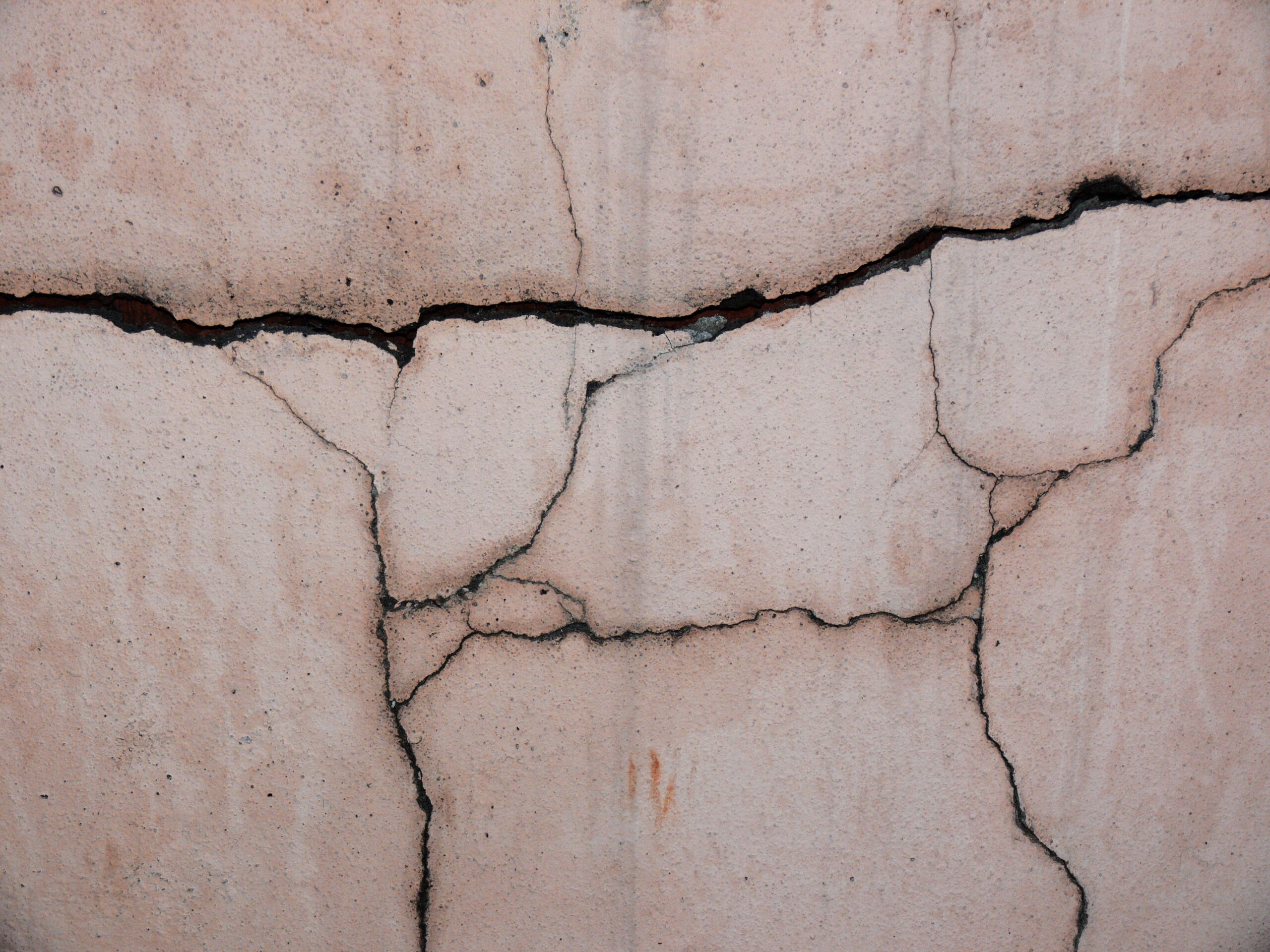
- Crack nature — through-cracks (passing through the entire wall thickness) are significantly more dangerous than surface ones. Also, pay attention to the direction: vertical cracks often indicate shrinkage, diagonal ones — uneven settlement, horizontal ones — lateral pressure.
GlobalBud Ukraine specialists conduct comprehensive facade inspections, which allow for precise identification of the cause of cracking and assessment of the degree of danger to the building.
Consequences of Ignoring Facade Cracks
If measures are not taken in time, cracks on the facade can lead to serious consequences:
- Moisture penetration into structures — water enters walls through cracks, causing insulation dampness, reinforcement corrosion, and material destruction. In winter, freezing water expands cracks, accelerating destruction.
- Reduced thermal insulation properties — cracks create thermal bridges through which heat escapes, leading to increased heating costs.
- Progressive structural deformation — if the cause is not eliminated, cracks will expand, leading to distortions in walls and openings.
- Loss of load-bearing capacity — in critical cases, cracks can lead to partial or total structural collapse.
- Reduced real estate value — the presence of cracks on the facade significantly lowers the market value of the object and complicates its sale.
Comprehensive building inspection allows identifying hidden defects and avoiding serious financial losses.
What to Do If You Discover Cracks on the Facade
- Do not panic, but do not ignore — document the defect: take a photo of the crack with a ruler to measure the width, write down the discovery date.
- Install control beacons — this will allow tracking whether the crack expands over time.
- Order a professional inspection — only specialists can determine the true cause of the crack and assess the degree of danger.
- Develop a repair plan — depending on the cause and degree of damage, this could range from cosmetic repairs to strengthening the foundation or load-bearing walls.
Frequently Asked Questions
Can I seal a facade crack myself?
Cosmetic sealing of a crack with mortar without eliminating the cause of its appearance will not solve the problem. If the foundation continues to settle or the structure deforms, the crack will reappear, possibly in a different place. It is necessary to first conduct an inspection and eliminate the root cause.
How to distinguish a dangerous crack from a safe one?
The main criterion is dynamics. If a crack does not change over a long time (half a year to a year) and its width does not exceed 1–2 mm, it is likely not a serious danger. If the crack expands or new cracks appear — it is a signal of progressive deformation requiring immediate intervention by specialists.