


Building Roof Leaks: How to Find the Cause
Roof leaks are one of the most common and frustrating problems faced by building owners. Wet spots on the ceiling, peeling paint, mold on walls — all these are consequences of a roof losing its airtightness. But the most difficult part is finding the source of the leak. Water can enter in one place and manifest in another entirely. How to determine the cause and fix the problem?
Main Causes of Roof Leaks
Roof leaks can be caused by many factors. The most common ones are:
- wear and tear of roofing materials — aging, thinning, loss of elasticity, especially on soft roofs;
- mechanical damage — cracks, punctures, spalling, damage from hail or falling branches;
- violation of installation technology — improper fastening, lack of overlaps, non-hermetic joints, improper installation of flashings;
- damage to the waterproofing layer — especially on flat roofs;
- clogged gutters — water accumulation on the roof leads to its penetration through micro-cracks;
- insufficient roof ventilation — condensation formation, which later penetrates inside through micro-cracks;
- damage to junctions — to pipes, parapets, ventilation shafts, antennas.
How to Find the Source of a Leak: Diagnostic Methods
Finding a roof leak requires a systematic approach. Here are the most effective methods:
1. Visual Inspection
The first step is a thorough inspection of the roof and attic space:
- Ceiling inspection — wet spots, stains, peeling paint, water marks.
- Attic inspection — damp rafters, floor, traces of water on insulation. Rafters, floor, and decking should be examined in the attic.
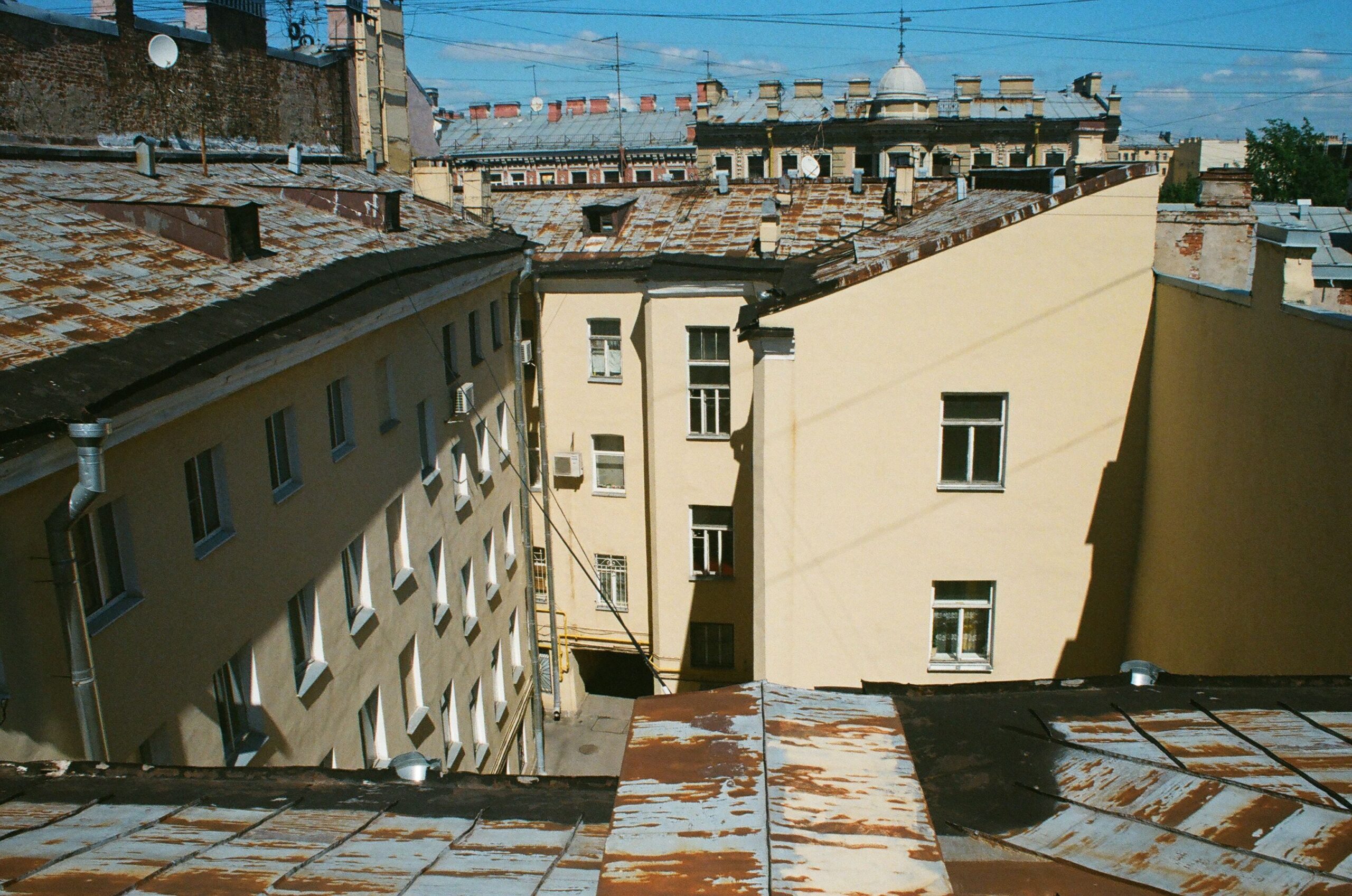
- Roof inspection from the outside — covering damage, blisters, cracks, missing elements, darkening, local bulges.
- Gutters check — clogs, damage, missing elements.
2. Water Testing
If visual inspection does not yield results, water testing is conducted:
- Gradual irrigation — watering the roof in sections to detect the leak location.
- Using a hose — for source localization.
3. Instrumental Diagnostics
Modern methods allow detecting leaks with high precision:
- Moisture meter — allows detecting hidden moisture in roof structures.
- Thermal imaging inspection — areas with high humidity have a different temperature, which is clearly visible on a thermal imager.
- Roofing flaw detector — high-precision instrumental diagnostics for leak hunting.
Professional roof inspection helps accurately determine the cause of the leak and develop a repair plan.
How to Fix a Roof Leak
The choice of repair method depends on the roof type and damage cause:
- soft roof — local repair of damaged areas using repair compounds or patches;
- metal roof — replacing damaged sheets, sealing joints and fastening points;
- tile roof — replacing damaged elements, restoring airtightness;
- flat roof — restoring the waterproofing layer, eliminating blisters and cracks.
During local repairs, it is important not only to fix visible damage but also to ensure the airtightness of junctions to walls, pipes, parapets, and other elements. A competently conducted roof assessment can determine the cause of the roofing damage and find options for its full or partial repair. Technical inspection of buildings and structures allows getting an objective assessment of the roof condition and avoiding recurring leaks.
Preventing Leaks: How to Avoid the Problem
It is much easier to prevent leaks than to spend funds on fixing them and restoring damaged interior premises. Here are key preventive measures:
- Regular roof inspection — at least twice a year (spring and autumn), as well as after heavy precipitation or hurricanes.
- Timely cleaning of gutters — from leaves, branches, debris.
- Monitoring the state of junctions — to pipes, parapets, ventilation shafts.
- Timely repair of minor damage — without waiting until they turn into serious leaks.
Frequently Asked Questions
Why can water appear in one place but leak in another?
Water can move along roof structures, insulation, along beams, or under roofing material. Therefore, the leak location on the ceiling often does not coincide with the roof damage location. That is why searching for the source requires a professional approach.
Can I fix a roof leak myself?
Local damage (small cracks, spalls) can be repaired independently using repair compounds. However, if the leak is caused by serious problems (waterproofing damage, installation technology violations), professional intervention is necessary.