

Concrete Floor Destruction: How to Assess Structural Condition
Concrete floor slabs are the foundation of any building. They take on loads from residents, furniture, and equipment, transferring them to walls and the foundation. Over time, under the influence of loads, moisture, temperature fluctuations, and other factors, concrete structures can deteriorate. Concrete slab destruction is a serious problem requiring immediate specialist intervention. How to assess the structural condition and detect danger in time?
Main Causes of Concrete Floor Destruction
Concrete is a strong but not eternal material. Over time, it loses its properties under the influence of various factors. Main causes of concrete floor destruction:
- reinforcement corrosion — rust expands in volume, rupturing concrete from within, leading to delamination of the protective layer;
- moisture and freezing — water entering concrete pores expands during freezing, destroying the material structure;
- exceeding design loads — additional stories, heavy equipment, changing premises’ purpose;
- chemical destruction — influence of aggressive environments that destroy cement stone;
- construction technology violations — insufficient compaction, improper reinforcement, poor concrete quality;
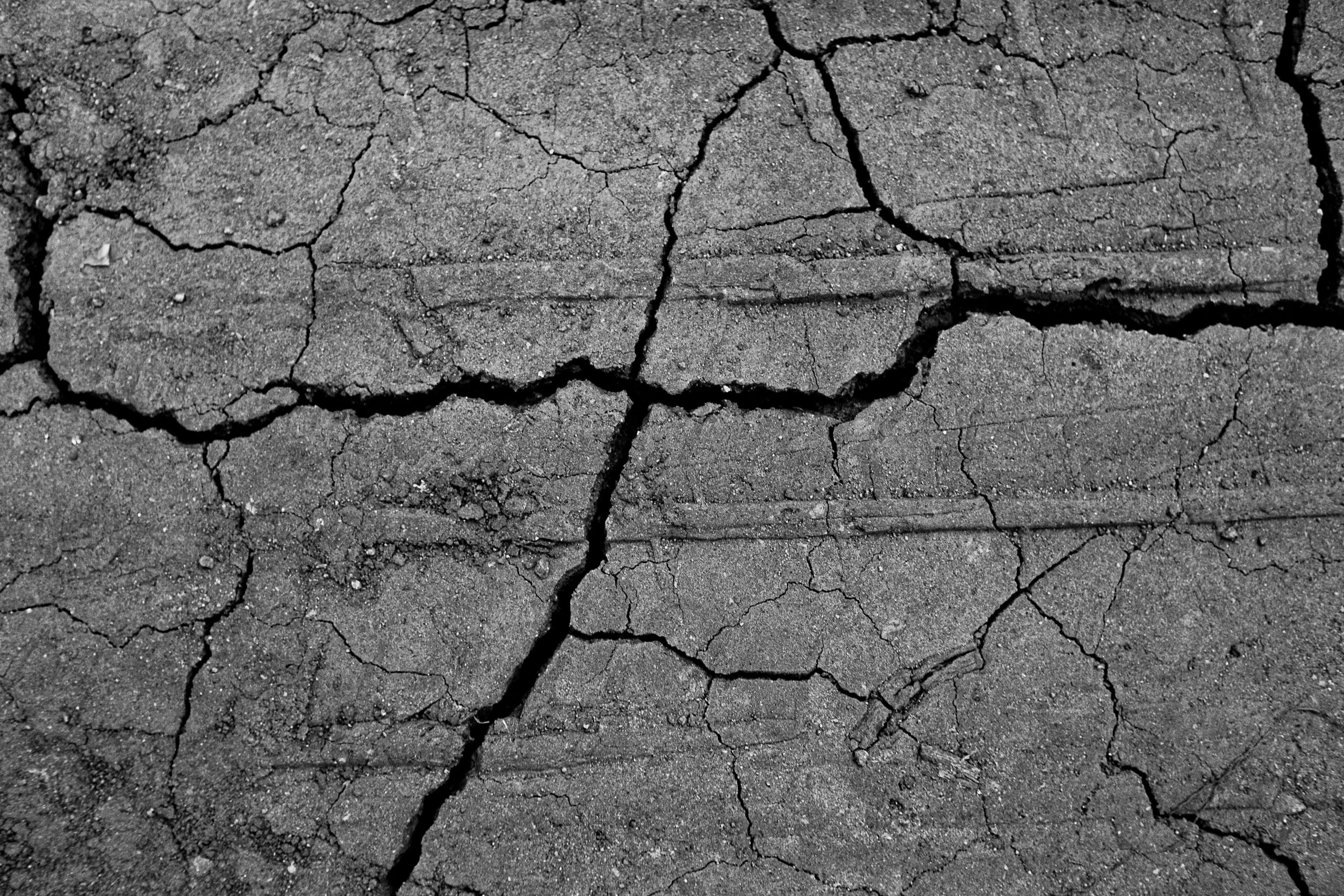
- cracks and micro-cracks — they can be located in the upper and lower zones of the slab cross-section.
How to Assess Concrete Floor Condition
Assessment of the technical condition of concrete and reinforced concrete structures based on external signs is carried out based on:
- determination of structural geometric dimensions — checking compliance with design dimensions;
- detection of defects and damage — cracks, spalling, delamination, exposed reinforcement;
- assessment of concrete condition — strength, moisture, presence of corrosion processes.
When inspecting reinforced concrete floors, specialists determine:
- dimensions of detected cracks and deflections;
- thickness of the concrete protective layer;
- moisture and state of concrete;
- state of reinforcement (presence of corrosion).
Signs of Concrete Floor Destruction
What to look for during floor inspection:
- Cracks — especially in the tension zone (bottom part of the slab), and cracks widening over time.
- Protective layer delamination — exposed reinforcement, visible corrosion.
- Deflection — visually noticeable sag of the slab exceeding permissible standards.
- Traces of moisture, efflorescence — white spots on the concrete surface indicating lime leaching.
- Sound upon tapping — a dull sound may indicate concrete delamination.
Professional inspection of concrete floors allows accurately determining the structural state and degree of damage.
Stages of Professional Floor Condition Assessment
- Visual inspection — detection of visible defects, cracks, delamination.
- Instrumental inspection — measuring deflections, determining concrete strength (via sclerometry or ultrasound), detecting hidden defects.
- Determining the degree of reinforcement damage — assessing the corrosion state of reinforcing bars.
- Calculating residual load-bearing capacity — determining the possibility of further operation.
- Developing recommendations — regarding repair, strengthening, or replacement of the structure.
Technical inspection of buildings and structures allows getting a complete picture of an object’s technical state.
Frequently Asked Questions
How often should concrete floors be inspected?
It is recommended to conduct inspections before major repairs, when changing premises’ purpose, or when signs of deformation (cracks, deflections) are detected. For older houses, inspection is recommended every 5-10 years.
Can I assess the concrete floor condition myself?
A visual assessment can be performed independently — look for cracks, deflections, concrete delamination, signs of corrosion. However, professional instrumental inspection is necessary for an accurate assessment of load-bearing capacity and reinforcement condition.