


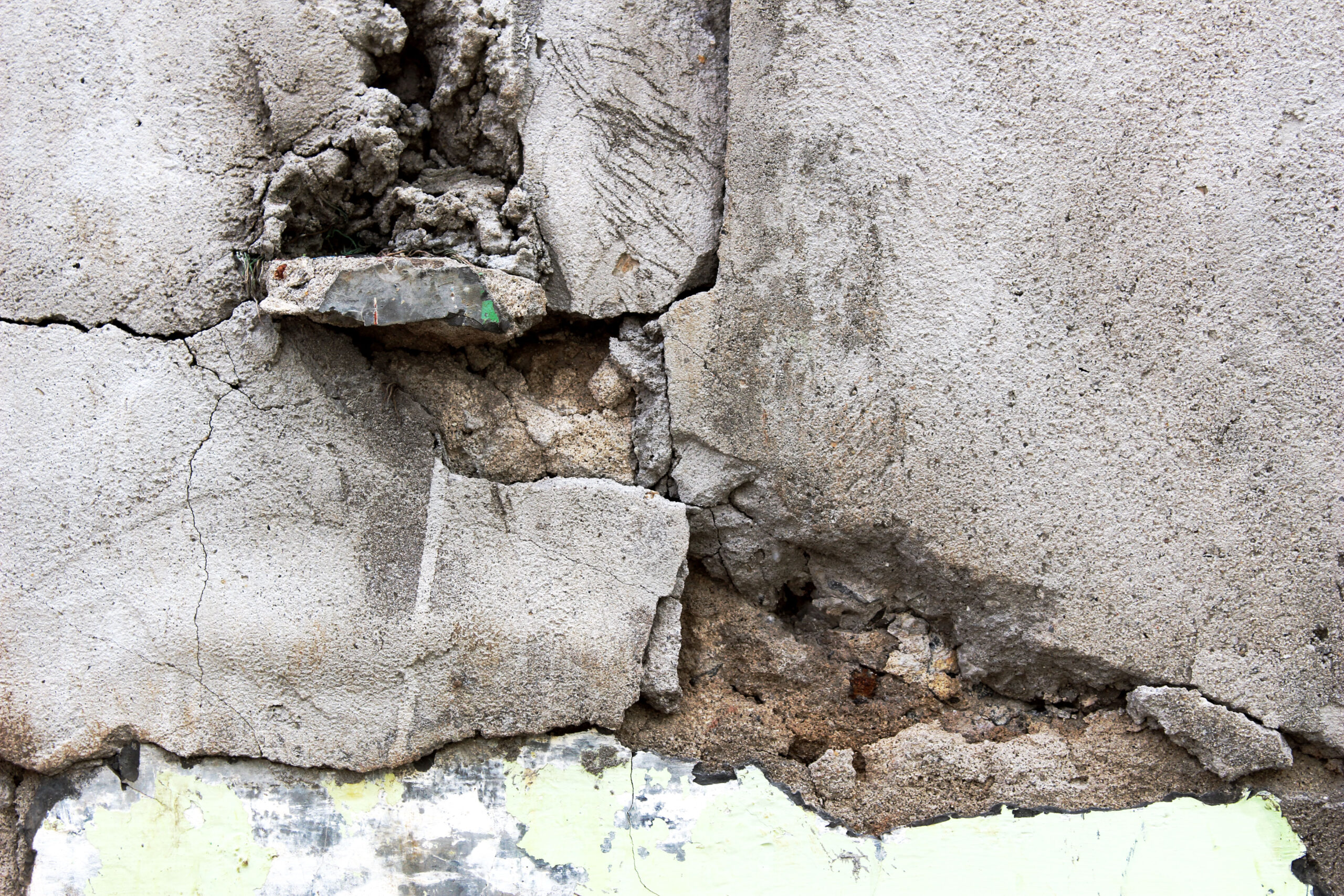
Crack in the Building Plinth: Cosmetic Defect or Serious Threat?
The building plinth (socle) is the transitional structure between the foundation and the main walls, which bears the brunt of the external environment. It is constantly subjected to moisture, temperature fluctuations, frost heaving of soils, and mechanical loads from upper floors. A crack in the building’s plinth is a common phenomenon often perceived by owners as a purely aesthetic problem. However, in engineering practice, any deformation in the lower part of a structure is considered a potential indicator of serious structural violations. How to distinguish a safe hair-line crack in plaster from a through-fracture that threatens the integrity of the entire house?
Why Cracks Occur in the Plinth Part
The emergence of defects in the plinth is rarely without cause. To correctly select a repair method, engineers at GlobalBud Ukraine (GBU) always look for the source of the problem. Among the most common reasons for crack formation in the plinth are:
- Frost heaving of soils. The absence or destruction of the pavement (blind area) around the house leads to water accumulation under the plinth. During freezing, water expands, lifting the soil and creating colossal pressure on the structure, which literally “tears” concrete or brickwork.
- Foundation settlement. If the building’s base settles unevenly (due to soil washout or design errors), the plinth, as a rigid element, takes on bending stress and cracks. Usually, such cracks have a diagonal or vertical direction and continue onto facade walls.
- Violation of concreting technology. Lack of expansion joints, insufficient reinforcement, improper care for concrete during its hardening (e.g., drying out) cause shrinkage cracks.
- Structural overloading. Erection of additional floors, heavy roofs, or mounting industrial equipment without prior engineering calculation of load-bearing capacity.
When Technical Inspection is Mandatory and Urgent
Some micro-cracks (up to 0.5 mm wide) can be a consequence of the natural drying of materials. However, there are clear markers indicating that the building requires immediate expert attention. You absolutely must order a professional technical inspection if you notice:
- The crack has an opening width of more than 1-2 mm and a tendency to increase over time.
- The defect is through-going (the crack is visible both from the street side and inside the basement area).
- The crack in the plinth smoothly transitions to the facade wall, widening upwards or downwards.
- Concrete crumbling, exposure, and rusting of reinforcement inside the fracture are observed.
- Water, mold, or dampness has started appearing in the basement, indicating the destruction of the waterproofing barrier.
Our specialists conduct instrumental diagnostics using ultrasonic flaw detectors and sclerometers, which allow looking inside the structure without destroying it.
Frequently Asked Questions (FAQ)
Is it enough to just seal a crack in the plinth with cement mortar?
Categorically no, if it is a dynamic structural crack. Sealing will only hide the defect for a short time. At the next freezing/thawing cycle or further foundation settlement, the crack will appear again, possibly with an even greater opening. First, you need to eliminate the cause (e.g., divert water or reinforce the foundation), and only then carry out repairs with injection compounds.
How long does a plinth and foundation inspection take?
The initial visual and instrumental inspection of an object by GBU experts takes from 2 to 4 hours. However, if the crack is dynamic, it may be necessary to install beacons for observation over a certain period (from several weeks to months). Preparation of an official engineering report with recommendations takes up to 3-5 working days. Always stay up to date with modern methods of engineering expertise — read useful materials and tips in our news. Timely technical audit from GlobalBud Ukraine is your peace of mind and the safety of your property.