


Ramp Installation for People with Limited Mobility
Ramp installation is a mandatory condition for ensuring barrier-free access to buildings and structures for people with limited mobility. According to Ukrainian legislation, the arrangement of ramps is regulated by a number of regulatory documents, in particular DBN B.2.2-40:2018 “Accessibility of Buildings and Structures”. The presence of a properly designed and installed ramp is not only a matter of comfort but also a legal requirement for organizations, institutions, and developers.
When Ramp Installation is Required
Ramps must be provided:
-
at entrances to public buildings (government institutions, shopping centers, medical facilities, etc.);
-
in residential buildings where the height difference exceeds 0.15 m;
-
at transport infrastructure facilities;
-
as part of reconstruction or major repairs of buildings;
-
during new construction in accordance with project documentation.
Regulatory Requirements for Ramps
The arrangement of ramps must comply with state building codes. Key technical requirements include:
| Parameter | Requirements according to DBN |
|---|---|
| Ramp slope | Not more than 8% (1:12) |
| Minimum width | From 1.2 m |
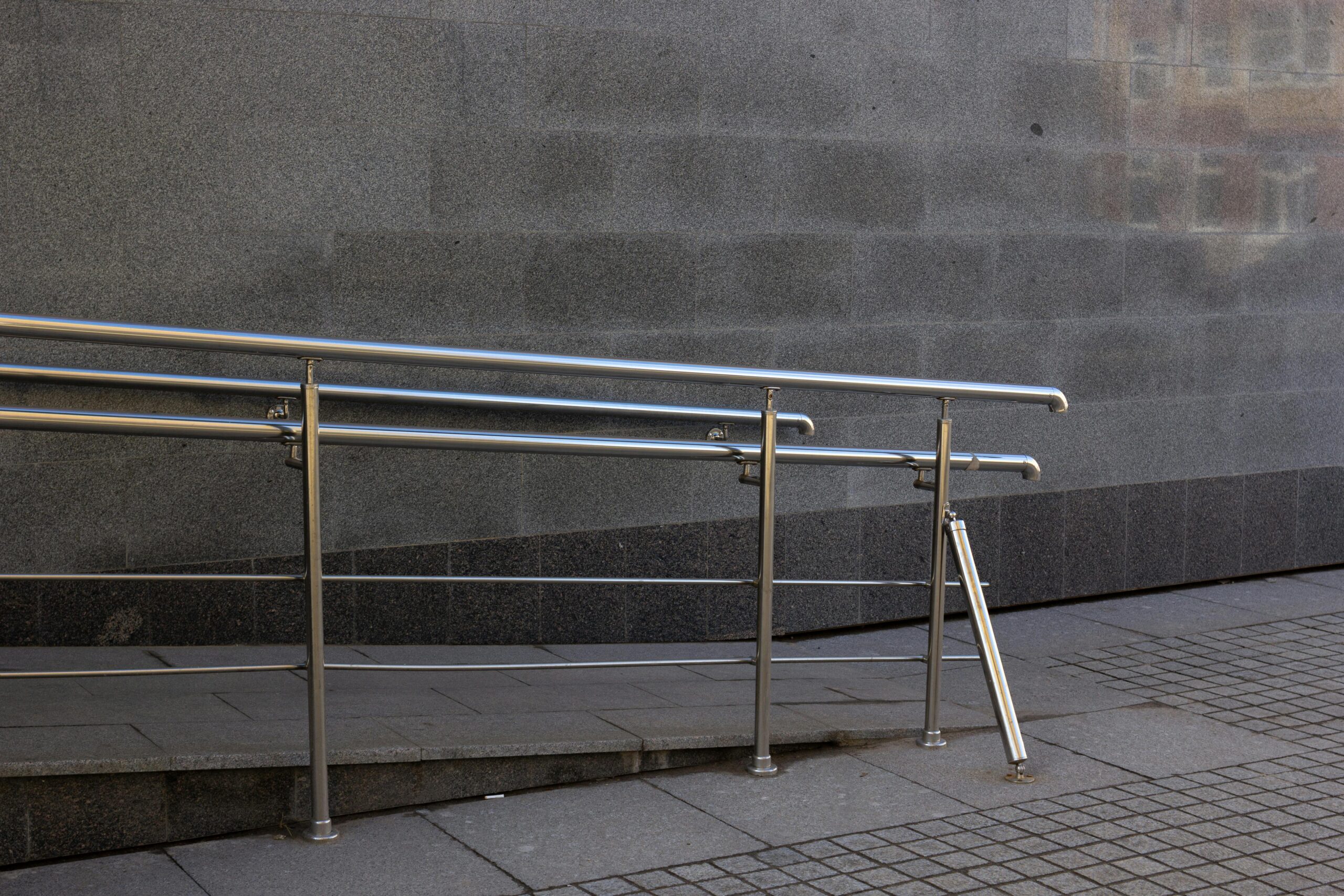
| Handrails | Mandatory on both sides at heights of 0.7 m and 0.9 m |
| Surface | Non-slip, wear-resistant |
| Edge protection | At least 0.05 m along ramp edges |
| Landing area in front of doors | Minimum 1.5×1.5 m |
In cases where it is not possible to build a ramp with an acceptable slope, elevators, lifts, or other technical accessibility devices are allowed.
Stages of Ramp Installation
1. Site survey and technical assignment
GlobalBud Ukraine engineers conduct an audit of the installation site, assess the feasibility of arranging the ramp in compliance with DBN and the client’s needs.
2. Project design
The design is carried out by certified architects, taking into account regulations, functionality, and aesthetics of the facility.
3. Documentation approval (if required)
Depending on the facility, approval may be required from local authorities or the original building designer.
4. Construction and installation works
Installation is performed by qualified specialists in compliance with safety norms and quality standards.
5. Commissioning
The completed ramp undergoes technical inspection, documentation is prepared, and if necessary — notification is submitted to DIAM.
Common Mistakes in DIY Ramp Installation
-
Failure to maintain the allowed slope (too steep angle);
-
Lack of handrails or their incorrect placement;
-
Passageway too narrow;
-
Use of slippery materials;
-
Lack of project documentation approval in multi-apartment buildings.
All these mistakes can lead to fines, complaints, or even hazardous situations.
Advantages of Ordering Services from GlobalBud Ukraine
-
Turnkey solutions: from design to installation and commissioning;
-
Experience working with government institutions, condominium associations, and business centers;
-
Legal support and consultations;
-
Compliance with all building and legal regulations;
-
Warranty on all completed works.
Contact the Experts at GlobalBud Ukraine
If you are planning ramp installation in a residential building, commercial facility, or public institution — contact GlobalBud Ukraine. Our engineers and lawyers will ensure full compliance with all regulations, help you avoid mistakes, and provide a safe environment for all categories of people.