

Assessment of Damaged Buildings: Expert Evaluation of Structural Condition and Action Plan
The assessment of damaged buildings is a set of engineering and technical measures aimed at determining the degree of structural damage, evaluating the residual load-bearing capacity, and developing recommendations for further use, restoration, or demolition of the structure.
This type of analysis is critical following emergencies such as shelling, fires, accidents, natural disasters, or man-made incidents.
When is a Building Condition Assessment Required?
The assessment is conducted in the following cases:
- After military damage or shelling — to document destruction and apply for insurance or compensation.
- After fires or structural collapses — to determine the feasibility of continued use.
- Before reconstruction or major renovation — to verify the structural load-bearing capacity.
- During legal disputes or investigations — to provide an official expert report.
- For decommissioning or demolition — when the building is no longer fit for use.
Stages of Damaged Building Assessment
1. Preparatory Stage
- Review of available design and as-built documentation (if any).
- On-site visit by certified specialists.
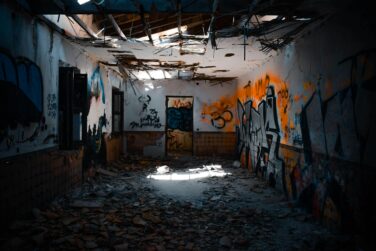
- Identification of visible damage and destruction zones.
2. Visual and Instrumental Inspection
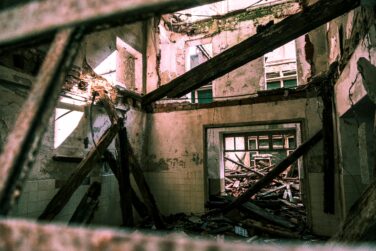
- Visual documentation of defects in load-bearing structures (cracks, settlement, deformations).
- Use of geodetic, ultrasonic, endoscopic, and other diagnostic methods.
- Laboratory testing of material samples, if necessary.
3. Structural Condition Calculation
The level of damage is determined based on inspection results in accordance with current Ukrainian Building Codes (DBN) and technical assessment guidelines.
4. Technical Inspection Report
The final report includes:
- Damage severity level (minor, moderate, critical, emergency).
- Condition of specific structural elements (foundations, floors, walls, roof).
- Forecast of further deterioration or stability.
- Recommendations: restoration, reinforcement, demolition.
Regulatory Framework
The building assessment process is regulated by the following documents:
- Law of Ukraine “On Regulation of Urban Planning Activities” — defines safety requirements for buildings.
- DBN B.1.2-14:2018 “General Principles of Ensuring Structural Reliability and Safety of Buildings and Structures”.
- DSTU-N B V.1.2-18:2016 — methodological guidelines for technical condition assessment.
Common Mistakes Made by Clients
- Conducting assessments without certified engineers — reports will not have legal validity.
- Failure to document damage immediately after the incident — makes compensation claims more difficult.
- Skipping the assessment before reconstruction — increases the risk of structural failures or project rejection.
Case Study: Post-Shelling Assessment of a Residential Complex
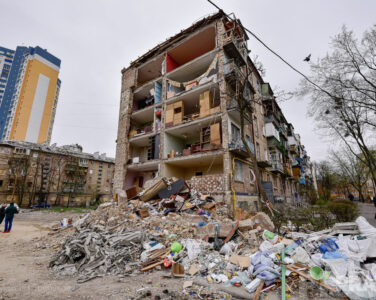
In 2023, GlobalBud Ukraine’s engineers conducted a structural assessment of a multi-storey residential building after a missile strike. The findings included:
- Total collapse of floor slabs between the 4th and 5th floors.
- Critical damage to over 35% of the load-bearing walls.
- Decision taken: dismantling of damaged sections and staged reconstruction with frame reinforcement.
Why Choose GlobalBud Ukraine?
GlobalBud Ukraine employs certified engineers and legal experts with years of experience in technical building inspections of any complexity. We provide comprehensive turnkey services, including:
- Technical reports in compliance with DBN and applicable law.
- Design of restoration or demolition projects.
- Legal support for compensation procedures or litigation.
We work with both private and legal entities, including international companies and humanitarian organizations.
Order a Building Condition Assessment
Contact us to receive an official technical report and expert support. GlobalBud Ukraine specialists will carry out the assessment promptly, in compliance with all safety and legal standards.