



Providing Accessibility Recommendations
Unfortunately, not all premises meet accessibility requirements, and it is not always possible to receive a positive conclusion right away. In such cases, it is necessary to start with recommendations. Recommendations are a report outlining what exactly needs to be corrected and how, which materials and equipment should be used, etc. After implementing the recommendations, it becomes possible to obtain a positive accessibility conclusion for people with limited mobility (PLM).
Why Are Recommendations Important?
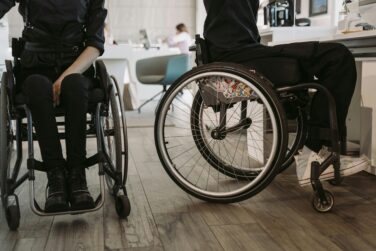
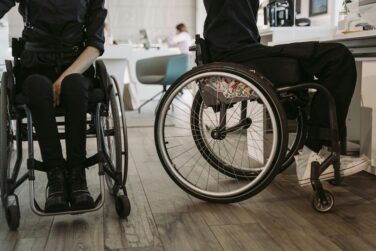
Providing recommendations on the accessibility of buildings and premises is an important step in the design, reconstruction, or operation of construction objects. These recommendations aim to ensure equal access to infrastructure for all population groups, including people with disabilities, the elderly, parents with young children, and other people with limited mobility (PLM).
Accessibility in construction is based on the principles of universal design. This approach envisions creating an environment convenient for everyone, without the need for further adaptation. According to DBN V.2.2-40:2018 “Accessibility of buildings and structures”, all newly constructed, reconstructed, or overhauled facilities must be accessible for people with limited mobility.
What Do Recommendations Include?
Key recommendations for ensuring accessibility:
-
Building entrance accessibility. Ramps must have an acceptable slope (no more than 8%), wide doorways (at least 90 cm), and automatic doors. Tactile indicators for visually impaired individuals are also required.
-
Inclusive interior space. Corridors, elevators, stairs, and doors must comply with DBN standards regarding passage width, presence of handrails, and no thresholds. For example, elevators must have buttons at a convenient height with Braille duplication.
-
Sanitary facilities. Toilets must be adapted for PLM: provide extra space for wheelchair turning, have handrails, and toilets of appropriate height.
-
Parking. Designated parking spaces for people with disabilities should be located as close as possible to the building entrance. The minimum width of such spaces is 3.5 m.
-
Navigation and visual signs. Use of high-contrast markings, clear navigation, large fonts, and audio announcements. This ensures convenience for people with visual and hearing impairments.
-
Information accessibility. Information boards and websites must be adapted for visually impaired users (e.g., high-contrast mode, speech synthesis).
Following the above recommendations not only improves user comfort but is also required by current legislation. In particular, Article 26 of the Law of Ukraine “On the Fundamentals of Social Protection of Persons with Disabilities” mandates the creation of a barrier-free environment.
Contact GlobalBud Ukraine
If you need professional consultations or wish to order services such as accessibility audits of a building, inclusive environment design, or adaptation of existing facilities – we recommend contacting GlobalBud Ukraine. Our engineers and lawyers have many years of experience in the construction field, are well-versed in legal requirements, and will help ensure your facility meets modern accessibility standards.