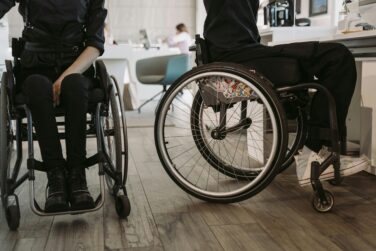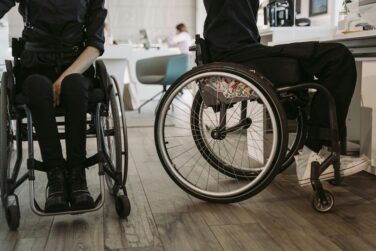


Entrance Adaptation for People with Limited Mobility
Adapting building entrances for people with limited mobility (PLM) is a mandatory requirement under Ukrainian legislation and a key element of an inclusive environment. Ensuring barrier-free access for persons with disabilities, the elderly, parents with strollers, and other individuals with temporary or permanent mobility limitations is essential to upholding their rights and freedoms.
Legal Regulations
The main regulatory documents governing accessible entrance design include:
-
DBN B.2.2-40:2018 “Inclusiveness of Buildings and Structures”, which outlines specific requirements for entrance design, ramps, doorways, etc.
-
Law of Ukraine “On the Fundamentals of Social Protection of Persons with Disabilities in Ukraine”
-
DSTU-N B V.2.2-31:2011 – recommendations for incorporating PLM needs in project design.
Key Entrance Requirements
To ensure accessible entrances, the following technical solutions must be implemented:
-
Ramps with a slope not exceeding 8% (1:12) and width of at least 1.2 meters;
-
Handrails on both sides, at 0.7 m and 0.9 m height;
-
Anti-slip surfaces on ramps and stairs;
-
Stair marking with contrasting colors on leading and ending steps;
-
Automatic or lightweight doors with a minimum width of 0.9 m;
-
Lifting platforms or elevators if ramps are not feasible.
Who Is Responsible for Adaptation?
Building owners or managers are responsible for ensuring accessibility in accordance with Article 26 of the Law of Ukraine “On Urban Development Regulation”. During reconstruction or major repairs, compliance with inclusiveness requirements is also mandatory.
Penalties for Non-Compliance
Failure to meet accessibility standards may lead to:
-
administrative liability;
-
revocation of the building’s occupancy permit;
-
lawsuits from persons with disabilities.
Consult the Experts
The team at GlobalBud Ukraine has extensive experience adapting buildings for people with limited mobility. Our engineers and legal experts assist with project documentation, coordination with relevant authorities, and comprehensive legal support.