

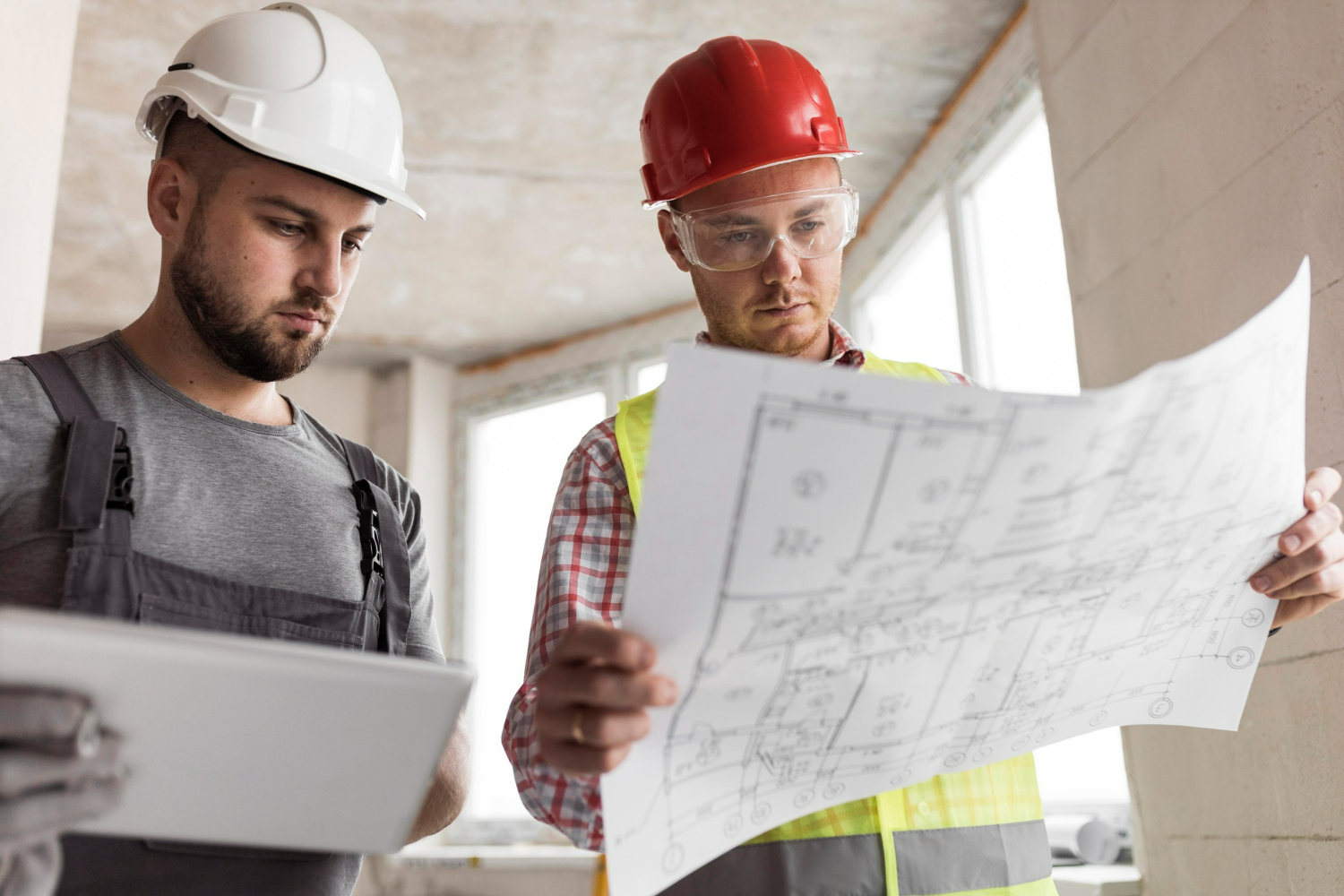
Engineering Inspection of Buildings and Structures
- 1111
- 2222
- Price: from UAH 12,000
- Timeframe: from 2 business days
What Is an Engineering Inspection of Buildings and Structures
An engineering inspection of buildings and structures is a comprehensive assessment aimed at determining the actual technical condition of a facility, identifying hidden defects, and assessing the remaining service life of structures.
Unlike a superficial visual inspection, a professional technical inspection of buildings is conducted by certified experts using specialized testing equipment.
This approach provides an objective answer to the key question: Is it safe to operate the facility? Does it require major repairs or reinforcement? And how will the structures perform in the future? For owners, buyers, investors, and developers, assessing the technical condition of a building is a key step in making decisions regarding purchase, renovation, adding additional stories, or insurance.
Would you like to find out the cost of an engineering assessment for your property?
Contact an engineer
What Is Included in the Inspection of Buildings and Structures
A comprehensive engineering inspection of structures covers all load-bearing and enclosing structures, engineering systems, and landscaping elements:
- Foundation inspection—assessment of the type, depth of foundation, presence of deformations, cracks, evidence of water intrusion, and the condition of waterproofing and drainage systems. Uneven settlement, the impact of groundwater, and frost heave are examined.
- Inspection of load-bearing structures—walls, columns, beams, trusses, and floor slabs. The presence of cracks, distortions, deviations from verticality, damage from corrosion, rot, and biological damage is determined.
- Inspection of roofs and facades—checking for leaks, assessing the condition of roofing materials, the roof truss system, and drainage systems; evaluating facade panels, plaster, and insulation.
- Thermal imaging inspection—detection of thermal bridges, thermal insulation defects, cold penetration through walls, gaps in window and door frames, and hidden damp areas. This allows for the visualization of heat loss, which is particularly important for energy audits and the evaluation of heating system efficiency.
- Instrumental building inspection—the use of thermal imagers, moisture meters, and testing devices during the inspection to assess the condition of electrical systems and the presence of formaldehyde in the air.
- Analysis of building systems—assessment of the condition of water supply, sewer systems, heating, electrical systems, and ventilation to verify operability and compliance with standards.
With GlobalBud Ukraine, you won’t miss a single hidden issue. We’ll provide the most detailed and transparent overview of your facility’s condition, from the foundation to the roof.
Regardless of the type and size of the facility, our certified engineers select an inspection methodology tailored to the specific structure—from a single column or water tower to a multi-story industrial complex.
Do you want to know the cost of the service
for your specific situation?
Call our consultant
Why You Should Trust Us with the Inspection
A technical report is a legally binding document that can significantly affect the future of the facility.
Our certified experts are authorized to inspect facilities of any complexity level, ongoing professional development for our specialists, and membership in the NGO “Association of Construction Industry Specialists”.
Our engineers have worked directly on-site—so they can not only identify a crack but also predict how it will behave in one year or five years.
means that our report is legally binding and accessible to all authorized parties.
We are financially responsible for the quality of our work.
Left exclusively by those who have actually used our service, with no fake reviews or incentives for leaving feedback.
What Types of Facilities Do We Inspect?
We conduct technical inspections of any buildings and structures—regardless of their size, purpose, or structural complexity:
- Residential real estate—apartments, single-family homes, garden houses, summer cottages, townhouses, and cottages
- Multi-unit residential buildings—both individual sections or floors and the building as a whole
- Commercial real estate—office buildings, retail spaces, warehouses, restaurants, and food service establishments
- Industrial facilities—factories, production halls, hangars, logistics complexes
- Engineering structures—water towers, overpasses, reservoirs, retaining walls
- Individual structural elements—columns, beams, display pylons, fences, and equipment foundations
- Social and public facilities—libraries, educational institutions, medical facilities
- Unfinished construction projects—to assess the feasibility of resuming work after long-term preservation.
What Are the Risks of Delaying an Inspection?
A hidden defect does not disappear on its own—it either progresses or waits for the worst possible moment to manifest itself:
- A crack in the foundation that wasn’t detected in time can turn into a problem in a few years that will cost many times more than the inspection itself.
- Buying real estate without a technical assessment is like buying a “pig in a poke”: the actual condition of the structures may differ significantly from what meets the eye.
- Operating a structurally unsound building without an expert’s assessment poses not only a financial risk but also a direct safety risk to the people inside the building.
It is worth highlighting situations where a technical inspection of structures is not a recommendation but a necessity on which people’s safety depends:
- The building was exposed to a blast wave—even if there is no visible damage, the shock wave could have compromised the integrity of the load-bearing structures, while hidden foundation cracks or frame deformations may have developed without immediately becoming visible.
- The structure has sustained damage or partial destruction—before beginning any restoration work, it is essential to know exactly which structures have retained their load-bearing capacity and which must be dismantled or reinforced.
- When planning a renovation or adding additional stories to a damaged building, it’s impossible to accurately determine whether the existing foundation and load-bearing walls can withstand the additional load without a structural inspection.
- The building has remained in long-term preservation after sustaining damage—it is necessary to assess how the structures have behaved during this time and whether any new defects have appeared.
In such cases, a technical report is not a mere formality, but a document that determines whether it is even possible to continue operating or constructing at the site, and to what extent restoration is required. When you turn to GlobalBud Ukraine, you receive not just a statement of facts, but a ready-made engineering solution from experts capable of handling tasks of any complexity.
When to Conduct an Inspection of Buildings and Structures
You should order a technical inspection in the following situations:
- before purchasing residential, commercial, or industrial real estate—to avoid buying a facility with critical defects that require significant investment.
- before renovation, vertical expansion, remodeling, or a change in functional use—to determine whether design solutions can be implemented without compromising the structural integrity of the building.
- upon detecting signs of a hazardous condition—such as cracks, subsidence, or water ingress—indicating progressive deformation.
- to obtain permits for construction or commissioning after long-term preservation.
Based on the survey results, a technical report is prepared and registered in the Unified State Electronic System in the Construction Sector (EDESSB). This is a mandatory procedure for properties subject to technical inspection in accordance with the law.
How a Building Inspection Is Conducted: Stages of Work
- 111
- 222
- 333
- 444
- Preparatory stage. Analysis of existing design, as-built and operational documentation. The scope and methods of the inspection are determined, and a schedule for the on-site visit is agreed upon.
- Instrumental testing. Use of specialized equipment to obtain quantitative data.
- Visual inspection. An initial walk-through of all rooms, basements, attics, and facades to document obvious defects (cracks, delamination, corrosion, signs of leaks). Problem areas are photographed, and a preliminary defect map is compiled.
- Preparation of a technical report. Documentation of all results, including detailed descriptions, tables, graphs, conclusions, and recommendations. The report is signed by certified engineers and, if necessary, registered with the Unified State Electronic System in the Construction Sector (EDESSB).
The duration of the work depends on the floor area, number of stories, complexity of the engineering systems, and the need for additional studies. The estimated completion time ranges from two business days for a residential building to 2–3 weeks for large commercial or industrial facilities.
What You’ll Receive
A technical report consisting of the following sections:
- Description of the facility’s actual condition—a detailed analysis of each structural element (foundations, walls, floor slabs, roof) with calculations and photographic documentation.
- Technical condition category with an assessment of the structures’ remaining service life.
- A list of identified defects, specifying the nature, location, and probable causes of each.
- Photographic report—visual documentation of all problem areas.
In addition, the client receives:
- A clear understanding of the facility’s actual condition—without “vague” wording, but with a specific technical condition category for each structural element.
- An answer as to whether the defects can be remedied—for each identified problem, we indicate whether it can be fixed and what is required to do so: repairs, structural reinforcement, or additional investigations.
- An estimated cost for rectifying the defects—so you can immediately assess the actual scope of future investments, rather than receiving a list of problems without understanding the budget.
- Recommendations on the order of priority for work—where to start, what can be postponed, and what requires immediate action.
- Answers to all the questions that concern you before making a decision—is it safe to purchase or operate the facility, will it withstand renovation or a vertical expansion, and what will it actually cost to bring it into proper condition.
In simple terms: you receive not just a document listing defects, but a complete picture—the condition of the facility, what problems exist, whether they can be fixed, the approximate cost, and what to do next.
If you plan to submit the technical report to state architectural and construction control authorities or use it in legal proceedings, we ensure the technical report is registered with the Unified State Electronic System in the Construction Sector (EDESSB), which grants the document official status.
FAQ Engineering Inspection of Buildings and Structures
- How much does an engineering inspection of a building cost?
The cost of a technical inspection is calculated on a case-by-case basis and depends on the building’s floor area, construction volume, complexity category (consequence class), the availability of original design documentation, as well as the purpose of the audit and the need to apply complex non-destructive testing methods. To get an estimate for your facility, submit a request—we’ll provide a free quote within one business day.
- How long does the inspection take?
For an apartment or a small private home, it typically takes 2 business days from the on-site visit to the final report. For commercial or industrial facilities requiring laboratory testing of samples, it takes 1 to 3 weeks.
- Is registration of the technical report with the Unified State Electronic System in the Construction Sector (EDESSB)?
Registration is mandatory if the inspection is conducted to obtain permits for construction work, or if the facility shows signs of signs of structural unsafety. For internal purposes (deciding whether to purchase a facility, assessing investment attractiveness), registration is not required.
- What should you do if the inspection reveals a serious defect?
You will receive not only a statement of the problem but also a list of recommendations for remediation—ranging from specific repair work to structural reinforcement. If needed, we can help you prioritize the work and assist with subsequent stages—from project documentation to technical supervision of the repairs.
- Can I request an inspection of just one part of the building (for example, only the roof or the foundation)?
Yes, we perform both comprehensive inspections and targeted inspections—tailored to a specific task: before installing solar panels, before repairs, or to inspect a single component.
- Do you travel outside of Kyiv?
Yes, we operate in Kyiv and the surrounding region, and we travel to other regions by prior arrangement.
Order a Technical Inspection of Your Building
Do you want to get an objective picture of your facility’s condition and protect your investment?
Entrust the audit to the professionals at GlobalBud Ukraine—certified engineers with over 15 years of practical experience in construction.
Speak with one of our consultants or request a quote on our website.