

Apartment Acceptance with a Thermal Imager: What You Can’t See with Your Eyes, Infrared Diagnostics Will See
A standard visual inspection of an apartment is like reading a book in twilight — you see the general meaning, but miss details that can prove decisive. A thermal imager in the hands of a professional engineer turns this “twilight” into a vivid image where every problem is visible as if on your palm. Apartment acceptance with a thermal imager is not a marketing trick, but a necessary tool that allows identifying hidden defects that would otherwise manifest only after moving in — and would cost you significant money.
Why a Thermal Imager Is Your Main Ally in a New Building
Thermal imaging inspection is a non-contact diagnostic method that allows you to see the distribution of temperature on the surfaces of walls, floors, ceilings, windows, and engineering utilities. A temperature difference of a few degrees on a thermal image is a signal of a problem: a thermal bridge, violation of thermal insulation, a hidden leak, or overheating of electrical wiring. For a buyer of an apartment in a new building, this means that you get an objective picture of the actual state of the object, rather than hoping for the developer’s promises. A thermal imager records what cannot be seen with the eyes: where exactly heat is lost, whether the insulation has been done qualitatively, and whether there are hidden leaks in walls or ceilings.
What Exactly an Engineer Checks During Apartment Acceptance with a Thermal Imager
The procedure of apartment acceptance using a thermal imager is part of a complete instrumental inspection and includes several key directions:
- Thermal imaging diagnostics of enclosing structures — external walls, slab joint areas, and corner rooms are checked. The thermal imager detects thermal bridges, freezing areas, insulation violations, and poor-quality joint filling.
- Checking window and door blocks — the tightness of mounting seams, the presence of drafts, and the quality of slope insulation are evaluated. A thermal image clearly shows where heat loss occurs due to poor-quality installation.
- Diagnostics of heating systems — uniformity of radiator heating, presence of air locks, and system efficiency as a whole are checked. A thermal imager allows seeing if all radiator sections heat up evenly, and if there are clogs or incorrect connections.
- Identification of hidden leaks — thermal imaging inspection helps find areas with increased humidity, which may indicate leaks in water supply or sewage systems, as well as violations of waterproofing.
- Control of electrical wiring state — the thermal imager detects areas of overheating in cables and connections, which may indicate incorrect wire cross-section, insufficient load, or poor-quality connection.
How Apartment Acceptance with a Thermal Imager Happens in Practice
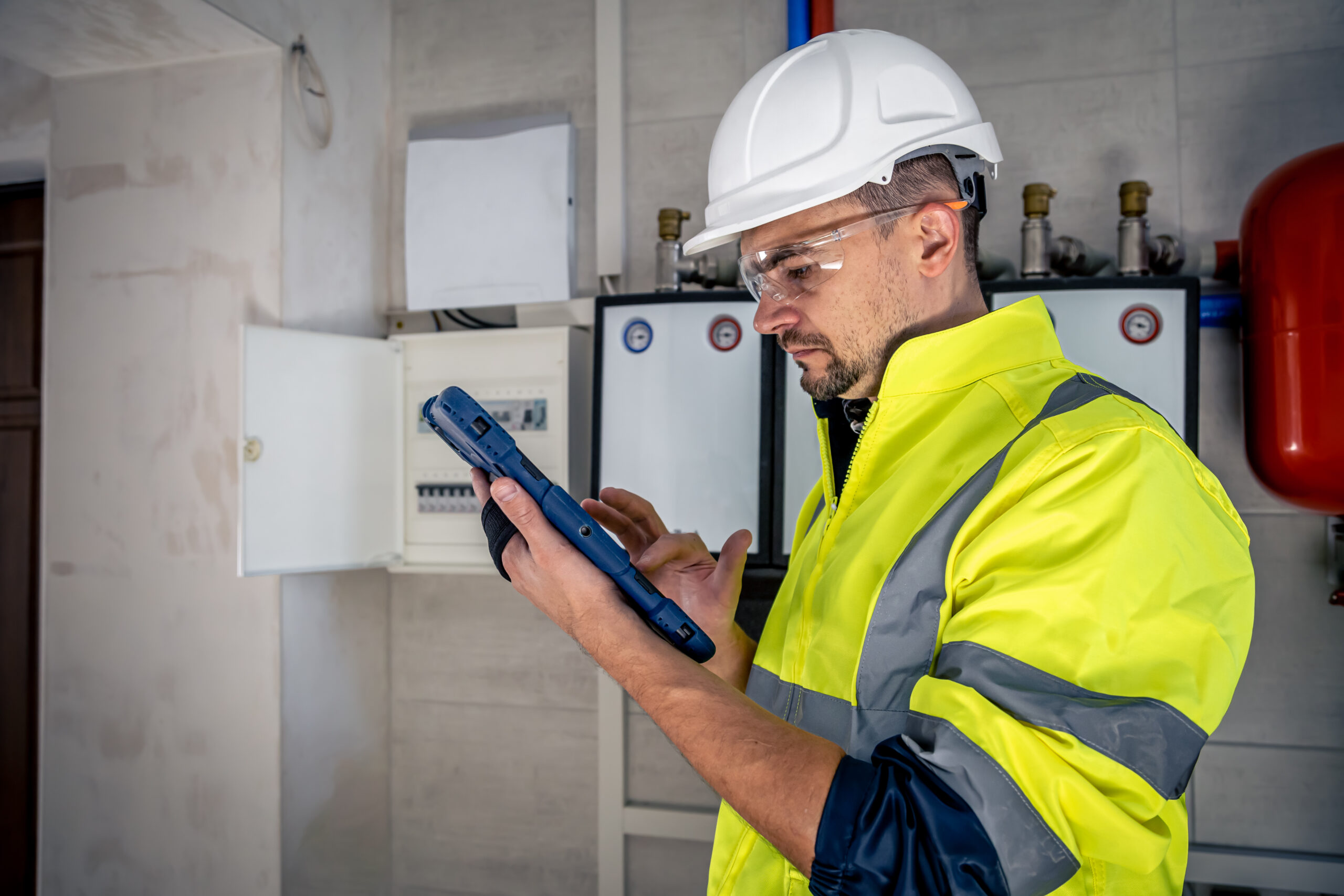
An engineer arrives at the object with professional thermal imaging equipment. The inspection is conducted under conditions where there is a temperature difference between the internal and external environment — this allows obtaining the most accurate results. The specialist scans all surfaces, records thermograms, and analyzes the received data. The results of the thermal imaging inspection are documented: each identified problem is recorded on a snapshot with explanations. This creates an irrefutable evidentiary base for filing claims against the developer. Unlike subjective complaints (“I think it’s cold here”), a thermal image is an objective fact that cannot be disputed. Order professional apartment acceptance with a thermal imager and get an objective picture of your housing’s state.
Frequently Asked Questions About Apartment Acceptance with a Thermal Imager
Is it mandatory to order a thermal imaging inspection if the apartment is handed over with renovation?
Yes, especially in that case. Behind wallpaper, paint, and decorative plaster, serious problems with thermal insulation, thermal bridges, and hidden leaks can hide. A thermal imager “sees” through finishing and allows identifying defects that would otherwise manifest only after moving in.
How much time does a thermal imaging inspection of an apartment take?
The duration depends on the apartment’s area and the number of rooms. On average, a complete thermal imaging scan of a two-room apartment takes about 1-2 hours along with the analysis of the received data.
Is it possible to conduct a thermal imaging inspection after signing the acceptance certificate?
Yes, but this complicates the process of filing claims. If you have already signed the certificate without remarks, proving that defects arose due to the developer’s fault will be much more difficult. Therefore, thermal imaging inspection is recommended to be conducted specifically before signing documents.
Conclusion
Apartment acceptance with a thermal imager is not an additional luxury, but a necessary tool for protecting your investments. Thermal imaging diagnostics allows you to see what is hidden from the eyes and fix problems that would otherwise become your headache after moving in. Complete instrumental inspection of the building from GlobalBud Ukraine includes thermal imaging diagnostics, humidity checks, power grid analysis, and other types of inspections.