


Tactile Tiles: Installation, Standards, and Key Requirements
Tactile tiles are a mandatory element of a barrier-free environment, designed to ensure safe and guided movement for people with visual impairments. Their installation is regulated by state building codes and must comply with a number of technical requirements.
What Are Tactile Tiles and Why Are They Needed
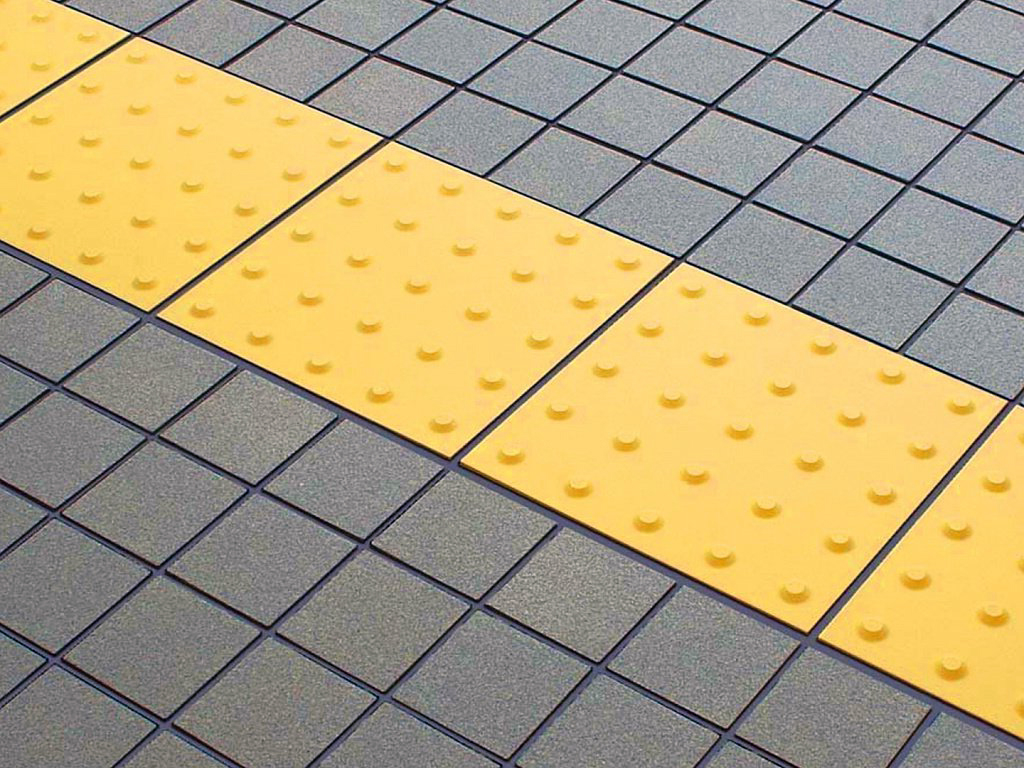
Tactile tiles are specialized surface coverings with a textured surface, installed on sidewalks, pedestrian crossings, public transport platforms, and inside public buildings. They serve the following functions:
-
warning of changes in direction or obstacles;
-
guiding movement in the required direction;
-
stopping before hazards (stairs, roadways, doors, escalators).
The installation of tactile elements is mandatory according to DBN V.2.2-40:2018 “Accessibility of Buildings and Structures”.
Regulatory Requirements for Installing Tactile Tiles
The installation of tactile tiles must comply with the following regulations:
-
DBN V.2.2-40:2018 — establishes the obligation to provide tactile elements in public-use buildings.
-
DSTU ISO 23599:2017 — sets technical requirements for tactile indicators.
-
DBN B.2.2-5:2011 — regulates accessibility in residential and public construction.
Key Requirements:
-
Tile types:
-
Warning tiles (dome surface) — signal danger.
-
Guiding tiles (ribbed surface) — indicate direction of movement.
-
-
Materials:
-
concrete;
-
polymer-sand mix;
-
rubber;
-
PVC;
-
metal.
-
-
Color contrast: tiles must be clearly distinguishable from the main surface (contrast at least 70%).
-
Width of guiding strip: at least 300 mm.
-
Warning zone: installed 600–700 mm before a hazardous area.
Tactile Tile Installation Technology
1. Base Preparation
-
Clean the surface of dirt, dust, and moisture.
-
If necessary, level the base (concrete screed or asphalt concrete).
2. Positioning
-
According to project documentation and DBN requirements.
-
Taking into account pedestrian flow direction and existing infrastructure.
3. Fixing the tiles
-
Adhesive method: for indoor spaces or PVC tiles.
-
Cement-sand mortar: for outdoor use.
-
Mechanical fastening (dowels, anchors): for metal or rubber tactile elements.
4. Level and Position Control
-
All elements must be flush with the surface, without protrusions.
-
Installation must be without gaps or displacements.
Common Installation Mistakes
-
Insufficient color contrast (complicates visual perception).
-
Installing tiles against the pedestrian flow.
-
Using only guiding or only warning tiles — without combination.
-
No warning elements before hazardous areas.
Examples of Use
GlobalBud Ukraine has overseen the installation of tactile tiles as part of projects for medical and financial institutions, infrastructure around shopping malls, and government facilities. Our engineers designed the layout according to DBN standards and ensured high-quality installation in line with city improvement regulations.
Conclusions
Proper installation of tactile tiles is a key stage in creating an inclusive environment. Non-compliance with standards may not only create risks for people with disabilities but also result in administrative liability for violations of construction law.
Order Professional Installation of Tactile Elements from GlobalBud Ukraine
GlobalBud Ukraine performs a full cycle of works including design, supply, and installation of tactile tiles in compliance with current DBN standards. We work with both individuals and legal entities, including international companies. Our engineers and lawyers deliver turnkey projects, taking into account all regulations, approvals, and accessibility standards.